Sensitive and reactive skinRoutine guide
The Routine for Sensitive, Reactive Skin
Four fragrance-free steps for skin that stings, flushes or flares at products, how to add a product without a reaction, and when to see a doctor.
Published September 21, 2026 · 9 min read · 12 sources · By N/FORM
The short version
- A skincare routine for sensitive skin is four fragrance-free steps, a non-foaming emulsion cleanser at night, a humectant toner on damp skin, one calming active, and a plain moisturizer that seals the barrier.
- Sensitive is something skin does, not a skin type. It stings, flushes or flares because its outer layer is letting more through than it should, and the routine works by taking away what starts the reaction and repairing the layer that lets it in.
- Fragrance ingredients are among the most frequent causes of contact allergy to cosmetics, affecting roughly 1 to 4% of people, and a reaction can begin after years of trouble-free use, so fragrance-free is the first rule, not an optional one.
- Introduce one product at a time, patch test it behind the ear for a few nights first, and give the routine six to eight weeks before judging it.
- Skin that is still burning, weeping or flaring on nothing but a mild cleanser, a humectant and a plain moisturizer is a medical question. Rosacea, eczema and contact allergy are diagnosed, not moisturized away.
A skincare routine for sensitive skin has one job before any other: stop giving the skin things to react to. In practice that is four fragrance-free steps. At night, a non-foaming emulsion cleanser; in the morning, water. Then a humectant toner on damp skin, one calming active (niacinamide or centella), and a plain moisturizer with lipids to seal the barrier. Introduce one product at a time, patch tested, and give the routine six to eight weeks. Skin that still burns, weeps or flares on that is a medical question, not a product one.
Sensitive is something your skin does, not something it is
Skin that stings when a serum goes on, flushes after a wash, or itches a day after a new cream is not a separate type of skin. It is ordinary skin whose outer layer (the stratum corneum) is letting more through than it should. That layer of flattened dead cells in a lipid mortar keeps water in and irritants out; when it is damaged, water loss rises and more of whatever you apply reaches the living cells underneath, where the nerves and immune cells are1.
So sensitivity is a behavior with two causes. One is a barrier thinned by hot water, strong cleansers, acids or a retinoid, so that even mild ingredients get through. The other is an ingredient the immune system has learned to recognize, and fragrance is the classic case: fragrance ingredients are among the most frequent causes of contact allergy to cosmetics, affecting roughly 1 to 4% of the general population, and the reaction can appear after years of using the same product without trouble2. A product that was fine for five years and now burns has not changed; your skin has. If it reacts to nearly everything and has for weeks, start with how to fix a damaged skin barrier, which strips even this routine back for a while.
Rule one: fragrance-free, on every label
"Fragrance" or "parfum" on a label can stand for a mixture of many ingredients that are not listed individually, and "unscented" is not the same thing: an unscented product may contain a masking fragrance to cover the smell of the base3. The term to look for is fragrance-free, which is the one the FDA uses for products without added fragrance3. Essential oils are fragrance too. That rule cuts part of our own shelf: Reset Cleanser, Quench Serum, Balance Gel, Renewal Serum and Brighten Serum contain parfum, so none of them belongs in a reactive routine until the skin has settled; the five fragrance-free formulas are the ones this guide is built from. The guide on whether fragrance in skincare is bad reads every term on a label.
Step one: a cleanser that does not start the reaction
The cleanser is where reactive skin gets hurt first, twice a day. Surfactants, the molecules that let a wash lift oil, cannot tell the oil on your skin from the lipids in it; the strong, high-foaming ones strip the barrier lipids, bind to the proteins in the dead cells and leave a residue that keeps irritating after the rinse4. Skin sits naturally at a pH just under 5, which favors the bacteria that belong there and the enzymes that repair the barrier, and alkaline soap pushes that up for hours5.
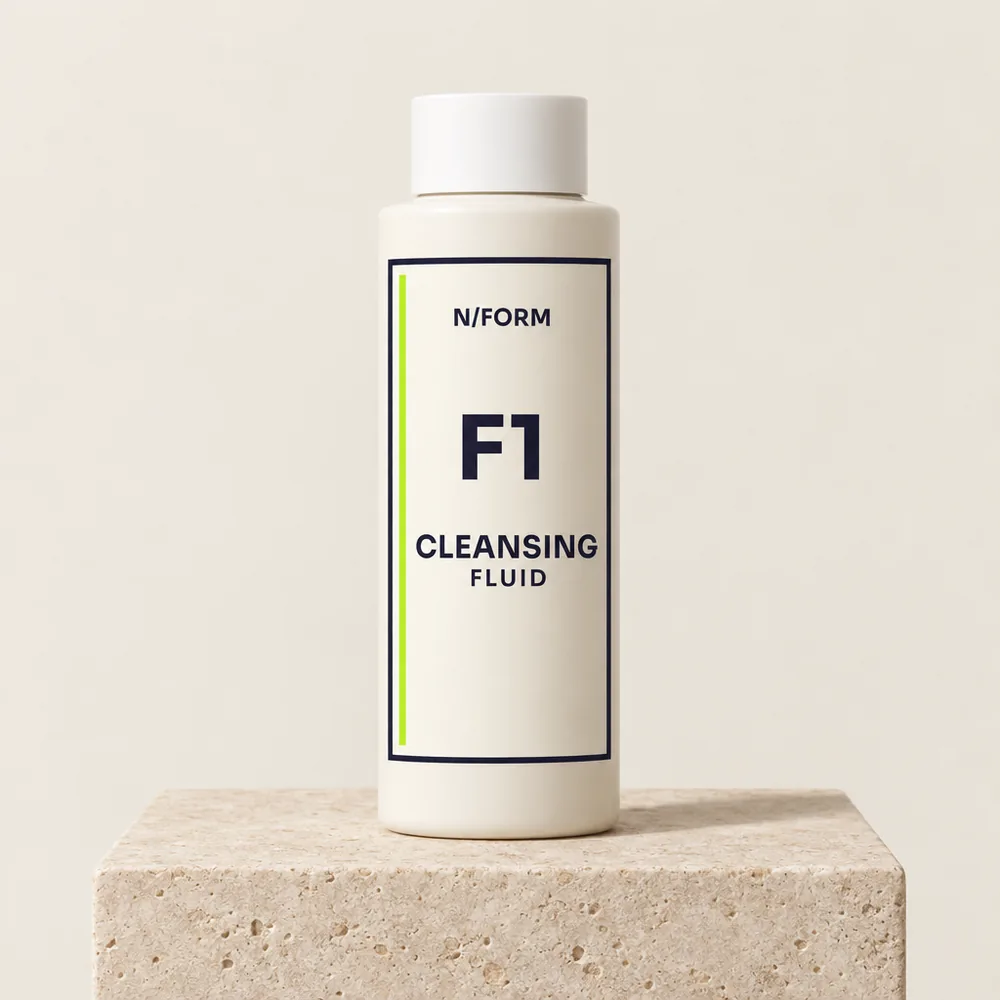
So: in the morning, lukewarm water and no cleanser, because every wash costs the barrier something4. In the evening, an emulsion rather than a foam. Fragrance-Free Cleansing Fluid is a dual-phase micellar emulsion on aloe leaf juice, hyaluronic acid and camomile; it lifts makeup and sunscreen without rubbing and with nothing scented in it. If your face pulls within a minute of rinsing, why skin feels tight after washing explains what your current cleanser is taking.
Step two: water, with nothing in it to react to
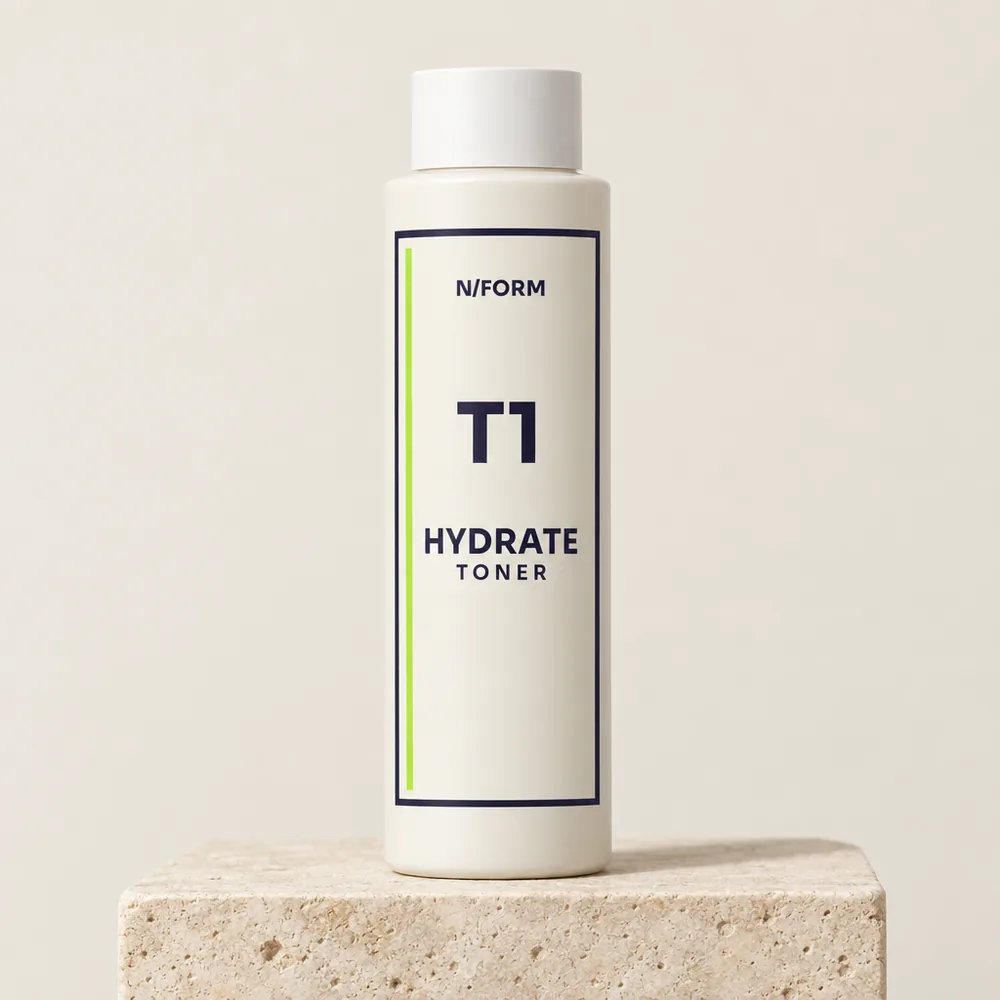
While the face is still damp, put water back with a humectant, an ingredient that draws water into the outer layer and holds it there, from as short an ingredient list as you can find. Hydrate Toner is twelve ingredients: hyaluronic acid, sodium PCA, rose flower water and camomile flower extract in a fragrance-free base. The rose is a hydrosol, the water left after distilling the petals, not the essential oil. It is a preparatory step, not a moisturizer. Press it in with the hands rather than a cotton pad.
Step three: one calming active, and only one
The instinct is to add several soothing things at once. Add one. Niacinamide, a form of vitamin B3, is the better documented. The review evidence is that it strengthens the barrier by raising the skin's own ceramide production, reduces water loss, calms inflammation and reduces the transfer of pigment to surface cells6. The niacinamide page has the trials.
Centella asiatica, the plant behind "cica" products, is the second. A cosmetology review credits its triterpenes with anti-inflammatory activity and with supporting wound repair, the basis for its use on sensitive and healing skin7. That is a review, not a trial on redness, as the centella asiatica page says.
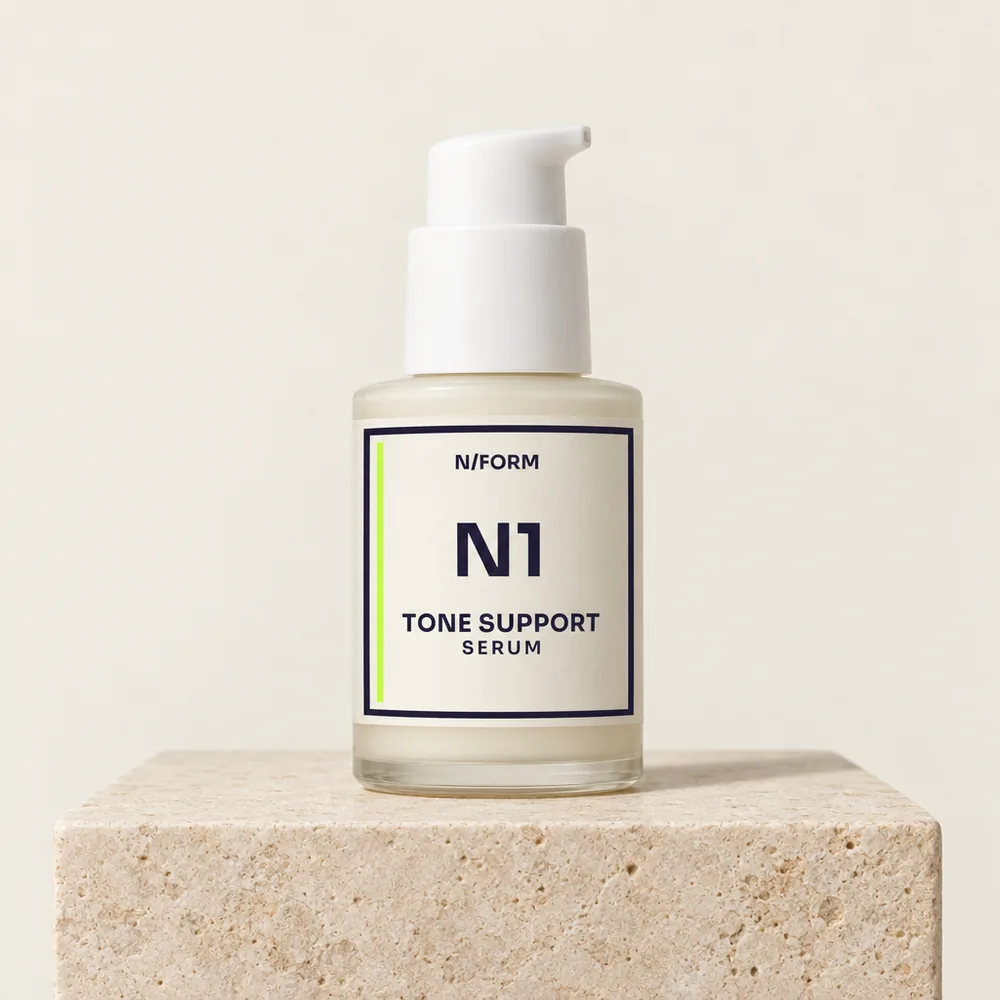
Tone Support Serum carries both, with hyaluronic acid and plant exosomes, with no parfum and no declared allergens. It contains lactic acid at a level the label does not state and jojoba seed oil, so it is not oil-free, and it gets the same patch test as everything else. The exosomes have no trial in the bank; the calming case rests on the niacinamide and the centella.
Step four: a plain moisturizer that seals the barrier
Across the dermatitis literature, regular moisturizer use repairs the barrier, keeps skin hydrated, reduces itch and inflammation and reduces flares8. For reactive skin the moisturizer should be plain: humectants, a lipid, and nothing that smells.
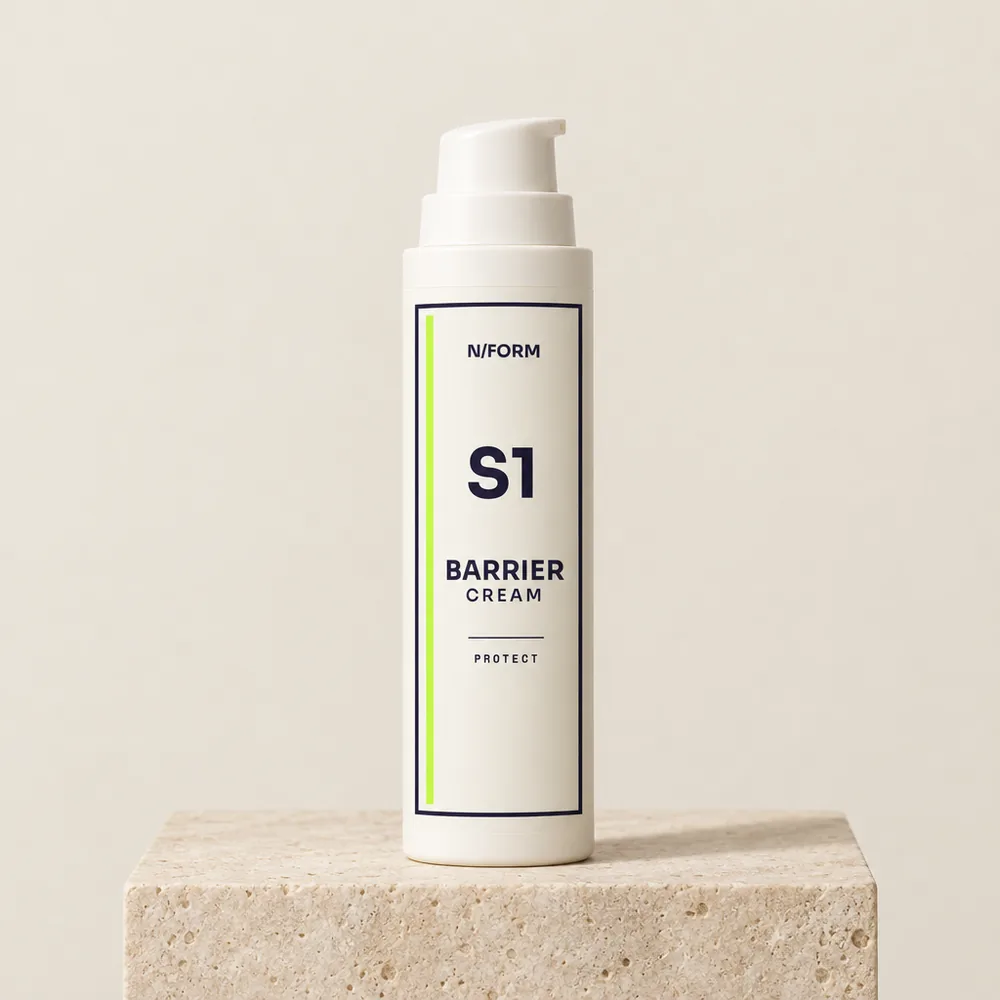
Barrier Cream is the fragrance-free moisturizer in the range, with no fragrance ingredient at all, in a COSMOS Organic base. Its humectants are aloe leaf juice, sodium PCA and hyaluronic acid; its lipid is jojoba seed oil. In a two-week trial in 20 women, formulations with 0.10% to 0.50% freeze-dried aloe raised the water content of the outer skin while water loss through the skin did not change, so aloe is a humectant rather than a seal9. The jojoba supplies the seal; it is a liquid wax close to human sebum, anti-inflammatory and well tolerated, with review evidence for barrier repair10. The aloe vera and jojoba oil pages go through both. There is no oil-free gel in this routine: Balance Gel is for normal, oily and combination skin and contains fragrance, so it is not for skin that reacts.
The skincare routine for sensitive skin, step by step
Morning: lukewarm water only, patted dry. Hydrate Toner on damp skin. Tone Support Serum, once it has passed its patch test. Barrier Cream within a minute. A mineral sunscreen you have already tested.
Night: Fragrance-Free Cleansing Fluid, rinsed with lukewarm water. Hydrate Toner on damp skin. Tone Support Serum. Barrier Cream, a slightly thicker layer.
Nothing exfoliating, nothing with a retinoid, nothing with a scent. When the skin has been quiet for two months, a mild acid or a retinol alternative can be tested like everything else; the guide on retinol alternatives covers the gentler options.
How to add a product without a flare
- Patch test first. A pea of the product behind one ear, once a night for three to five nights. Contact allergy shows as itch, redness or small bumps at the spot, often a day or two later rather than immediately.
- One product at a time. Add it and change nothing else for two weeks. If two went in together and the skin flares, you know nothing.
- Cleanser and moisturizer first, the active last, every other night to begin with.
- Keep a note. A reaction that arrives a day or two later is easy to blame on the wrong thing.
The mistakes that keep reactive skin reacting
Foam in the morning: the surfactant takes lipid from a barrier that is already short4. Hot water: it loosens the lipid mortar and dilates the vessels in the face, so every wash ends in a flush. "Calming" mists with essential oils: the molecules that make lavender smell are the same ones on the allergen lists2. Changing products every week: the American Academy of Dermatology's guidance is that changing products every week or two irritates skin11. Exfoliating the rough patches: they are a barrier shedding cells in clumps, and an acid takes more of a layer that is already thin1.
What to expect, week by week
Week one: the sting on application stops almost at once if fragrance and foam were the cause. Redness fades more slowly.
Weeks two to three: flushing after washing eases and flaking softens as the outer layer takes up water.
Weeks four to eight: the window that matters. A skin cell takes roughly 40 to 56 days to travel from the base of the epidermis to being shed, so the cells reaching the surface now were made under the new routine12. The AAD advises using a product for 6 to 8 weeks before judging it and allowing up to three months for full results11. Hold it steady.
Beyond eight weeks: calm skin can test one addition at a time. Skin still burning or flaring needs the next section.
When the reaction is medical
A routine can only stop supplying triggers and repair the barrier. Persistent redness across the nose and cheeks with visible small vessels and flushing set off by heat is the pattern of rosacea. Itchy, weeping or cracked patches that come and go are the pattern of eczema. Both are diagnoses with prescription treatments no moisturizer replaces, though in dermatitis a moisturizer still reduces flares alongside them8. An itchy, sometimes blistering rash exactly where a product went on, a day or two later, is allergic contact dermatitis, and a dermatologist can patch test you against the standard allergen series and name the ingredient for good2. If a reaction is spreading, swelling the eyes or lips, or not settling within days of stopping every product, do not wait out the six weeks.
Questions people ask
What is the best skincare routine for sensitive skin?
Fragrance-free everything, and fewer steps than you think. Water in the morning and a non-foaming emulsion cleanser at night, a humectant toner on damp skin, one calming active such as niacinamide, and a plain moisturizer with humectants and a lipid. The fragrance rule is not fussiness: fragrance ingredients are among the most frequent causes of contact allergy to cosmetics2.
How do I calm reactive skin fast?
Stop applying everything except a plain fragrance-free moisturizer, wash with lukewarm water only, and give it three to five days. A flare is mostly the barrier letting irritants through, and the fastest fix is to stop supplying them while it repairs1. Then reintroduce one product at a time.
Is niacinamide good for sensitive skin?
It is one of the two calming actives with real evidence. Reviews credit topical niacinamide with strengthening the barrier through the skin's own ceramide production, lowering water loss and calming inflammation6. Introduce it every other night after a patch test, and go daily once the skin accepts it.
Does sensitive skin need a dermatologist?
Not for stinging and flushing that stop when you take fragrance and foam away. Yes for persistent redness with visible vessels, itchy weeping patches that come and go, or a rash where a product went on that lasts days after you stopped it. Those are rosacea, eczema and contact allergy, and patch testing can name the exact ingredient behind years of reactions2.
Sources
Every study cited above, with what it found and where it can be read. A study of an ingredient is not a study of one of our formulas, and we say which kind each one is.
- 1
Proksch, Experimental Dermatology, 2008
Review
Review of the skin barrier: the stratum corneum’s corneocytes and lipid matrix limit water loss and keep irritants out, and barrier damage is measurable as raised transepidermal water loss.
- 2
Johansen, American Journal of Clinical Dermatology, 2003
Review
Clinical review: fragrance ingredients are among the most frequent causes of contact allergy to cosmetics, affecting roughly 1 to 4% of the general population, and the reaction can appear after years of trouble-free use.
- 3
U.S. Food and Drug Administration, Fragrances in Cosmetics
Guidance
FDA guidance: "fragrance" on a label can stand for a mixture of many undisclosed ingredients, "unscented" products may still contain masking fragrance, and "fragrance-free" is the term for products without added fragrance.
- 4
Ananthapadmanabhan, Dermatologic Therapy, 2004
Review
Review of how surfactants damage the barrier: harsh cleansers strip lipids and bind to skin proteins, raising water loss and the tight, dry after-feel; milder surfactant systems clean with far less of both.
- 5
Lambers, International Journal of Cosmetic Science, 2006
Review
Natural skin surface pH averages just below 5; keeping it there favors the resident flora and barrier repair, and washing with alkaline soap raises it, with recovery taking hours.
- 6
Wohlrab and Kreft, Skin Pharmacology and Physiology, 2014
Review
Review of topical niacinamide: it strengthens the barrier by raising ceramide production, reduces water loss, calms inflammation and reduces the transfer of pigment to surface cells.
- 7
Bylka, Advances in Dermatology and Allergology, 2013
Review
Review of Centella asiatica in cosmetics: its triterpenes support collagen synthesis and wound repair and have anti-inflammatory activity, which is the basis for its use on sensitive and healing skin.
- 8
Purnamawati, Clinical Medicine and Research, 2017
Review
Review across dermatitis types: moisturizers repair the barrier, keep skin hydrated, reduce itch and inflammation, and reduce flares when used regularly.
- 9
Dal'Belo, Skin Research and Technology, 2006
Clinical trial
20 women, two weeks: formulations with 0.10% to 0.50% freeze-dried aloe raised the water content of the outer skin against the same vehicle without it; water loss through the skin did not change, so aloe works as a humectant, not a seal.
- 10
Pazyar, Giornale Italiano di Dermatologia e Venereologia, 2013
Review
Review: jojoba is a liquid wax close to human sebum, anti-inflammatory and well tolerated, with evidence for barrier repair and wound healing.
- 11
American Academy of Dermatology
Guidance
The American Academy of Dermatology advises using a product for 6 to 8 weeks before judging it and allowing up to three months for full results; changing products every week or two irritates skin.
- 12
Iizuka, Journal of Dermatological Science, 1994
Review
A skin cell takes roughly 40 to 56 days to travel from the base of the epidermis to being shed, which is why a change in skin needs weeks, not days, to show.
The formulas this guide points at
Not sure which of these is your skin?
Seven questions about what your skin does, not what you own, and you get the three formulas that treat it. Sixty days to find out, full refund, keep the bottles.
Read next
Sensitive and reactive skinGuide
How to Fix a Damaged Skin Barrier (and How Long It Takes)
A damaged barrier stings, flakes and flushes at products it used to tolerate. What broke it, the three-step repair routine, what to stop, and how many weeks.
7 min read · 12 sources
Sensitive and reactive skinGuide
Is Fragrance in Skincare Bad? What the Label Means and Who Should Avoid It
Not bad for everyone, but among the most frequent causes of contact allergy to cosmetics. What parfum, unscented and fragrance-free mean, and what to check.
7 min read · 3 sources
Dry and dehydrated skinGuide
Why Your Skin Feels Tight After Washing (and How to Make It Stop)
That pulled, squeaky feeling thirty seconds after you rinse is your cleanser taking more than dirt. What it took, why moisturizer only patches it, and the fix.
6 min read · 6 sources
Lines and firmnessGuide
Retinol Alternatives: Bidens Pilosa vs Bakuchiol vs Retinol
How two plant alternatives compare with retinol on evidence, irritation and sun. Bakuchiol has a human trial against retinol; Bidens pilosa has cell culture.
7 min read · 5 sources