Sensitive and reactive skinGuide
How to Fix a Damaged Skin Barrier (and How Long It Takes)
A damaged barrier stings, flakes and flushes at products it used to tolerate. What broke it, the three-step repair routine, what to stop, and how many weeks.
Published September 21, 2026 · 7 min read · 12 sources · By N/FORM
The short version
- A damaged skin barrier is an outer layer that has lost lipids and water, and it shows as stinging, tightness, flaking, redness and reacting to products that used to be fine.
- The usual causes are over-exfoliation, harsh foaming cleansers, hot water and fragrance, and the repair starts with stopping all four.
- The repair routine is three steps, a mild fragrance-free cleanser at night, a humectant on damp skin and a lipid-rich fragrance-free moisturizer, twice a day, and nothing else for at least four weeks.
- Comfort returns in one to two weeks, but the outer layer takes roughly 40 to 56 days to replace itself, so judge the repair at six to eight weeks.
- Skin that still stings, weeps, cracks or flares on a bare routine after eight weeks needs a dermatologist, because eczema, rosacea and contact allergy look like barrier damage and need different treatment.
The way to fix a damaged skin barrier is to stop damaging it and give it time. Strip the routine back to three things: a mild, fragrance-free cleanser in the evening only, a humectant on damp skin, and a fragrance-free moisturizer that carries lipids, morning and night. Stop every acid, scrub, retinoid, fragranced product and hot wash. The stinging and tightness ease within one to two weeks, and the barrier is fully rebuilt in six to eight, because that is how long the outer layer takes to replace itself.
What the skin barrier actually is
The outer layer of your skin (the stratum corneum) is a wall of flattened dead cells, called corneocytes, set in a mortar of lipids. Together they do two jobs: keep water in and keep irritants, allergens and microbes out. When it is damaged, water escapes faster and things that should stay outside get in, which is why a damaged barrier both dries out and reacts. Dermatologists measure the damage as raised transepidermal water loss, the rate at which water evaporates through the surface1.
The cells themselves hold water with a mix of small molecules called natural moisturizing factors, and when those run short and the lipids fall out of order, the layer stiffens, feels tight and flakes2.
The signs of a damaged skin barrier
- Products that used to feel like nothing now sting, including water.
- Tightness that starts within a minute of washing and does not fully ease.
- Redness and flushing that come and go, worst after cleansing or a hot shower.
- Fine flaking or rough patches, often on the cheeks and around the nose.
- Makeup and sunscreen that pill, cling or sit unevenly.
If four or more of those describe your face, treat the barrier first. Skin with an intact barrier that is simply short of water is an easier case; dry versus dehydrated skin covers it.
What damages the barrier
Over-exfoliation is the most common cause in people who care about their skin. Alpha-hydroxy acids such as glycolic acid loosen the bonds between dead surface cells and thin the compacted outer layer, which is the point of using them; used daily, or stacked with a scrub, a retinoid and a salicylic acid toner, they take that layer down faster than it is replaced and raise sun sensitivity while they are at it3.
Harsh cleansing is the second. Strong foaming surfactants cannot tell the sebum on your skin from the lipids in the barrier; they strip those lipids, bind to the proteins in the dead cells and leave a residue that keeps irritating after the rinse, which raises water loss and produces the tight, dry after-feel4. Why skin feels tight after washing goes through the surfactant detail.
Hot water and alkaline soap. Skin's surface sits at a pH just under 5, and that acidity favors the resident bacteria and the enzymes that finish building the barrier; washing with alkaline soap pushes the pH up and it takes hours to come back down5. Hot water loosens the lipid mortar so more of it rinses away.
Fragrance. Fragrance ingredients are among the most frequent causes of contact allergy to cosmetics, affecting roughly 1 to 4% of the general population, and the reaction can appear after years of trouble-free use6. On a damaged barrier more of it reaches the living skin below, and inflamed skin is the skin most likely to start reacting.
The skin barrier repair routine
Three steps, morning and night, and nothing else for at least four weeks.
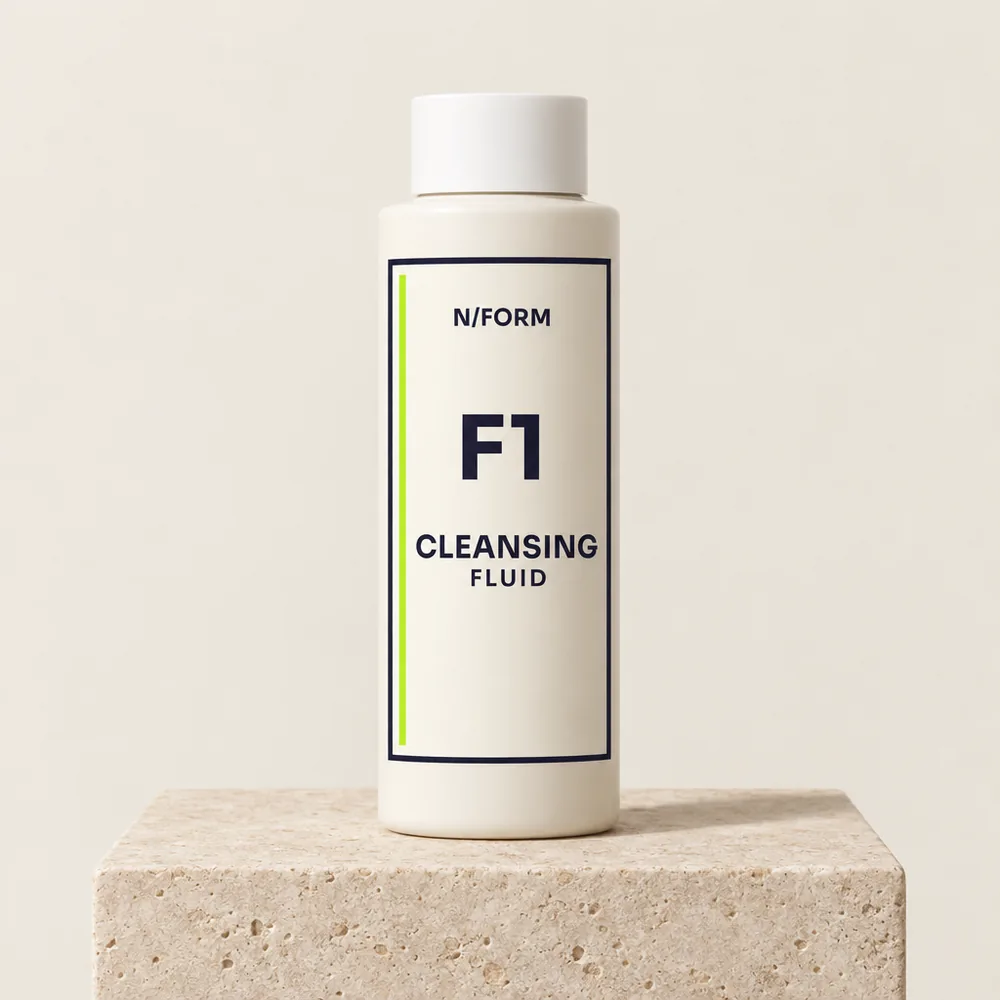
Evening cleanse, morning rinse. In the evening, a mild, non-foaming cleanser that lifts sunscreen and the day without surfactants strong enough to strip lipid. Fragrance-Free Cleansing Fluid is a dual-phase cleansing emulsion with aloe leaf juice, hyaluronic acid and camomile, fragrance-free and allergen-free, built for exactly this job. In the morning, lukewarm water only. A barrier under repair cannot afford two washes a day.
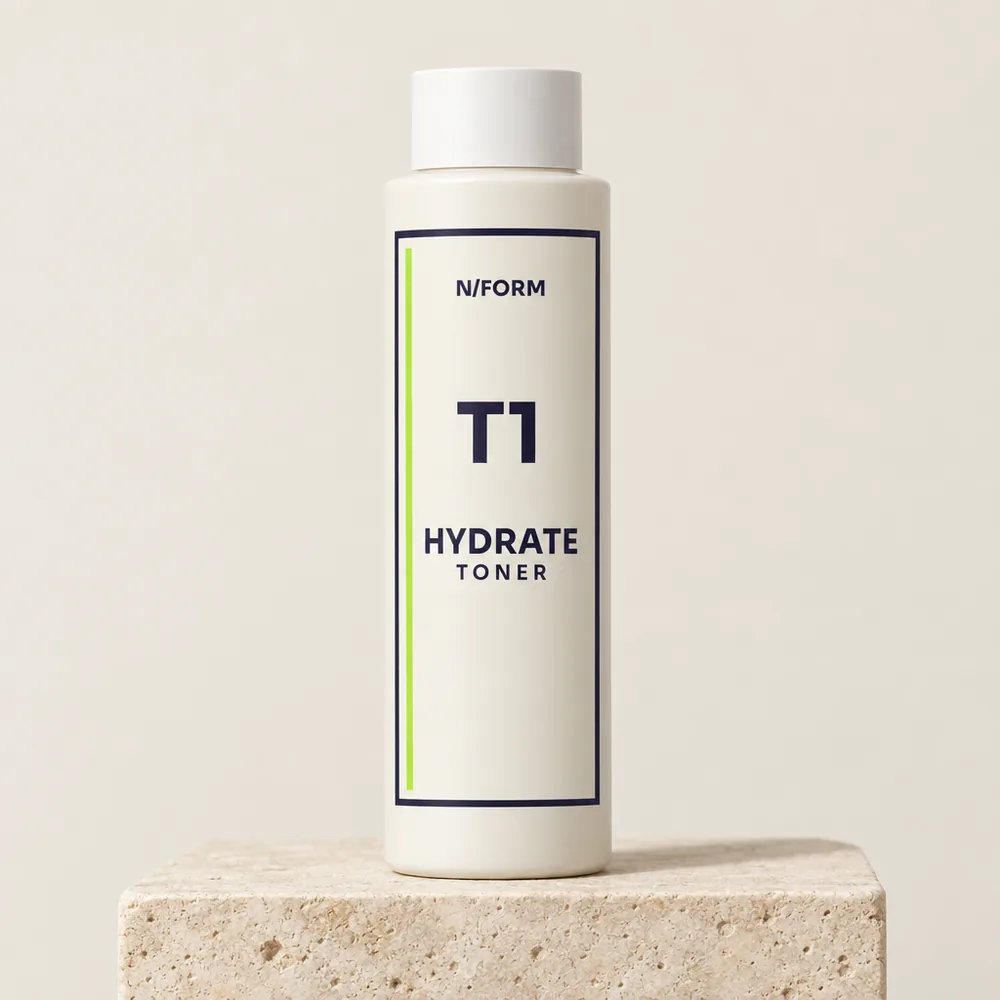
Humectant on damp skin. Within a minute of patting dry, an ingredient that draws water into the outer layer. A moisturizer works through humectants that draw water in, occlusives that slow it leaving and emollients that smooth the surface7, so the humectant step sets up the moisturizer rather than replacing it. Hydrate Toner is twelve ingredients, fragrance-free, with hyaluronic acid, sodium PCA and rose flower water (a hydrosol, not an essential oil); it prepares the skin and does not replace a moisturizer. Glycerin, the other humectant with a hard trial behind it, restored barrier function and improved outer-layer hydration in 24 people with atopic dermatitis over four weeks, double-blind, in a 20% glycerol cream against the same cream without it8.
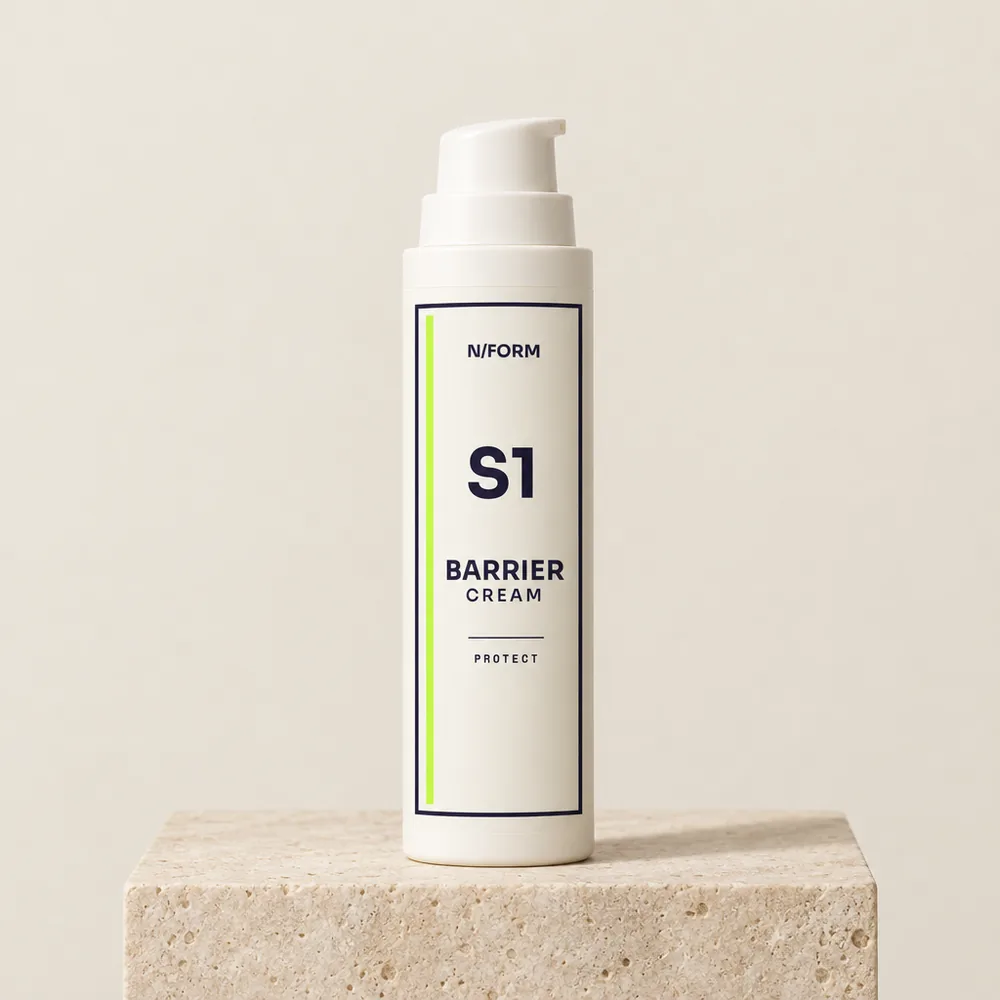
Fragrance-free moisturizer with lipid. The step that does the repairing. Regular use of an emollient moisturizer lowers water loss and improves barrier recovery in dry-skin disorders, and reduces the need for topical steroids9. Across dermatitis types, moisturizers repair the barrier, keep skin hydrated, reduce itch and inflammation and reduce flares when used regularly10. Barrier Cream is aloe leaf juice, jojoba seed oil, sodium PCA and hyaluronic acid in a fragrance-free, COSMOS Organic base, with no fragrance ingredient in the formula at all; jojoba supplies the lipid, the rest supplies the water. Apply it over the damp toner, morning and night.
Sunscreen in the morning is the only addition. If you want a fourth step once the stinging stops, niacinamide is the one with barrier evidence: it raises ceramide production in the outer layer, reduces water loss and calms inflammation11. The niacinamide page has the trials. Bring it in at week three or four.
What to stop, and for how long
Stop, for at least four weeks: every exfoliating acid (glycolic, lactic, salicylic), scrubs and cleansing brushes, retinol and retinoids, vitamin C in its pure ascorbic acid form, anything with fragrance or essential oils, foaming cleansers with sulfates, hot water, and face masks of any kind. Stop, permanently: washing twice a day with foam, and changing products every week or two.
When the skin has gone two full weeks without stinging, bring things back one at a time, a week apart, starting with the gentlest. An exfoliating acid comes back last, at two evenings a week at most, and how often to exfoliate covers the schedule that keeps the barrier intact from then on.
How long it takes to repair the skin barrier
Comfort comes first. Once the stripping stops and a humectant and moisturizer go on damp skin, the stinging and tightness ease within the first week or two. That is water going back into the outer layer and lipid going back over it.
Structural repair takes longer. A skin cell takes roughly 40 to 56 days to travel from the base of the epidermis to being shed, so the cells arriving at the surface in week six were made under the new routine, with their natural moisturizing factors and lipids intact, and the ones made under the old routine have to work their way out first12. Judge the repair at six to eight weeks, not at day ten.
The full routine for skin that reacts at everything, once the barrier is repaired, is in the routine for sensitive and reactive skin.
When it is time to see a dermatologist
Barrier damage from products repairs on a bare routine. See a dermatologist if, after six to eight weeks on cleanser, humectant and fragrance-free moisturizer alone, the skin still stings, or if at any point it weeps, cracks, crusts, or flares in defined patches. Eczema, rosacea, seborrheic dermatitis and contact allergy all look like a damaged barrier from the outside and need different treatment.
Questions people ask
What are the signs of a damaged skin barrier?
Stinging from products that used to be fine, tightness after washing that does not ease, redness that comes and goes, fine flaking, dullness, and pilling makeup. Underneath, the outer layer has lost lipids and water, and dermatologists see it as raised transepidermal water loss1.
How long does it take to repair a damaged skin barrier?
One to two weeks for the stinging and tightness to ease; six to eight weeks for the barrier to be rebuilt, because a skin cell takes roughly 40 to 56 days to travel from the base of the epidermis to the surface12. Keep the routine bare for the whole of that time.
What should I avoid with a damaged skin barrier?
Acids, scrubs, retinoids, pure vitamin C, fragrance and essential oils, sulfate foaming cleansers, hot water and masks. The strong surfactants strip barrier lipids and bind to skin proteins4, and fragrance is among the most frequent causes of contact allergy to cosmetics6. Stop all of them for at least four weeks and reintroduce one at a time.
Can over-exfoliating damage the skin barrier?
Yes, and it is the most common cause. Alpha-hydroxy acids loosen the bonds between dead surface cells and thin the compacted outer layer, which is what they are for; daily use, or stacking an acid with a scrub or a retinoid, thins it faster than it is replaced3. Stop every exfoliant, repair for four to eight weeks, and come back at two evenings a week.
Does moisturizer repair the skin barrier?
Yes, used regularly. In dry-skin and dermatitis reviews, regular moisturizer use lowers water loss, improves barrier recovery and reduces flares9. The moisturizer needs lipid as well as humectants, and it needs to be fragrance-free while the barrier is open.
Sources
Every study cited above, with what it found and where it can be read. A study of an ingredient is not a study of one of our formulas, and we say which kind each one is.
- 1
Proksch, Experimental Dermatology, 2008
Review
Review of the skin barrier: the stratum corneum’s corneocytes and lipid matrix limit water loss and keep irritants out, and barrier damage is measurable as raised transepidermal water loss.
- 2
Rawlings and Harding, Dermatologic Therapy, 2004
Review
Review of stratum corneum moisturization: dry skin is a failure of the outer layer to hold water, driven by lost natural moisturizing factors and disordered lipids, and humectants plus lipids together restore it.
- 3
Kornhauser, Clinical, Cosmetic and Investigational Dermatology, 2010
Review
Review of hydroxy acids: AHAs such as glycolic acid loosen the bonds between dead surface cells, thin the compacted outer layer and thicken living epidermis; they also raise sun sensitivity while in use.
- 4
Ananthapadmanabhan, Dermatologic Therapy, 2004
Review
Review of how surfactants damage the barrier: harsh cleansers strip lipids and bind to skin proteins, raising water loss and the tight, dry after-feel; milder surfactant systems clean with far less of both.
- 5
Lambers, International Journal of Cosmetic Science, 2006
Review
Natural skin surface pH averages just below 5; keeping it there favors the resident flora and barrier repair, and washing with alkaline soap raises it, with recovery taking hours.
- 6
Johansen, American Journal of Clinical Dermatology, 2003
Review
Clinical review: fragrance ingredients are among the most frequent causes of contact allergy to cosmetics, affecting roughly 1 to 4% of the general population, and the reaction can appear after years of trouble-free use.
- 7
Draelos, Journal of Cosmetic Dermatology, 2018
Review
Review of how moisturizers work: occlusives slow water loss, humectants draw water into the outer layer, and emollients smooth the surface; the effective products combine them.
- 8
Breternitz, Skin Pharmacology and Physiology, 2008
Clinical trial
24 people with atopic dermatitis, four weeks, double-blind: a 20% glycerol cream improved stratum corneum hydration and restored barrier function against the same cream without glycerol.
- 9
Lodén, American Journal of Clinical Dermatology, 2003
Review
Review of emollients in dry-skin disorders: regular moisturizer use lowers water loss, improves barrier recovery and reduces the need for topical steroids in barrier disorders.
- 10
Purnamawati, Clinical Medicine and Research, 2017
Review
Review across dermatitis types: moisturizers repair the barrier, keep skin hydrated, reduce itch and inflammation, and reduce flares when used regularly.
- 11
Wohlrab and Kreft, Skin Pharmacology and Physiology, 2014
Review
Review of topical niacinamide: it strengthens the barrier by raising ceramide production, reduces water loss, calms inflammation and reduces the transfer of pigment to surface cells.
- 12
Iizuka, Journal of Dermatological Science, 1994
Review
A skin cell takes roughly 40 to 56 days to travel from the base of the epidermis to being shed, which is why a change in skin needs weeks, not days, to show.
The formulas this guide points at
Not sure which of these is your skin?
Seven questions about what your skin does, not what you own, and you get the three formulas that treat it. Sixty days to find out, full refund, keep the bottles.
Read next
Sensitive and reactive skinRoutine guide
The Routine for Sensitive, Reactive Skin
Four fragrance-free steps for skin that stings, flushes or flares at products, how to add a product without a reaction, and when to see a doctor.
9 min read · 12 sources
Dry and dehydrated skinGuide
Why Your Skin Feels Tight After Washing (and How to Make It Stop)
That pulled, squeaky feeling thirty seconds after you rinse is your cleanser taking more than dirt. What it took, why moisturizer only patches it, and the fix.
6 min read · 6 sources
Dry and dehydrated skinGuide
Dehydrated Skin vs Dry Skin, and How to Tell Which You Have
Dry skin is short of oil. Dehydrated skin is short of water, and can be oily at the same time. The signs that separate them, a sink test, and what each needs.
7 min read · 6 sources
Dull and uneven skinGuide
How Often Should You Exfoliate Your Face?
Two or three evenings a week with a 5% glycolic acid toner is the answer for most skin. Here it is by skin type, with the signs you have overdone it.
7 min read · 6 sources