Dry and dehydrated skinIngredient
Jojoba Oil for Skin: A Liquid Wax That Behaves Like Sebum
Jojoba is a liquid wax, not an oil, and close to human sebum. Review evidence calls it anti-inflammatory and well tolerated, with support for barrier repair.
Published September 21, 2026 · 5 min read · 3 sources · By N/FORM
- The evidence
- 3 reviews
- In these formulas
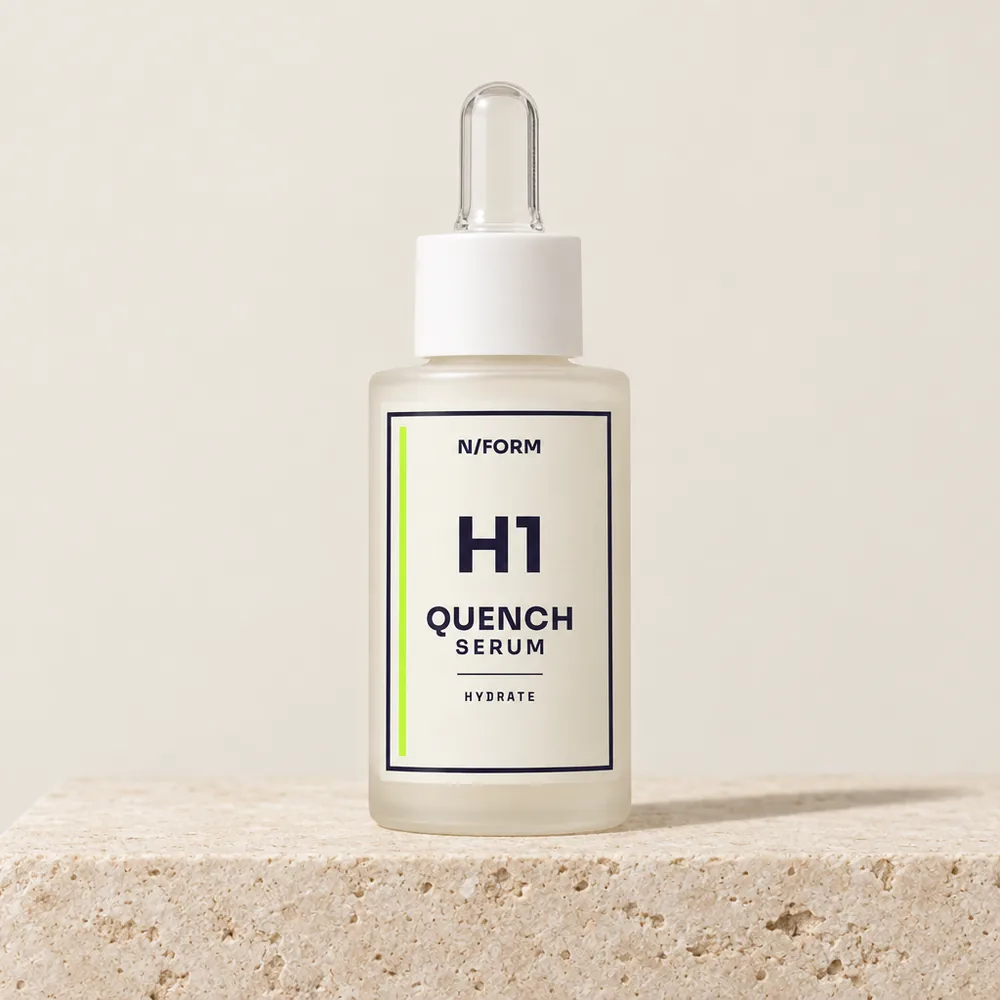
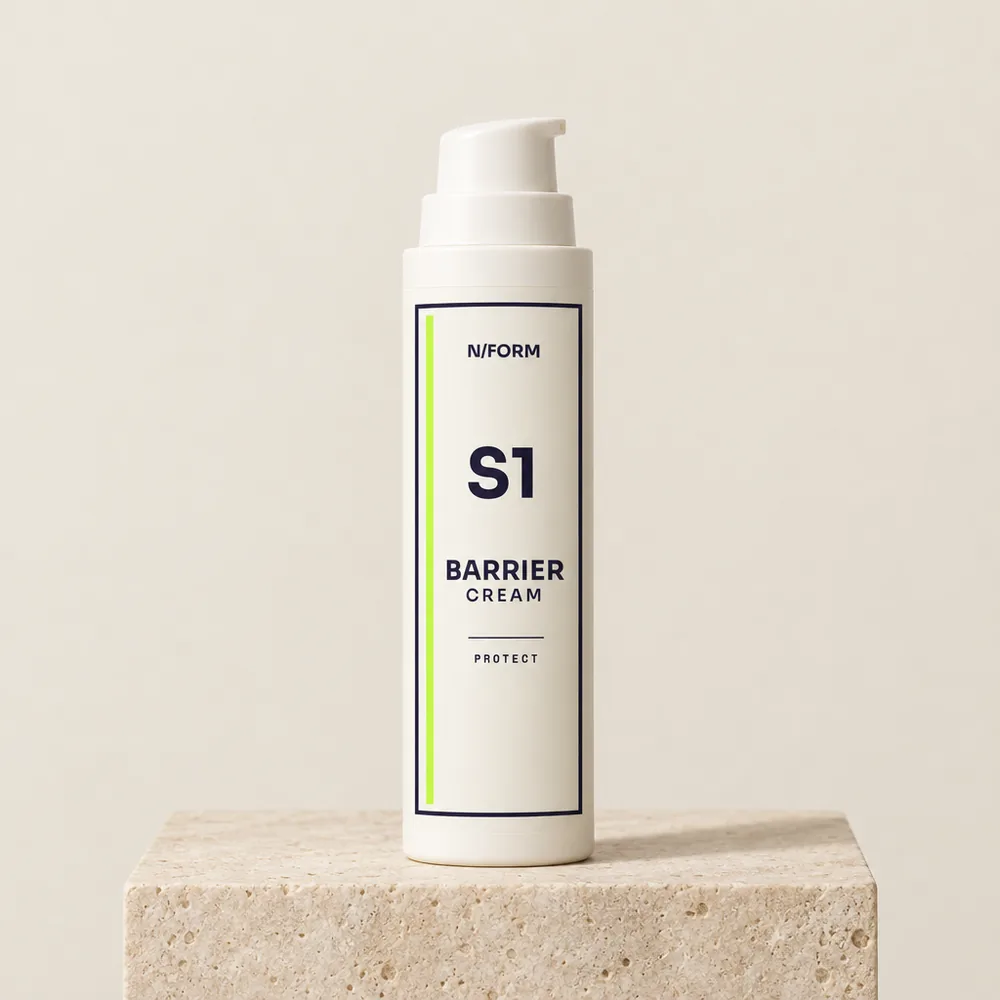
- Quench Serum, Barrier Cream
The short version
- Jojoba oil is chemically a liquid wax, a chain of long fatty acids joined to long fatty alcohols, and that structure is closer to human sebum than any plant oil.
- A dermatology review describes jojoba as close to human sebum, anti-inflammatory and well tolerated, with evidence for barrier repair and wound healing.
- Jojoba supplies the lipid half of moisturizing: humectants draw water into the outer layer, and a lipid such as jojoba slows it leaving and smooths the surface.
- On the comedogenic question, the review's finding is that jojoba is well tolerated; our source bank holds no comedogenicity trial, so this page does not give jojoba a pore-clogging score in either direction.
- Jojoba seed oil is the lipid in Barrier Cream and Quench Serum, and it is also in Tone Support Serum, which is why that serum is not oil-free.
Jojoba oil is pressed from the seed of Simmondsia chinensis, a desert shrub, and the first thing to know is that it is not an oil. Chemically it is a liquid wax, closer to human sebum than any plant oil is. A dermatology review describes jojoba as a liquid wax close to human sebum, anti-inflammatory and well tolerated, with evidence for barrier repair and wound healing1. That is the case for jojoba oil for face use: it does the job of a lipid, behaves like the one your skin already makes, and skin rarely objects to it.
What it does
Moisturizing is three jobs: occlusives slow water leaving the skin, humectants draw water into the outer layer, and emollients fill the gaps between lifted surface cells so the skin feels smooth2. Jojoba does the first and third, the lipid half. It sits on the outer layer of your skin (the stratum corneum), slows the water the humectants put there from evaporating, and smooths the surface, without the heavy film a triglyceride oil leaves.
Sebum, the skin's own surface lipid, is a mix that includes wax esters, and jojoba is almost entirely wax esters: long fatty acids joined to long fatty alcohols. The review evidence is that jojoba is close to human sebum, anti-inflammatory and well tolerated1. That closeness is why it spreads and sits on skin the way the skin's own lipid does. Dry skin is an outer layer that has lost its natural moisturizing factors and whose lipids have fallen out of order, and it takes humectants and lipids together to restore it3. Jojoba is the lipid.
What the trials found
The evidence in our bank is a review, which reports what the literature says rather than running a trial of its own. Its findings are that jojoba is a liquid wax close to human sebum, that it has anti-inflammatory activity, that it is well tolerated, and that there is evidence for its use in barrier repair and wound healing1. It gives no effect size and no percentage tested on faces, and this page does not add one.
It also does not contain a comedogenicity trial, the kind of study that applies an ingredient to skin and counts the clogged pores that follow; "well tolerated" is the finding, and it is a softer statement than "non-comedogenic". And the wound-healing evidence is for jojoba as an ingredient; a moisturizer that carries it is not a wound treatment.
How much, and in what
The review in our bank gives no cosmetic strength1. Jojoba is not dosed by percentage the way an acid is; in a cream it is the lipid phase, and its position on the label tells you roughly how much.
In the N/FORM range, jojoba seed oil is the lipid in Barrier Cream, second on the ingredient list after aloe leaf juice, in a fragrance-free, COSMOS Organic base with sodium PCA and hyaluronic acid as the humectants. It is also in Quench Serum, the hyaluronic acid serum, which uses jojoba to give an otherwise humectant formula a little of the lipid it needs; Quench contains parfum and declares the allergens limonene, geraniol, coumarin and linalool. Tone Support Serum carries jojoba as well, which is why it is not oil-free. None of the three declares a jojoba percentage, and this page does not invent one.
Who it suits, and who should go carefully
Jojoba suits skin that is short of lipid: the rough, flaky, matte kind, and the kind stripped by strong cleansers until it feels tight all day. Under a humectant, it supplies the half of moisturizing that water cannot, which is the logic of the routine for dry and dehydrated skin. It suits reactive skin because the review evidence calls it anti-inflammatory and well tolerated and it is fragrance-free, which is why it is the lipid in the moisturizer of the routine for sensitive, reactive skin1.
Oily and acne-prone skin should go carefully, not because the evidence says jojoba clogs pores but because it does not say either way. A wax ester that resembles sebum spreads thinly, which is usually why it is recommended for oily skin, but "well tolerated" in a review is not a comedogenicity trial on acne-prone faces1. If your skin breaks out easily, patch test a jojoba-based product on one side of the jaw for two weeks, and prefer it as a small part of a formula rather than as a neat oil.
What it works with
Jojoba works with humectants, and needs them: on its own it seals whatever water is already in the outer layer, and over a humectant applied to damp skin it holds the water the humectant just put there2. In practice that is aloe vera, glycerin or hyaluronic acid underneath, then a jojoba-based cream within a minute; the review literature is consistent that humectants and lipids together, not either alone, restore a dry outer layer3.
It also works under actives that thin the barrier: a retinoid or an exfoliating acid takes lipid from the outer layer, and a jojoba-based moisturizer puts some back, which is what the review's barrier-repair evidence supports1.
Questions people ask
Is jojoba oil good for your face?
For skin that is short of lipid, yes. A dermatology review describes jojoba as a liquid wax close to human sebum, anti-inflammatory and well tolerated, with evidence for barrier repair1. It does not put water into the skin, so it belongs over a humectant, not instead of one.
How should I use jojoba oil for face care?
As the last step, over a humectant on damp skin. Humectants draw water into the outer layer and a lipid such as jojoba slows it leaving2, so the order is water first, jojoba second, within a minute. A cream that carries jojoba as its lipid does the same job with less mess than a neat oil.
Is jojoba oil comedogenic?
The evidence in front of us does not say either way. The review's finding is that jojoba is close to human sebum and well tolerated1, and our source bank holds no comedogenicity trial, so this page does not give jojoba a score. Acne-prone skin should patch test it on one side of the face for two weeks; oily skin that is not short of lipid does not need it at all.
What is the difference between jojoba oil and sebum?
Sebum is a mix of triglycerides, wax esters, squalene and fatty acids; jojoba is almost entirely wax esters, so it resembles one part of sebum closely rather than the whole. The review's description of jojoba as close to human sebum rests on that shared wax-ester structure1.
Sources
Every study cited above, with what it found and where it can be read. A study of an ingredient is not a study of one of our formulas, and we say which kind each one is.
- 1
Pazyar, Giornale Italiano di Dermatologia e Venereologia, 2013
Review
Review: jojoba is a liquid wax close to human sebum, anti-inflammatory and well tolerated, with evidence for barrier repair and wound healing.
- 2
Draelos, Journal of Cosmetic Dermatology, 2018
Review
Review of how moisturizers work: occlusives slow water loss, humectants draw water into the outer layer, and emollients smooth the surface; the effective products combine them.
- 3
Rawlings and Harding, Dermatologic Therapy, 2004
Review
Review of stratum corneum moisturization: dry skin is a failure of the outer layer to hold water, driven by lost natural moisturizing factors and disordered lipids, and humectants plus lipids together restore it.
The formulas this guide points at
Not sure which of these is your skin?
Seven questions about what your skin does, not what you own, and you get the three formulas that treat it. Sixty days to find out, full refund, keep the bottles.
Read next
Dry and dehydrated skinRoutine guide
The Routine for Dry and Dehydrated Skin
Three steps, morning and night, for skin that feels tight, flakes or drinks up moisturizer by noon. What each step does to the outer layer and how long it takes
9 min read · 9 sources
Sensitive and reactive skinRoutine guide
The Routine for Sensitive, Reactive Skin
Four fragrance-free steps for skin that stings, flushes or flares at products, how to add a product without a reaction, and when to see a doctor.
9 min read · 12 sources
Sensitive and reactive skinIngredient
Aloe Vera for Skin: What the Leaf Juice Does and What a Trial Measured
Aloe leaf juice is a humectant. In a trial it raised the water content of the outer skin without changing water loss, so it hydrates but does not seal.
5 min read · 3 sources