Oily and congested skinRoutine guide
The Routine for Oily, Congested Skin
Oily, congested skin needs a cleanser that does not strip it, salicylic acid inside the pore, and an oil-free gel moisturizer. The order and the timing.
Published September 21, 2026 · 9 min read · 8 sources · By N/FORM
The short version
- Oily skin is not dirty skin. Washing it harder strips the lipids between the surface cells and raises water loss, which leaves it shiny on top and short of water underneath.
- Salicylic acid is the ingredient for congestion because it dissolves in oil, so it clears inside the pore instead of only at the surface. In a 28-day split-face trial, 2% salicylic acid cut acne lesions by 44%.
- Oily skin still needs a moisturizer, an oil-free gel built on humectants rather than oils. Skipping it does not reduce shine; it removes the one step that gives the skin water without oil.
- A skin cell takes 40 to 56 days to travel from the base of the epidermis to being shed, so judge the routine at six to eight weeks, not after a fortnight.
A skincare routine for oily skin has three jobs: clean without stripping, clear the pore from the inside, and put water back without adding oil. Done in that order, morning and evening, it brings the shine and the congestion down over one turnover cycle of the skin, which is roughly six to eight weeks. The mistake most people make is treating oil as dirt. They wash harder, skip the moisturizer and add a scrub, and end up with skin that is oily on the surface, dehydrated underneath, and no less blocked.
What oily, congested skin is doing
Sebum is the oil your skin makes in glands that open into the pores. On oily skin the glands make more of it than the surface can use, so by midday the forehead, nose and chin shine and makeup slides. Congestion is what happens inside the pore when that oil meets dead surface cells that should have shed. The mix hardens into a plug. A plug closed under the skin is a whitehead; one open to the air darkens into a blackhead.
The plug sits below the surface, which is why scrubbing does so little for it. Salicylic acid is different: it is oil-soluble, so it follows the sebum down into the pore and loosens the plug from the inside, and it is anti-inflammatory as well, which is why it suits oily and acne-prone skin better than the other acids1.
One more thing is true of most oily skin: it can be short of water at the same time as it is heavy with oil, because water and oil are held by different parts of the skin. The guide on dehydrated versus dry skin explains the difference, and it is the reason the third step below exists.
What a skincare routine for oily skin has to do
Three steps, each doing one thing. A cleanser that removes the day's oil, sunscreen and grime without removing the lipids that hold the outer layer together. A salicylic acid toner that keeps the pore clear and calm. A moisturizer that gives the skin water and nothing greasy to sit in. Morning and evening, in that order.
Step one: cleanse twice a day, without stripping
The advice to wash oily skin harder gets it backwards. A cleanser works through surfactants, molecules that grab oil at one end and water at the other so the oil can be rinsed away. Strong, high-foaming surfactants cannot tell the sebum on your skin from the lipids in it: they strip the fats between the cells of the outer layer (the stratum corneum), bind to the proteins in those cells and raise the rate at which water escapes, which is the tight, squeaky feeling after the rinse2. Milder surfactant systems, the coconut- and sugar-derived ones, clean the surface with far less of that damage2.
What follows a harsh wash is skin that is oily on the surface and dehydrated underneath: shine within an hour or two, with flaking around the nose. Whether the glands make more oil in response to being stripped is widely claimed and hard to measure. It does not need to be true for the harsh wash to be a bad trade; the barrier damage is documented, and the rest of the routine works less well on stripped skin.
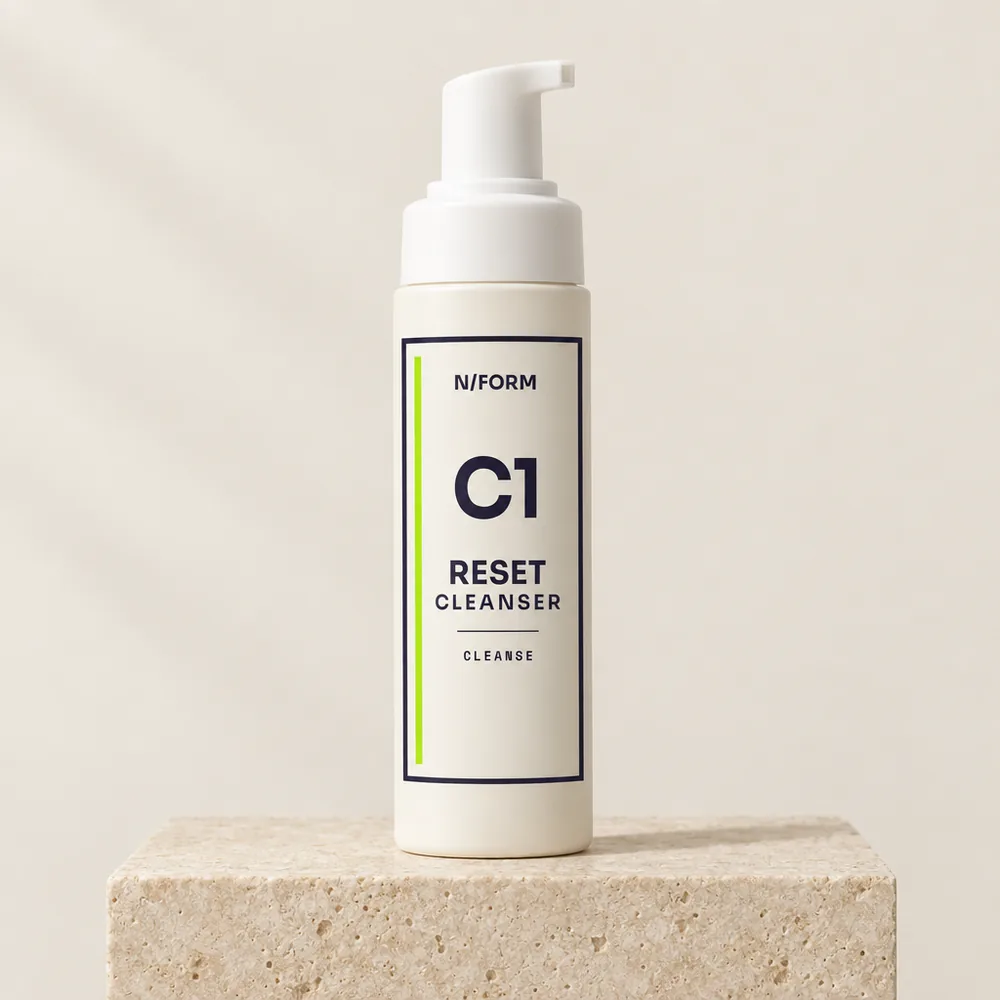
Reset Cleanser is a sulfate-free foaming cleanser built on cocamidopropyl betaine and sucrose cocoate, the coconut- and sugar-derived surfactants, with glycerin so the skin is not left tight. It contains fragrance, so it is not the one for anyone avoiding it. Lukewarm water, thirty seconds, pat dry.
Step two: salicylic acid on the pore, then niacinamide for the oil
On the cleansed face, a salicylic acid toner. Salicylic acid is a beta hydroxy acid (BHA), the oil-soluble one, and its job is inside the pore where the plug is1. The trial that matters for oily, blemish-prone skin was a split-face study in 31 people with mild to moderate acne: 2% salicylic acid on one side cut total lesions by 44% in 28 days, statistically the same as 5% benzoyl peroxide plus adapalene on the other side3. The salicylic acid page has the detail on how it works and how often to use it.
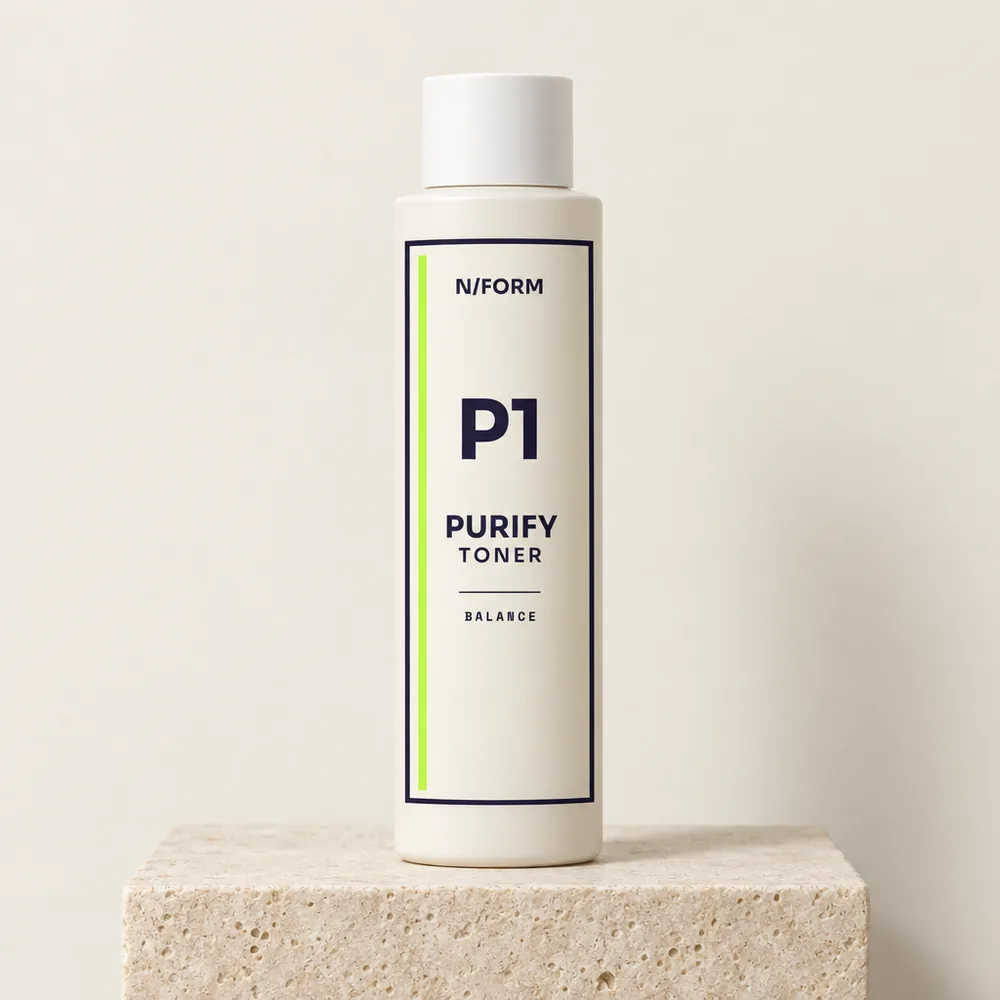
Purify Toner carries salicylic acid with betaine and cucumber, and it is fragrance-free: the lavender in it is a flower water, not an essential oil. It does contain alcohol as well as the acid, so it is not the toner for very sensitive skin. The guide on what toner does explains why a clarifying toner goes on before anything else.
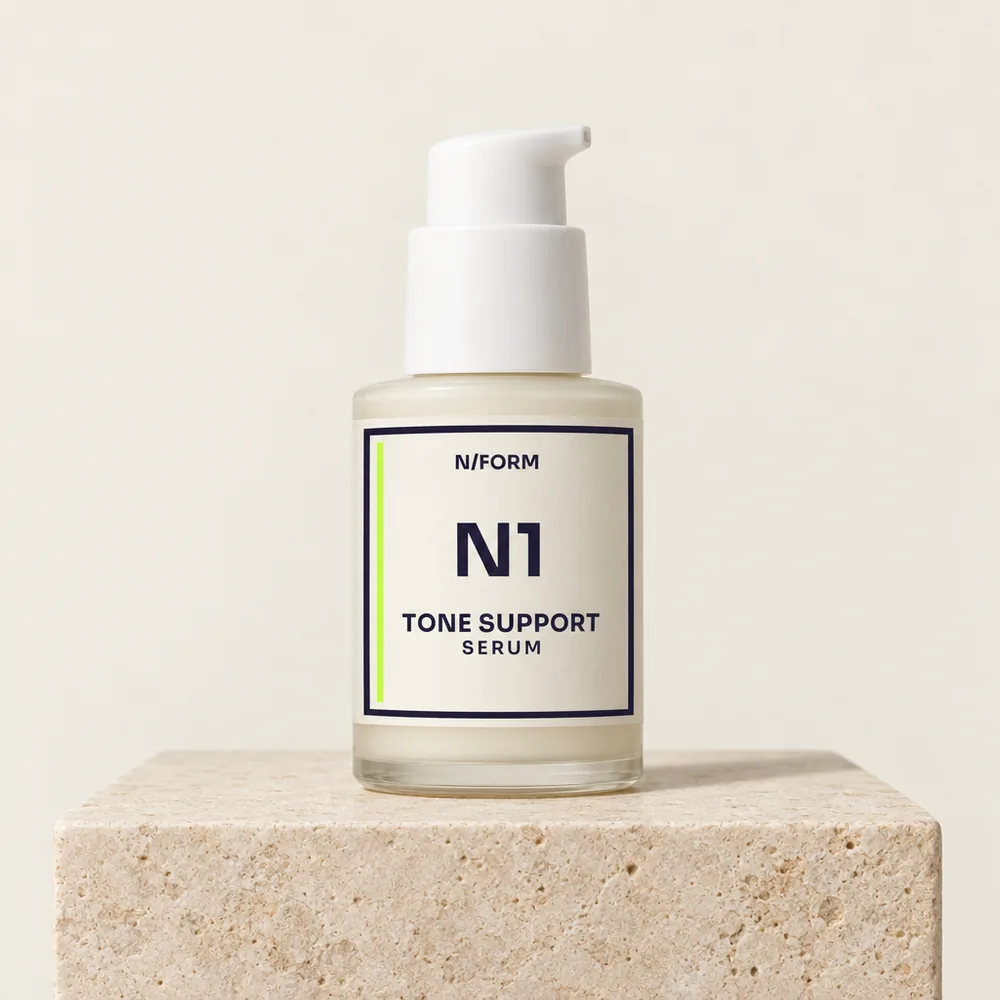
Niacinamide is the second active for oil. In two randomized trials with 100 people in total, 2% niacinamide lowered sebum output within two to six weeks against the same product without it4. That is a measured drop in the oil itself, not a matte finish that hides it. Tone Support Serum is the niacinamide serum in the range, fragrance-free, with no declared niacinamide percentage; it contains jojoba oil, so it is not oil-free. The niacinamide page covers the evidence.
Step three: moisturize with an oil-free gel, every time
This is the step oily skin skips, and the one it needs. A moisturizer does three things: humectants draw water into the outer layer, occlusives slow water leaving, and emollients smooth the surface, and the products that work combine them5. On dry skin the occlusives and emollients are oils and butters. On oily skin they do not need to be. A gel built on humectants such as hyaluronic acid and betaine gives the outer cells water without adding any oil to skin that already has too much, and the barrier gets what a moisturizer is for without the shine.
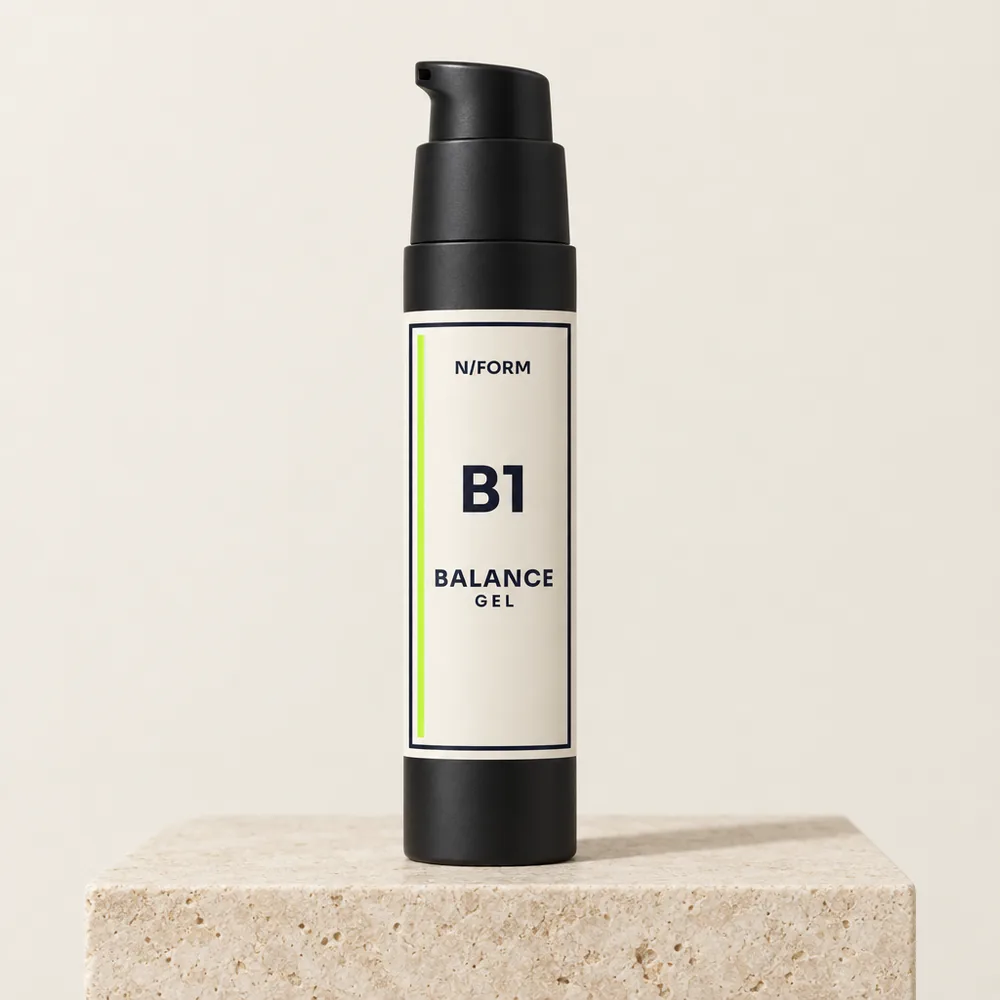
Balance Gel is that gel: oil-free, with hyaluronic acid, zinc PCA, betaine and watercress extract, for normal, oily and combination skin. It contains fragrance and declared allergens, and it is not the moisturizer for sensitive or allergy-prone skin. Zinc PCA is the zinc salt of pyrrolidone carboxylic acid, a compound the skin itself uses to hold water. Its evidence is cell culture: in cultured human skin cells, zinc PCA reduced the UVA-triggered enzyme that breaks down collagen and raised type I collagen production, in work done at the manufacturer6. It is positioned in the industry as sebum-regulating; that is a positioning, not a human trial. The zinc PCA page says exactly what the study showed.
Apply the gel while the toner is still damp; a humectant gel on a dry face has less to work with.
The habits that keep oily skin congested
Exfoliating harder. The instinct with a blocked pore is to scrub it. Scrubs and daily acids work on the surface and leave the plug alone, and enough of them on top of a daily BHA irritates the skin, which reads as redness and more spots. A glycolic acid toner two or three evenings a week is plenty on top of a daily salicylic toner; the guide on how often to exfoliate sets the limits.
Skipping the moisturizer. Skin that is short of water is not less oily. It is oily and tight. The gel is not optional.
Reading the first flush of spots as failure. When a salicylic acid toner starts clearing pores, congestion that was already forming comes to the surface faster, in the places you already break out. It settles within a turnover cycle. Spots in new places, or spots that keep coming, are a different story, and purging versus breaking out explains how to tell them apart.
Switching every fortnight. The American Academy of Dermatology advises using a product for six to eight weeks before judging it, and warns that changing products every week or two irritates skin8. Oily skin gets switched more than any other because the shine is visible every day. Pick the routine and hold it.
What to expect, week by week
A skin cell takes roughly 40 to 56 days to travel from the base of the epidermis to being shed, which is why a change in skin needs weeks, not days, to show7. The routine works on the cells that are forming now; you see the result when they reach the surface.
Weeks one and two. The cleanser change shows first: no tightness after washing, less flaking. Shine at midday is similar. Some people see more small spots in their usual places as the toner clears pores that were already filling.
Weeks three to six. This is the window in which the niacinamide trials measured the drop in sebum, two to six weeks in4. Midday shine is later and lighter. Existing plugs are loosening; the skin feels smoother under the fingers before it looks different.
Weeks six to eight. One turnover cycle. Fewer new plugs, because the pores have been kept clear while the current layer formed. This is the point at which the AAD guidance says to judge a product, with up to three months for the full result8.
Week twelve. Judge it. If the congestion is down and the shine is manageable, keep going. If nothing has moved, the problem is not the timing.
Questions people ask
Does oily skin need moisturizer?
Yes. A moisturizer gives the outer layer water through humectants and slows it leaving; oily skin has plenty of oil and often not enough water5. The right one is an oil-free gel built on humectants such as hyaluronic acid, which hydrates without adding to the shine. Skipping it leaves the skin tight as well as oily.
Should I wash my face more often if it is oily?
No. Twice a day with a mild cleanser is the limit. Each wash with a strong surfactant strips lipids from the outer layer and raises water loss, and a third wash removes more of the barrier without removing more congestion2. If the shine at midday bothers you, blot it rather than washing.
Why is my skin oily but flaky at the same time?
Because oil and water are held by different parts of the skin. Flaking is the outer layer short of water, and a harsh cleanser that strips its lipids causes it on oily skin as readily as on dry2. The fix is a milder cleanser and a humectant gel moisturizer, not a heavier cream and not a scrub.
Is a combination skin routine different?
Same routine, adjusted by area. Combination skin is oily in the T-zone and normal or dry on the cheeks, so the salicylic toner goes on the forehead, nose and chin and the oil-free gel goes everywhere. If the cheeks stay tight with the gel alone, give them a richer moisturizer there and only there.
How long before an oily skin routine works?
Six to eight weeks for a fair judgment, up to three months for the full result, which is the American Academy of Dermatology's guidance for any new product8. Skin cells take 40 to 56 days to reach the surface, so the pores that formed under the new routine take that long to show7. The cleanser change shows in days; the congestion takes the cycle.
Sources
Every study cited above, with what it found and where it can be read. A study of an ingredient is not a study of one of our formulas, and we say which kind each one is.
- 1
Arif, Clinical, Cosmetic and Investigational Dermatology, 2015
Review
Review: salicylic acid is oil-soluble, so it clears inside the pore rather than only at the surface, and it is anti-inflammatory, which is why it suits oily and acne-prone skin.
- 2
Ananthapadmanabhan, Dermatologic Therapy, 2004
Review
Review of how surfactants damage the barrier: harsh cleansers strip lipids and bind to skin proteins, raising water loss and the tight, dry after-feel; milder surfactant systems clean with far less of both.
- 3
Zheng, Cutaneous and Ocular Toxicology, 2019
Clinical trial
Split-face trial in 31 people with mild to moderate acne: 2% salicylic acid on one side cut total lesions 44% in 28 days, statistically the same as 5% benzoyl peroxide plus adapalene on the other.
- 4
Draelos, Journal of Cosmetic and Laser Therapy, 2006
Clinical trial
Two randomized trials, 100 people in total: 2% niacinamide lowered sebum output within two to six weeks against the same product without it.
- 5
Draelos, Journal of Cosmetic Dermatology, 2018
Review
Review of how moisturizers work: occlusives slow water loss, humectants draw water into the outer layer, and emollients smooth the surface; the effective products combine them.
- 6
Takino, International Journal of Cosmetic Science, 2012
Laboratory study
In cultured human skin cells, zinc PCA reduced the UVA-triggered enzyme that breaks down collagen and raised type I collagen production. Cell culture, and the work was done at the manufacturer.
- 7
Iizuka, Journal of Dermatological Science, 1994
Review
A skin cell takes roughly 40 to 56 days to travel from the base of the epidermis to being shed, which is why a change in skin needs weeks, not days, to show.
- 8
American Academy of Dermatology
Guidance
The American Academy of Dermatology advises using a product for 6 to 8 weeks before judging it and allowing up to three months for full results; changing products every week or two irritates skin.
The formulas this guide points at
Not sure which of these is your skin?
Seven questions about what your skin does, not what you own, and you get the three formulas that treat it. Sixty days to find out, full refund, keep the bottles.
Read next
Oily and congested skinGuide
Skin Purging vs Breakout: How to Tell Which One You Have
Purging is congestion that was already forming, brought up faster by an acid or a retinoid. Where the spots are and how long they last tell you which it is.
7 min read · 5 sources
Every skinGuide
What Does Toner Do? The Three Kinds, and Which One You Need
A toner is the water step between cleansing and serum. It hydrates, exfoliates or clears pores depending on what is in it. The alcohol kind is the one to skip.
7 min read · 6 sources
Dull and uneven skinGuide
How Often Should You Exfoliate Your Face?
Two or three evenings a week with a 5% glycolic acid toner is the answer for most skin. Here it is by skin type, with the signs you have overdone it.
7 min read · 6 sources
Dry and dehydrated skinGuide
Dehydrated Skin vs Dry Skin, and How to Tell Which You Have
Dry skin is short of oil. Dehydrated skin is short of water, and can be oily at the same time. The signs that separate them, a sink test, and what each needs.
7 min read · 6 sources