Oily and congested skinIngredient
Zinc PCA: What It Is, What the Study Showed, and What Is Positioning
Zinc PCA is the zinc salt of a molecule skin uses to hold water. Its published evidence is one cell-culture study on collagen; the sebum claim is positioning.
Published September 21, 2026 · 5 min read · 3 sources · By N/FORM
- The evidence
- 1 clinical trial, 1 review, 1 laboratory study
- In these formulas
- Balance Gel
The short version
- Zinc PCA is the zinc salt of pyrrolidone carboxylic acid (PCA), a molecule the skin makes itself as part of its natural moisturizing factor. In a formula it is a humectant that carries zinc.
- The published evidence is a cell-culture study, done at the manufacturer, in which zinc PCA reduced the UVA-triggered enzyme that breaks down collagen and raised type I collagen production in cultured human skin cells.
- Zinc PCA is positioned in oily-skin products as sebum-regulating. No human trial of that claim is in the evidence behind this page, so it is described here as a positioning, not a result.
- It suits normal, oily and combination skin in an oil-free gel moisturizer. For oily skin that wants a measured drop in sebum, niacinamide has the human trial and zinc PCA does not.
Zinc PCA is the zinc salt of pyrrolidone carboxylic acid, or PCA, a small molecule the skin makes itself to hold water in its outer layer. In a moisturizer it does two things by design: the PCA half is a humectant, and the zinc half is the reason it appears in products for oily skin, where it is positioned as sebum-regulating. The zinc PCA skin benefits that can be stated with a citation are narrower than the positioning. One published study, in cultured skin cells at the manufacturer, found that it reduced a UVA-triggered collagen-degrading enzyme and raised collagen production. Nothing in the evidence behind this page measures its effect on oil in people. For skin, then: a humectant salt with a laboratory finding on collagen, in an oil-free gel that suits oily skin for other reasons.
What it does
The outer layer of the skin (the stratum corneum) holds water with a mix of small molecules inside its dead cells, called the natural moisturizing factor. Dry skin is a failure of that layer to hold water, driven by lost natural moisturizing factor and disordered lipids, and humectants plus lipids together restore it1. PCA is one of the main components of the natural moisturizing factor. In skincare it usually appears as sodium PCA, the sodium salt, which is a humectant in the same family as glycerin: it draws water into the outer cells and helps them keep it.
Zinc PCA swaps the sodium for zinc. The humectant behavior is the same molecule doing the same job. What the zinc adds is the question, and the honest answer is that the industry positions zinc as oil-regulating and the published evidence on zinc PCA is about something else. A guide that told you zinc PCA "controls sebum" would be repeating the positioning as if it were a result.
What the trials found
There is no human trial. The evidence is a cell-culture study, and it was done at the manufacturer, which the paper declares. In cultured human skin cells, zinc PCA reduced the UVA-triggered enzyme that breaks down collagen and raised type I collagen production2. Cell culture means cells in a dish, exposed to UVA and to the ingredient, with no skin barrier for the ingredient to cross and no person to observe. It is the kind of study that tells you a molecule can do something, not that it does it on a face at the strength a moisturizer carries.
That is the whole of the trial evidence. Read the claims on any zinc PCA product against it: a collagen finding in cells, and no measurement of sebum, pore size, shine or blemishes in people.
How much, and in what
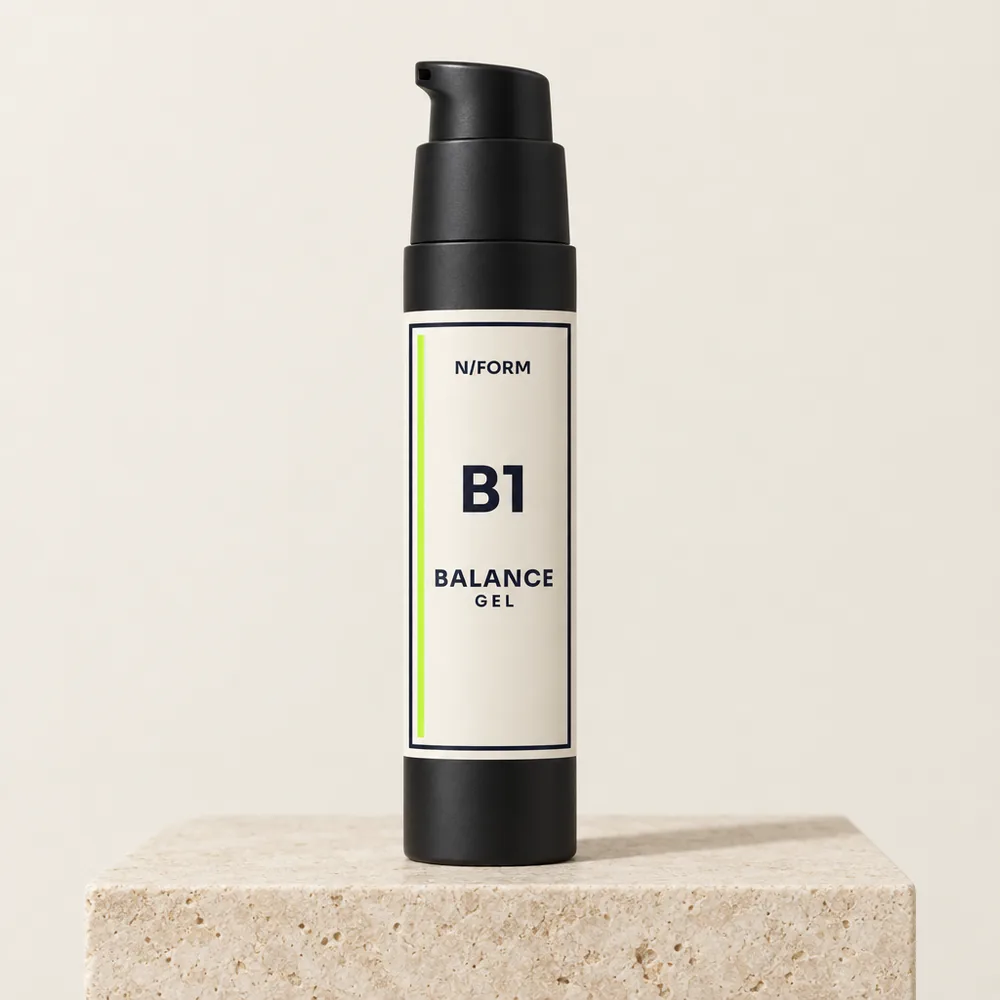
No strength has been studied on people, so there is no studied strength to name. Balance Gel carries zinc PCA with hyaluronic acid, betaine and watercress flower and leaf extract, and the catalogue does not declare a percentage for it, so none is claimed here. It is an oil-free gel moisturizer for normal, oily and combination skin: the humectants give the outer layer water, and the absence of oil means it does so without adding to the shine.
Zinc PCA is where you will find it in this range. Purify Toner does not carry it.
Who it suits, and who should go carefully
Normal, oily and combination skin, which is who Balance Gel is for. The case for the gel on that skin rests on the humectants and the lack of oil, and the oily, congested skin routine explains why oily skin needs a moisturizer at all.
Balance Gel contains fragrance and the declared allergens limonene, linalool, geraniol and citral. It is not for sensitive or allergy-prone skin, and not for anyone avoiding fragrance; that skin has a fragrance-free moisturizer in the range instead. Zinc PCA itself is not the reason for that caution, the fragrance is, but the ingredient does not come without it here.
What it works with
Hyaluronic acid and betaine. The other humectants in the same gel. Humectants draw water into the outer layer and the natural moisturizing factor holds it, which is the mechanism dry-skin research describes1. On oily skin that is the whole of what a moisturizer needs to do.
Salicylic acid. The pore-clearing acid goes on first, as a toner, and the gel goes over it. The salicylic acid page covers what it does and how often.
Niacinamide. This is the comparison that matters for oily skin. In two randomized trials with 100 people in total, 2% niacinamide lowered sebum output within two to six weeks against the same product without it3. That is a human measurement of the oil itself. Zinc PCA has no equivalent. If the goal is less sebum, niacinamide is the ingredient with the evidence, and the niacinamide page sets it out; zinc PCA in the moisturizer over it is a humectant with a laboratory finding, not a second oil-control active.
Questions people ask
What is zinc PCA?
The zinc salt of pyrrolidone carboxylic acid (PCA), a molecule the skin makes as part of its natural moisturizing factor, the mix of small molecules that holds water in the outer layer1. In a formula it is a humectant that carries zinc. It is related to sodium PCA, the common form in hydrating products, and does the same water-holding job.
Does zinc PCA reduce oil?
No human trial of that claim is in the evidence behind this page. Zinc PCA is positioned in oily-skin products as sebum-regulating, but the one published study is cell culture, done at the manufacturer, and it measured collagen, not sebum2. Treat "sebum-regulating" as the industry's description of the ingredient, not as a result.
Zinc PCA vs niacinamide: which is better for oily skin?
Niacinamide, on the evidence. Two randomized trials with 100 people found 2% niacinamide lowered sebum output within two to six weeks against the same product without it3. Zinc PCA has a cell-culture study on collagen and no human sebum measurement2. They are not rivals in a routine: niacinamide goes on as a serum and a zinc PCA gel goes over it as the moisturizer.
What are the zinc PCA skin benefits, in plain terms?
A humectant that draws water into the outer layer, in a form that carries zinc1. In cultured skin cells it reduced the UVA-triggered enzyme that breaks down collagen and raised type I collagen, in work done at the manufacturer2. That is what can be said. Effects on oil, pores or blemishes in people have not been measured.
Is zinc PCA safe for sensitive skin?
The ingredient itself is a humectant salt with no particular reputation for irritation. The product that carries it here, Balance Gel, contains fragrance and declared allergens and is not for sensitive or allergy-prone skin. Sensitive skin should look for its humectants in a fragrance-free formula.
Sources
Every study cited above, with what it found and where it can be read. A study of an ingredient is not a study of one of our formulas, and we say which kind each one is.
- 1
Rawlings and Harding, Dermatologic Therapy, 2004
Review
Review of stratum corneum moisturization: dry skin is a failure of the outer layer to hold water, driven by lost natural moisturizing factors and disordered lipids, and humectants plus lipids together restore it.
- 2
Takino, International Journal of Cosmetic Science, 2012
Laboratory study
In cultured human skin cells, zinc PCA reduced the UVA-triggered enzyme that breaks down collagen and raised type I collagen production. Cell culture, and the work was done at the manufacturer.
- 3
Draelos, Journal of Cosmetic and Laser Therapy, 2006
Clinical trial
Two randomized trials, 100 people in total: 2% niacinamide lowered sebum output within two to six weeks against the same product without it.
The formula this guide points at
Not sure which of these is your skin?
Seven questions about what your skin does, not what you own, and you get the three formulas that treat it. Sixty days to find out, full refund, keep the bottles.
Read next
Oily and congested skinRoutine guide
The Routine for Oily, Congested Skin
Oily, congested skin needs a cleanser that does not strip it, salicylic acid inside the pore, and an oil-free gel moisturizer. The order and the timing.
9 min read · 8 sources
Every skinIngredient
Niacinamide: What It Does for Skin, and What the Trials Found
Niacinamide is vitamin B3. It strengthens the barrier, calms redness, evens tone and lowers sebum, and it has human trials at 2% and 5% behind each of those.
6 min read · 4 sources
Oily and congested skinIngredient
Salicylic Acid: What It Does for Skin, and How Often to Use It
Salicylic acid is the oil-soluble exfoliating acid, so it clears inside the pore rather than only at the surface. What the trials found and how often to use it.
5 min read · 5 sources