Oily and congested skinGuide
Skin Purging vs Breakout: How to Tell Which One You Have
Purging is congestion that was already forming, brought up faster by an acid or a retinoid. Where the spots are and how long they last tell you which it is.
Published September 21, 2026 · 7 min read · 5 sources · By N/FORM
The short version
- Purging is not a diagnosis with a trial behind it. It describes what happens when an ingredient that speeds skin turnover brings congestion that was already forming to the surface sooner.
- Only ingredients that change turnover can cause it: salicylic acid, glycolic and other hydroxy acids, and retinoids. A moisturizer, a cleanser, a sunscreen or a hydrating serum cannot purge; if they cause spots, it is a reaction.
- Purging appears where you already break out and clears within one turnover cycle, which is roughly four to eight weeks. Spots in new places, or spots that keep coming past eight weeks, are a breakout from a product that does not suit you.
- Stinging, burning, peeling and spreading redness are irritation, not purging. Cut the frequency or stop; do not add another acid to push through it.
The difference between skin purging and a breakout is where the spots are and how long they last. Purging is a run of small spots in the first weeks of a new acid or retinoid, in the places you already break out, that clears within one turnover cycle of the skin, roughly four to eight weeks. A breakout from a product that does not suit you turns up in new places, keeps coming, and often arrives with stinging or flaking. The word "purging" has no trial behind it; it is a description of a mechanism, and the mechanism is the useful part, because it tells you which products can do it and which cannot.
What purging describes, and what it does not
A skin cell takes roughly 40 to 56 days to travel from the base of the epidermis to the surface and be shed, which is why any change in skin needs weeks, not days, to show1. Congestion forms on that timetable too. A pore that is going to block in three weeks is already filling now, below the surface, where you cannot see it.
Some ingredients speed that timetable up. Alpha hydroxy acids (AHAs) such as glycolic acid loosen the bonds between dead surface cells and thin the compacted outer layer of the skin (the stratum corneum)2. Salicylic acid, the beta hydroxy acid (BHA), is oil-soluble, so it works inside the pore rather than only at the surface3. Retinoids thicken the living epidermis and raise collagen, and the price is irritation, peeling and redness that is dose-related and most common in the first weeks4. Each of them changes how fast cells reach the surface and leave it. When that happens, the congestion that was already forming arrives sooner, and for a few weeks it looks as if the product is causing spots. It is not causing them; it is moving up their date.
That is all "purging" means. No study has measured it as a distinct event, no one has counted the spots, and the term is not in the dermatology literature as a diagnosis. Treat it as a plausible account of why the first weeks of an acid can be rough, not as a guarantee that any spot after a new product is a good sign.
How to tell skin purging vs breakout apart
Four questions settle it.
Does the product change turnover? Only an exfoliating acid, a retinoid or a retinoid-like ingredient can bring congestion forward. A moisturizer, a cleanser, a sunscreen, a hyaluronic acid serum or a niacinamide serum does none of that. If one of those gives you spots, it is a reaction to something in the formula, and the answer is to stop it, not to wait it out.
Where are the spots? Purging shows up where you already get congestion, because that is where the congestion was. On most people that is the forehead, the nose and the chin. Spots on the cheeks, the jaw or the temples where you never break out are new, and new means a reaction.
When did it start, and how long has it gone on? Purging begins within the first week or two, when the acid starts moving the surface, and it clears within one turnover cycle, four to eight weeks1. A breakout that begins after a month, or that is still going at week eight, has nothing to do with turnover.
What else is the skin doing? Purging is spots and nothing else. If the skin also stings when you apply anything, burns, flakes in sheets or is red beyond the spots themselves, that is irritation, which retinoids and acids produce when the dose or the frequency is too high4. Irritation is not a phase to push through.
If the answers are "yes, an acid or a retinoid", "in my usual places", "started in the first fortnight and is easing by week six" and "just the spots", it is purging. Any other pattern is a breakout, and the product is the suspect.
Which products can cause it
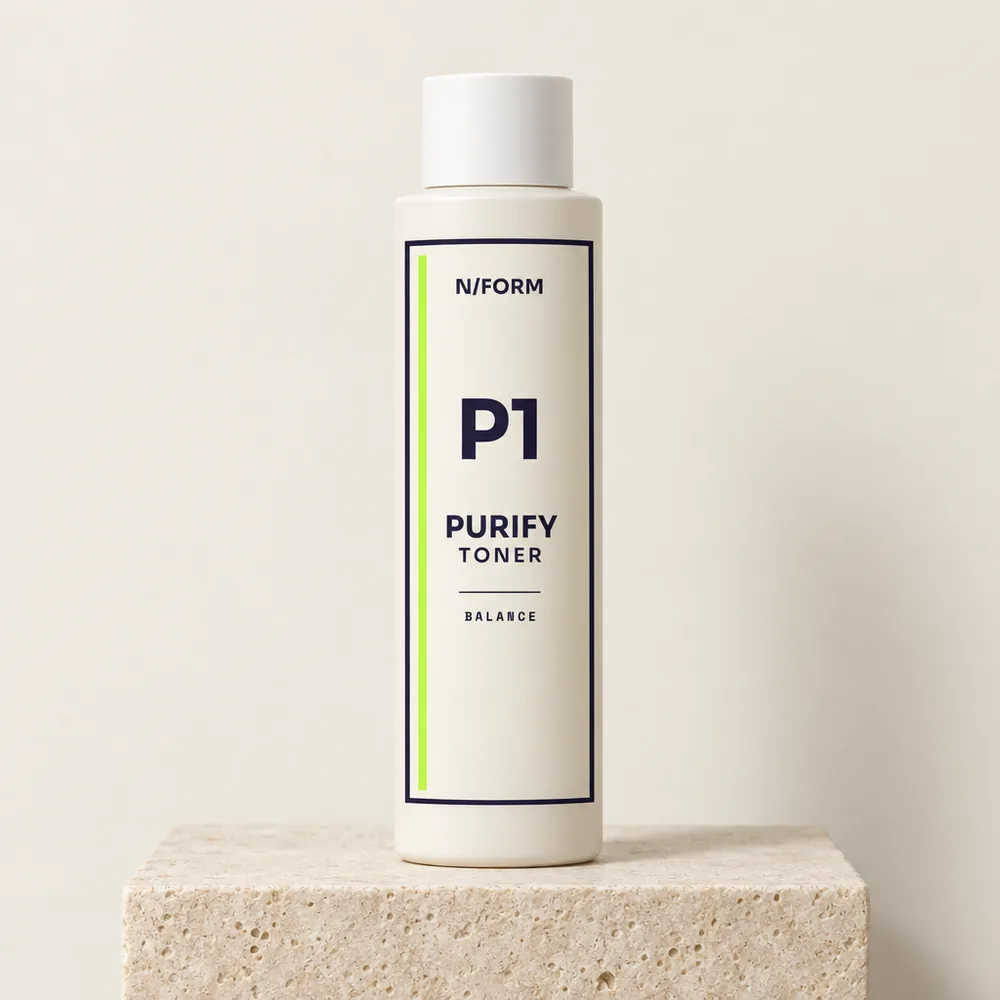
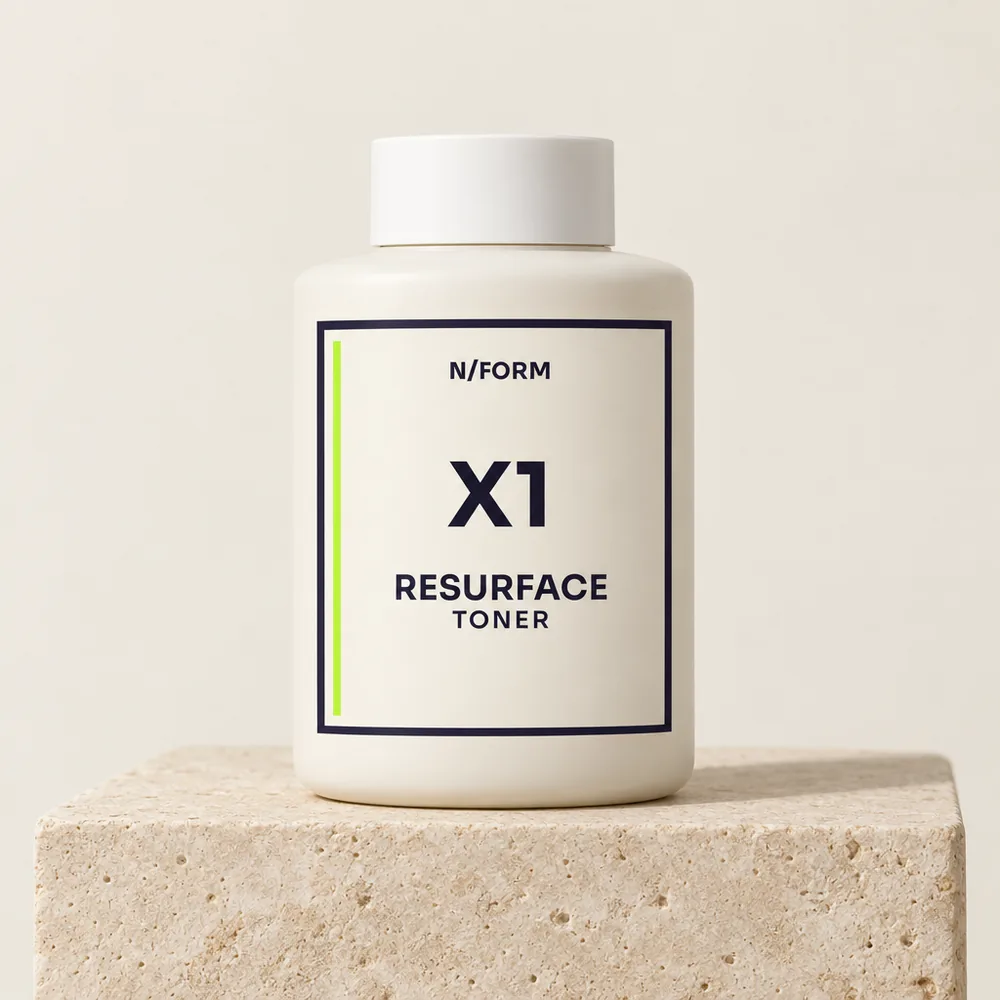
The two exfoliating toners in the range both can, in the sense that both change turnover. Purify Toner carries salicylic acid, whose job is inside the pore, and a pore that was half-blocked can empty faster once it starts3. Resurface Toner carries 5% glycolic acid, which loosens the compacted surface layer, and it is used two or three evenings a week rather than daily2. A retinoid, a retinol or a retinoid-like extract can do the same through a different mechanism4.
What cannot purge is everything else. The oily, congested skin routine explains why a first run of spots on a salicylic toner is expected and what the rest of the first eight weeks looks like.
How long purging lasts, and what to do while it does
One turnover cycle. The outer layer renews itself in roughly 40 to 56 days, so the congestion that was in the pipeline when you started has all surfaced and cleared by then1. Most people see the peak in weeks two to four and a clear improvement by week six. The American Academy of Dermatology advises using a product for six to eight weeks before judging it, and warns that changing products every week or two irritates the skin, which is the mistake purging invites5.
While it runs: keep the routine the same, keep the acid at the frequency the product states, moisturize, and do not add a scrub or a second acid to speed it along. More exfoliation on a purging face produces irritation, and irritation produces more spots. The guide on how often to exfoliate sets the limit for each kind of acid.
When to stop
Stop, or cut the frequency, when any of these is true:
- Spots are appearing in places you never break out, two weeks in.
- The skin stings on application, burns afterward, or flakes and peels beyond a little dryness.
- Redness has spread past the spots to the whole area.
- It is week eight and the spots have not eased.
The first three are irritation or reaction, and no amount of waiting fixes a product that does not suit your skin. The fourth means the mechanism has run its course and the spots were never purging. With a retinoid, the irritation is dose-related and worst in the first weeks, so dropping to every second or third evening is often enough4. With an acid toner, use it less often, or stop and let the skin settle for two weeks before deciding. The guide on how long skincare takes to work covers what a fair trial of any product looks like.
Questions people ask
How long does skin purging last?
Up to one turnover cycle, which is roughly four to eight weeks, because that is how long the outer layer takes to renew itself and clear the congestion that was already forming when you started1. The peak is usually in weeks two to four. Spots still coming at week eight are not purging.
Is my skin purging or breaking out?
Purging is spots in your usual places, starting in the first two weeks of an acid or a retinoid, and easing by week six. A breakout is spots in new places, spots that start late or continue past eight weeks, or spots that come with stinging, burning or peeling, which is irritation rather than turnover4. If the product is a moisturizer, cleanser, sunscreen or hydrating serum, it is a breakout, because those do not change turnover.
Does salicylic acid cause purging?
It can. Salicylic acid is oil-soluble and works inside the pore, so a pore that was already filling can clear faster in the first weeks, which surfaces congestion sooner3. It resolves within one turnover cycle. Spots in new places on a salicylic toner are a reaction to the formula, not purging.
Can retinol cause purging?
Yes, by the same logic: retinoids change how fast the epidermis renews, and they also cause dose-related irritation, peeling and redness that is most common in the first weeks4. Spots alone in your usual places are purging; peeling and redness are irritation, and the answer to irritation is a lower frequency, not persistence.
Can moisturizer or sunscreen cause purging?
No. Purging needs an ingredient that speeds cell turnover, and moisturizers and sunscreens do not. Spots after a new moisturizer or sunscreen are a reaction to that product, and the right move is to stop it rather than wait four weeks for it to pass.
Should I keep using a product if my skin is purging?
If it is purging by the four tests above (a turnover-changing ingredient, your usual places, started in the first fortnight, no stinging or peeling), yes, at the frequency the product states, for the six to eight weeks the American Academy of Dermatology advises before judging any product5. If it fails any one of the tests, cut the frequency or stop.
Sources
Every study cited above, with what it found and where it can be read. A study of an ingredient is not a study of one of our formulas, and we say which kind each one is.
- 1
Iizuka, Journal of Dermatological Science, 1994
Review
A skin cell takes roughly 40 to 56 days to travel from the base of the epidermis to being shed, which is why a change in skin needs weeks, not days, to show.
- 2
Kornhauser, Clinical, Cosmetic and Investigational Dermatology, 2010
Review
Review of hydroxy acids: AHAs such as glycolic acid loosen the bonds between dead surface cells, thin the compacted outer layer and thicken living epidermis; they also raise sun sensitivity while in use.
- 3
Arif, Clinical, Cosmetic and Investigational Dermatology, 2015
Review
Review: salicylic acid is oil-soluble, so it clears inside the pore rather than only at the surface, and it is anti-inflammatory, which is why it suits oily and acne-prone skin.
- 4
Mukherjee, Clinical Interventions in Aging, 2006
Review
Review of retinoids for skin ageing: they thicken the epidermis, raise collagen and reduce fine wrinkles, and the price is irritation, peeling and redness that is dose-related and most common in the first weeks.
- 5
American Academy of Dermatology
Guidance
The American Academy of Dermatology advises using a product for 6 to 8 weeks before judging it and allowing up to three months for full results; changing products every week or two irritates skin.
The formulas this guide points at
Not sure which of these is your skin?
Seven questions about what your skin does, not what you own, and you get the three formulas that treat it. Sixty days to find out, full refund, keep the bottles.
Read next
Oily and congested skinRoutine guide
The Routine for Oily, Congested Skin
Oily, congested skin needs a cleanser that does not strip it, salicylic acid inside the pore, and an oil-free gel moisturizer. The order and the timing.
9 min read · 8 sources
Dull and uneven skinGuide
How Often Should You Exfoliate Your Face?
Two or three evenings a week with a 5% glycolic acid toner is the answer for most skin. Here it is by skin type, with the signs you have overdone it.
7 min read · 6 sources
Every skinGuide
How Long Does It Take for Skincare to Work?
Hydration shows in days, texture and tone in 8 to 12 weeks, pigment in 12 to 24, lines in 12 or more. Why the skin cycle sets that clock and when to give up.
7 min read · 10 sources