Dull and uneven skinGuide
How Often Should You Exfoliate Your Face?
Two or three evenings a week with a 5% glycolic acid toner is the answer for most skin. Here it is by skin type, with the signs you have overdone it.
Published September 21, 2026 · 7 min read · 6 sources · By N/FORM
The short version
- Most skin should exfoliate two or three evenings a week with a chemical exfoliant such as 5% glycolic acid, not every day. Oily skin can go to three; sensitive skin starts at one.
- Exfoliating more often does not shed cells faster than the skin makes them. A skin cell takes 40 to 56 days to travel from the base of the epidermis to being shed, and the acid only loosens the cells that are already at the surface.
- Over-exfoliated skin is shiny but tight, stings when plain moisturizer goes on, flushes easily and flakes. That is a thinned barrier, and the fix is to stop the acid for two weeks and moisturize.
- The daily use in the 5% glycolic acid trial is the ceiling, not the target. A twice-weekly schedule gets the same exfoliation with far less irritation and sun sensitivity.
Two or three evenings a week, with a chemical exfoliant, is the answer to how often to exfoliate face skin that is normal, combination or oily. Sensitive skin starts at once a week and works up only if there is no stinging or redness the next morning. Nobody needs to exfoliate every day: the acid only loosens the dead cells already at the surface, and the skin makes new ones at its own pace. More often than three nights a week adds irritation and sun sensitivity without adding results.
Why exfoliating more does not work faster
Skin replaces itself from the bottom up. A cell made at the base of the epidermis takes roughly 40 to 56 days to rise, flatten, spend its last stretch in the outer layer (the stratum corneum) and be shed1. Exfoliation does not speed up that trip. What it does is clear the backlog: dead cells that should have shed and have not, sitting in a compacted layer that scatters light and feels rough.
Alpha hydroxy acids (AHAs), the family that includes glycolic acid, do this by loosening the bonds that hold dead surface cells to each other, which thins the compacted layer, and with regular use they thicken the living epidermis underneath2. Once the backlog is gone, there is nothing left for a daily acid to do but reach the living layer, and that is where the irritation comes from. The same review notes that AHAs raise sun sensitivity while in use, so every extra night of acid is also an extra night of a more sun-vulnerable face2.
There is a second reason to hold at two or three nights. The irritation potential of an AHA rises with its concentration and as its pH falls3. A 5% toner at a cosmetic pH is mild by design; using it every night is how a mild product becomes a harsh one.
How often to exfoliate face skin, by type
| Skin type | How often | What to use |
|---|---|---|
| Normal or combination | Two or three evenings a week | 5% glycolic acid |
| Oily or congested | Two or three evenings a week of glycolic acid; a salicylic acid toner can be used on the other days | 5% glycolic acid, salicylic acid |
| Dry | Twice a week, moisturizer straight after | 5% glycolic acid |
| Sensitive or reactive | Once a week to start; twice at most, and only if the next morning is calm | 5% glycolic acid, never on the same night as anything else active |
| Barrier already damaged (tight, stinging, flaking) | Not yet. Two weeks of no acid and no scrub, then once a week | Nothing exfoliating |
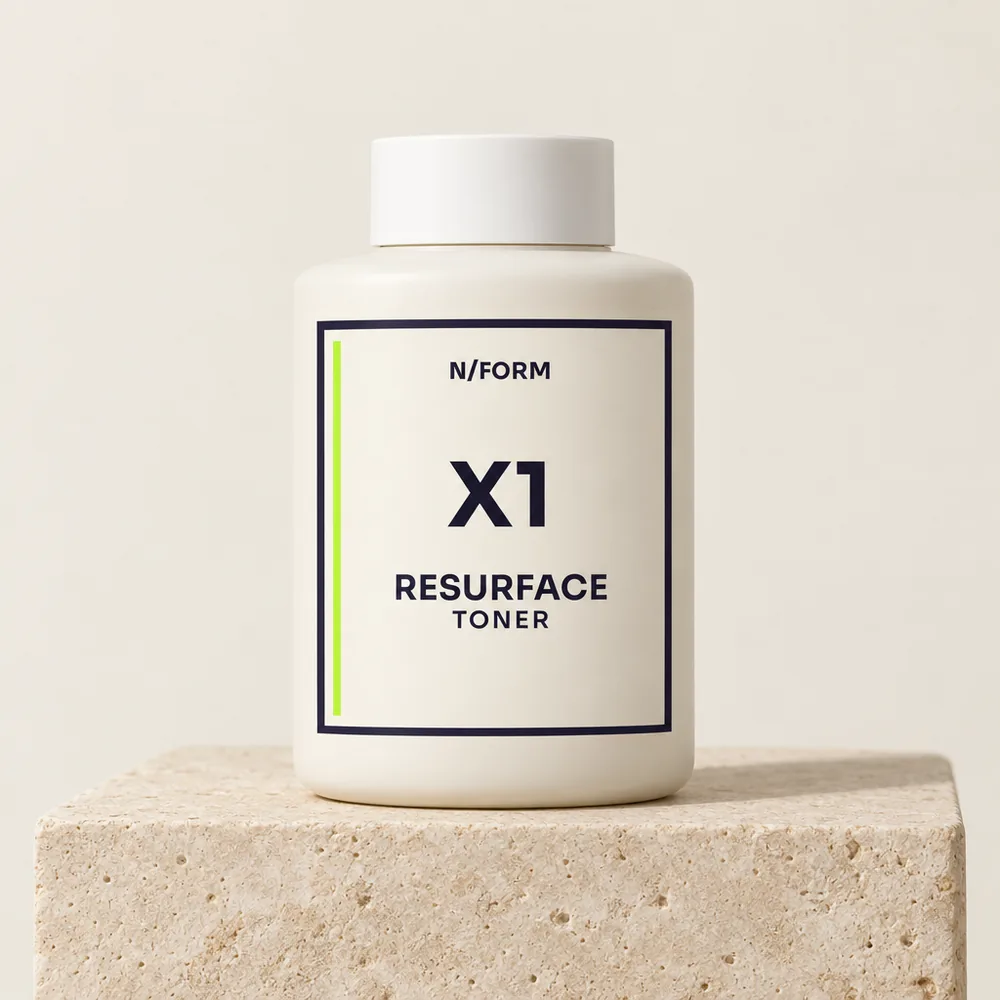
The evidence behind the 5% figure is a double-blind, placebo-controlled trial in which 75 volunteers used 5% glycolic acid daily for three months and their skin texture and discoloration improved significantly against placebo4. Daily use is what the trial tested, which makes it the ceiling of what is known to be tolerated over three months, not a recommendation. Resurface Toner carries that 5% glycolic acid and is made for a few evenings a week, not daily, because the two-to-three-night schedule clears the same backlog with far less irritation, and the reader who wants the trial detail can go to the glycolic acid page.
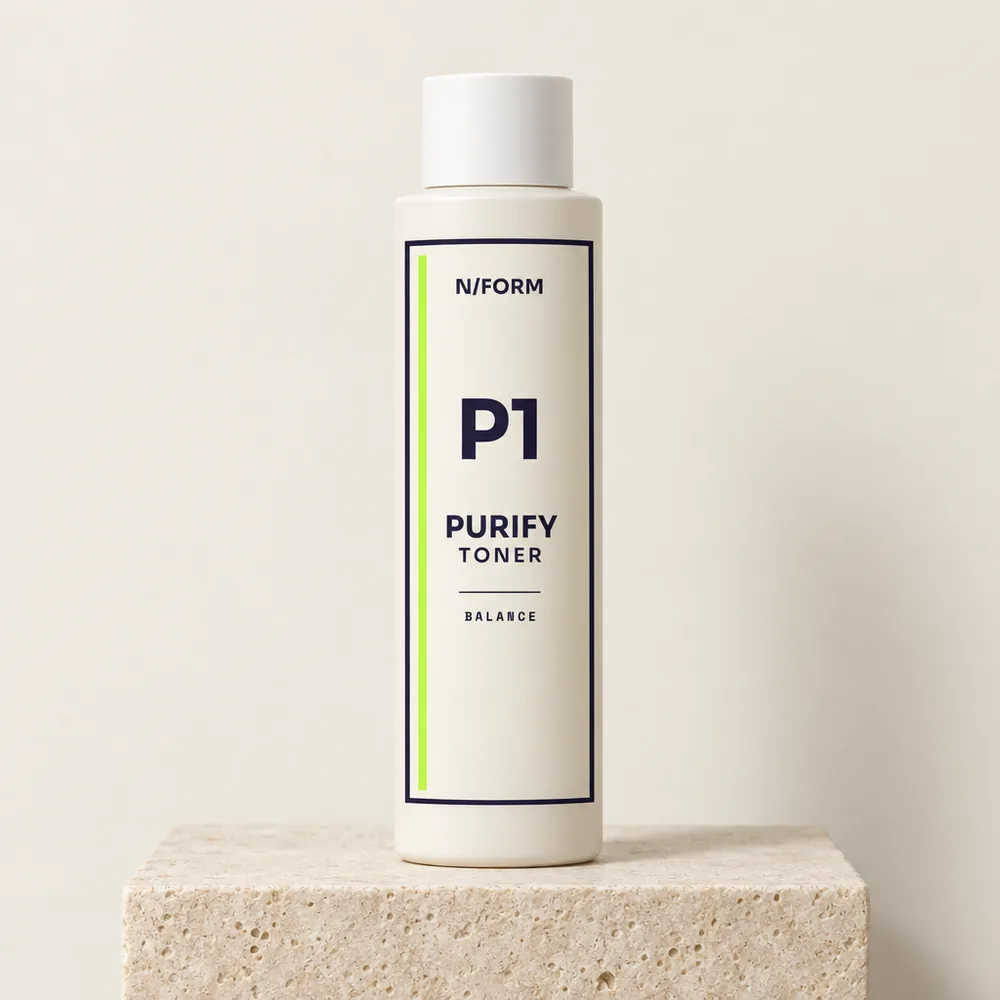
Oily skin has a second option. Salicylic acid is oil-soluble, so it clears inside the pore rather than only at the surface, and it is anti-inflammatory, which is why it suits oily and blemish-prone skin5. Purify Toner carries it without fragrance. It is gentler on the surface than glycolic acid, so it can be used more often, but it is still an exfoliating acid: on the nights you use Resurface Toner, skip it.
Chemical or physical exfoliation
A physical exfoliant, a scrub or a brush, removes dead cells by friction. It works, unevenly: the pressure is highest on the cheekbones and nose and lowest in the folds, and on skin that is already irritated the friction itself is an irritant. A chemical exfoliant, an acid, dissolves the bonds between dead cells across the whole surface at once, with no pressure, and at 5% glycolic acid has a placebo-controlled trial behind it4.
For the face, the acid is the better tool. If you keep a scrub, it counts as an exfoliation: do not use it on an acid night, and count it toward your two or three.
The signs you are exfoliating too much
The outer layer of skin is a wall of flattened dead cells in a mortar of lipids, and its job is to keep water in and irritants out; damage to it is measurable as raised water loss through the skin6. Exfoliate past the backlog and you thin that wall. The signs, in the order they usually show:
- Shine that is not glow. Over-exfoliated skin looks tight and waxy, as if stretched over the bones. Healthy exfoliated skin looks smooth and even; it does not look shiny.
- Stinging from products that never stung. Plain moisturizer, a hydrating toner, even water. The barrier is thinner, so everything reaches the nerves.
- Redness that lingers past the morning. A little warmth for a few minutes after an acid is normal. A flushed face at breakfast is not.
- Flaking and rough patches. Which reads as "I need to exfoliate more" and is the opposite.
- New breakouts in places you never get them. A damaged barrier is inflamed, and inflamed skin breaks out. If you are unsure whether what you are seeing is a purge or a reaction, the guide on skin purging versus a breakout draws the line.
If two or more of those are present, stop every exfoliant, physical and chemical, for two weeks, moisturize morning and evening, and wear sunscreen. The outer layer rebuilds on its own once it is left alone; the guide on fixing a damaged skin barrier is the recovery plan. Then restart at once a week.
How to fit it into the routine
Exfoliate in the evening, on clean, dry skin, as the first step after cleansing. Wait a minute, then serum and moisturizer. On the nights you do not exfoliate, the routine is cleanse, serum, moisturize as usual. Vitamin C belongs in the morning either way, so the two never meet on the skin. The full sequence for dull skin, including what to expect week by week, is in the routine for dull, uneven skin.
Sunscreen every morning is not optional while you are exfoliating. AHAs raise sun sensitivity while in use2, and the whole point of clearing the dead layer is to expose fresh skin, which is the skin you least want to burn.
Questions people ask
Can you exfoliate every day?
You can, and you should not. The dead cells at the surface are loosened in a few nights a week; every night beyond that reaches the living layer and irritates it, and AHAs raise sun sensitivity for as long as they are used2. The trial that used 5% glycolic acid daily for three months shows daily use can be tolerated, not that it is needed4.
How often should you use glycolic acid?
Two or three evenings a week at 5%. Sensitive skin starts at one. Irritation from an AHA rises with concentration and with lower pH3, so a 5% toner used two or three times a week sits well inside the comfortable range, and using it more does not clear the backlog any faster.
How often should oily skin exfoliate?
Two or three evenings a week with glycolic acid, and a salicylic acid toner on the days in between if pores are the main problem. Salicylic acid is oil-soluble and works inside the pore, and it calms inflammation5, so it is the one to keep for the congestion; glycolic acid is the one for surface texture and tone.
How often should sensitive skin exfoliate?
Once a week, in the evening, followed by a fragrance-free moisturizer, and nothing else active that night. If the next morning is calm after three or four weeks, twice a week is the most sensitive skin should go. If plain moisturizer stings, the barrier is thinned and you stop for two weeks6.
What does over-exfoliated skin look like?
Tight, shiny and slightly waxy, with stinging from products that never stung before, redness that lasts into the next day, and flaking. Those are the signs of a thinned outer layer letting water out and irritants in6. Stop all exfoliation for two weeks, moisturize, and restart at once a week.
Does exfoliating make you more sensitive to the sun?
Yes. AHAs raise sun sensitivity while in use2. That is a reason to exfoliate in the evening, not the morning, and to wear sunscreen every day for as long as an acid is in your routine.
Sources
Every study cited above, with what it found and where it can be read. A study of an ingredient is not a study of one of our formulas, and we say which kind each one is.
- 1
Iizuka, Journal of Dermatological Science, 1994
Review
A skin cell takes roughly 40 to 56 days to travel from the base of the epidermis to being shed, which is why a change in skin needs weeks, not days, to show.
- 2
Kornhauser, Clinical, Cosmetic and Investigational Dermatology, 2010
Review
Review of hydroxy acids: AHAs such as glycolic acid loosen the bonds between dead surface cells, thin the compacted outer layer and thicken living epidermis; they also raise sun sensitivity while in use.
- 3
Tang and Yang, Molecules, 2018
Review
Review of alpha-hydroxy acids: at cosmetic strengths they exfoliate and improve texture and pigmentation, and their irritation potential rises with concentration and falling pH.
- 4
Thibault, Dermatologic Surgery, 1998
Clinical trial
75 volunteers used 5% glycolic acid daily for three months, double-blind and placebo-controlled; skin texture and discoloration improved significantly against placebo.
- 5
Arif, Clinical, Cosmetic and Investigational Dermatology, 2015
Review
Review: salicylic acid is oil-soluble, so it clears inside the pore rather than only at the surface, and it is anti-inflammatory, which is why it suits oily and acne-prone skin.
- 6
Proksch, Experimental Dermatology, 2008
Review
Review of the skin barrier: the stratum corneum’s corneocytes and lipid matrix limit water loss and keep irritants out, and barrier damage is measurable as raised transepidermal water loss.
The formulas this guide points at
Not sure which of these is your skin?
Seven questions about what your skin does, not what you own, and you get the three formulas that treat it. Sixty days to find out, full refund, keep the bottles.
Read next
Dull and uneven skinRoutine guide
The Routine for Dull, Uneven Skin
Dull skin is dead cells scattering light, too little water and patchy pigment. The routine that fixes all three, from cleanser to sunscreen.
9 min read · 9 sources
Sensitive and reactive skinGuide
How to Fix a Damaged Skin Barrier (and How Long It Takes)
A damaged barrier stings, flakes and flushes at products it used to tolerate. What broke it, the three-step repair routine, what to stop, and how many weeks.
7 min read · 12 sources
Oily and congested skinGuide
Skin Purging vs Breakout: How to Tell Which One You Have
Purging is congestion that was already forming, brought up faster by an acid or a retinoid. Where the spots are and how long they last tell you which it is.
7 min read · 5 sources
Dull and uneven skinIngredient
Glycolic Acid for Skin: What It Does and How Often to Use It
The smallest AHA. It loosens dead surface cells so they shed; at 5% it improved texture and discoloration against placebo. Two or three nights a week.
6 min read · 5 sources