Oily and congested skinIngredient
Salicylic Acid: What It Does for Skin, and How Often to Use It
Salicylic acid is the oil-soluble exfoliating acid, so it clears inside the pore rather than only at the surface. What the trials found and how often to use it.
Published September 21, 2026 · 5 min read · 5 sources · By N/FORM
- The evidence
- 2 clinical trials, 3 reviews
- In these formulas
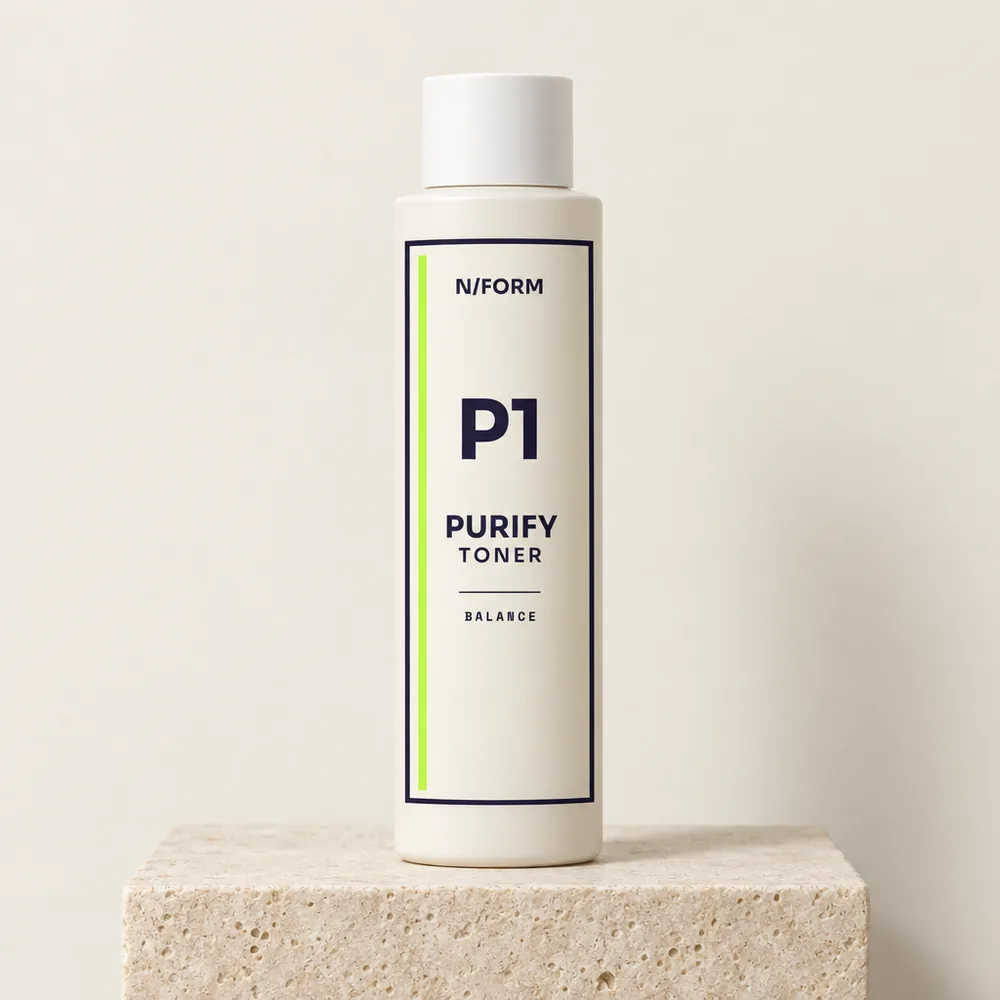
- Purify Toner
The short version
- Salicylic acid is a beta hydroxy acid (BHA) and the only common exfoliating acid that dissolves in oil, which is why it can follow sebum into the pore and clear the plug from inside.
- In a 28-day split-face trial in 31 people with mild to moderate acne, 2% salicylic acid cut total lesions by 44%, statistically the same as 5% benzoyl peroxide plus adapalene on the other side.
- It is anti-inflammatory as well as exfoliating, which is why it suits oily and blemish-prone skin better than the water-soluble alpha hydroxy acids.
- A leave-on salicylic acid toner is designed for daily use on normal to oily skin; very sensitive skin should go carefully, and other exfoliants should not be stacked on the same evening.
Salicylic acid is a beta hydroxy acid (BHA), first taken from willow bark, and the only common exfoliating acid that dissolves in oil rather than water. For skin, that one property is most of the story. Sebum is oil, the plug that blocks a pore is sebum mixed with dead cells, and an acid that dissolves in oil can follow it down into the pore and loosen the plug from inside. What salicylic acid for skin does, in one sentence: it clears congestion where it forms and calms the inflammation around it.
What it does
The exfoliating acids fall into two families. The alpha hydroxy acids (AHAs), glycolic and lactic among them, are water-soluble. They loosen the bonds between the dead cells of the outer layer (the stratum corneum), thin that compacted layer, and thicken the living epidermis beneath it2. They work at the surface, which is where dullness and rough texture live.
Salicylic acid works lower down. Because it is oil-soluble, it mixes with the sebum inside the pore and clears there rather than only at the surface, and it is anti-inflammatory, which is why it suits oily and acne-prone skin1. A blackhead is a pore plug open to the air; a whitehead is one closed under the skin; both are below the reach of a scrub or a water-soluble acid. Salicylic acid is the ingredient that reaches them. The anti-inflammatory action is the second half: a blemish is inflamed as well as blocked, and an ingredient that does both is doing the whole job.
What the trials found
The trial that matters for blemish-prone skin is a split-face comparison in 31 people with mild to moderate acne. One side of the face got 2% salicylic acid, the other got 5% benzoyl peroxide plus adapalene, a prescription retinoid. After 28 days the salicylic acid side had 44% fewer total lesions, and the difference between the two sides was not statistically significant3. That is a cosmetic-strength acid matching a prescription combination over a month, on the same faces.
Two cautions belong beside that number. It was 31 people and 28 days, not a large or long trial. And a review of the evidence behind the common cosmeceutical ingredients, hydroxy acids among them, found that the quality of the evidence varies widely and that concentration and formulation decide whether an ingredient does anything at all4. A salicylic acid at the bottom of an ingredient list, in a formula that rinses off in ten seconds, is not the salicylic acid in the trial.
How much, and in what
The strength with the trial behind it is 2%, applied as a leave-on3. A leave-on toner is the practical way to get the acid onto the pore every day: it goes on after cleansing, is not rinsed off, and reaches the T-zone where the congestion is.
Purify Toner carries salicylic acid with betaine, cucumber fruit extract and lavender flower water. The catalogue does not declare a percentage for it, so none is claimed here. It is fragrance-free: the lavender is a hydrosol, a flower water, not an essential oil. It contains alcohol as well as the acid.
Who it suits, and who should go carefully
Normal to oily skin, and any skin with congestion, blackheads or recurring blemishes in the T-zone. The oil-solubility means it does its best work where there is oil to follow1.
Very sensitive or reactive skin should go carefully. A salicylic acid toner is an acid and, in Purify Toner's case, carries alcohol too, so it is never the automatic choice for highly sensitive skin. Start on alternate evenings and watch for stinging, redness or flaking; those are irritation, not the acid working. The guide on purging versus breaking out explains the difference between the first weeks' spots, which are expected, and a reaction, which is not.
What it works with
Niacinamide. The natural partner for oily skin. In two randomized trials with 100 people in total, 2% niacinamide lowered sebum output within two to six weeks against the same product without it5. Salicylic acid clears the pore, niacinamide lowers the oil that fills it, and the two go on in that order, toner then serum.
An oil-free moisturizer. An acid used daily needs a moisturizer after it, every time. On oily skin that is a humectant gel rather than a cream, and the oily, congested skin routine sets out the three steps.
Glycolic acid, on separate evenings. The two acids do different jobs, surface and pore, and many people use both. Not in the same evening. A glycolic toner two or three evenings a week, the salicylic toner on the others, or the salicylic toner in the morning; the glycolic acid page and the guide on how often to exfoliate set the limits.
Sunscreen. Alpha hydroxy acids raise sun sensitivity while in use2. That finding is for the AHAs rather than for salicylic acid, but anyone exfoliating daily by any route is thinning the layer that sun hits first, and morning sunscreen is not optional.
Questions people ask
What does salicylic acid do for your skin?
It clears inside the pore. Salicylic acid is oil-soluble, so it mixes with sebum and loosens the plug of oil and dead cells from within, and it is anti-inflammatory, which calms the blemish around the block1. In a split-face trial, 2% salicylic acid cut acne lesions 44% in 28 days3.
Is salicylic acid for skin good for blackheads?
Yes, and it is the exfoliating acid best suited to them. A blackhead is a plug of sebum and dead cells sitting inside the pore, and salicylic acid follows the oil in and clears it there, which a water-soluble acid or a scrub cannot do1. Expect the change over weeks of daily use, not days.
BHA vs AHA: which one should I use?
By what the skin is doing. Alpha hydroxy acids such as glycolic are water-soluble and work on the surface: dullness, rough texture, uneven tone2. Salicylic acid, the BHA, is oil-soluble and works in the pore: congestion, blackheads, blemishes1. Oily, congested skin starts with the BHA; dull, dry-leaning skin starts with an AHA; many people use both on different evenings.
How often should I use salicylic acid?
A leave-on salicylic acid toner on normal to oily skin is made for daily use, morning or evening. Sensitive skin should start on alternate evenings. Stinging, flaking or redness means too much, too often; step back rather than push on, and do not add a second exfoliant on the same evening.
Does salicylic acid cause purging?
It can, in the first weeks, in the places you already break out. Because it clears inside the pore, congestion that was already forming can surface sooner1. That settles within one turnover cycle. Spots in new places, or stinging and peeling, are a reaction to the formula, not purging.
Sources
Every study cited above, with what it found and where it can be read. A study of an ingredient is not a study of one of our formulas, and we say which kind each one is.
- 1
Arif, Clinical, Cosmetic and Investigational Dermatology, 2015
Review
Review: salicylic acid is oil-soluble, so it clears inside the pore rather than only at the surface, and it is anti-inflammatory, which is why it suits oily and acne-prone skin.
- 2
Kornhauser, Clinical, Cosmetic and Investigational Dermatology, 2010
Review
Review of hydroxy acids: AHAs such as glycolic acid loosen the bonds between dead surface cells, thin the compacted outer layer and thicken living epidermis; they also raise sun sensitivity while in use.
- 3
Zheng, Cutaneous and Ocular Toxicology, 2019
Clinical trial
Split-face trial in 31 people with mild to moderate acne: 2% salicylic acid on one side cut total lesions 44% in 28 days, statistically the same as 5% benzoyl peroxide plus adapalene on the other.
- 4
Levin and Momin, Journal of Clinical and Aesthetic Dermatology, 2010
Review
Review of the evidence behind common cosmeceutical ingredients (retinol, vitamin C, niacinamide, hydroxy acids, peptides): the evidence quality varies widely and concentration and formulation decide whether an ingredient does anything.
- 5
Draelos, Journal of Cosmetic and Laser Therapy, 2006
Clinical trial
Two randomized trials, 100 people in total: 2% niacinamide lowered sebum output within two to six weeks against the same product without it.
The formula this guide points at
Not sure which of these is your skin?
Seven questions about what your skin does, not what you own, and you get the three formulas that treat it. Sixty days to find out, full refund, keep the bottles.
Read next
Oily and congested skinGuide
Skin Purging vs Breakout: How to Tell Which One You Have
Purging is congestion that was already forming, brought up faster by an acid or a retinoid. Where the spots are and how long they last tell you which it is.
7 min read · 5 sources
Dull and uneven skinGuide
How Often Should You Exfoliate Your Face?
Two or three evenings a week with a 5% glycolic acid toner is the answer for most skin. Here it is by skin type, with the signs you have overdone it.
7 min read · 6 sources
Dull and uneven skinIngredient
Glycolic Acid for Skin: What It Does and How Often to Use It
The smallest AHA. It loosens dead surface cells so they shed; at 5% it improved texture and discoloration against placebo. Two or three nights a week.
6 min read · 5 sources
Oily and congested skinRoutine guide
The Routine for Oily, Congested Skin
Oily, congested skin needs a cleanser that does not strip it, salicylic acid inside the pore, and an oil-free gel moisturizer. The order and the timing.
9 min read · 8 sources