Dry and dehydrated skinRoutine guide
The Routine for Dry and Dehydrated Skin
Three steps, morning and night, for skin that feels tight, flakes or drinks up moisturizer by noon. What each step does to the outer layer and how long it takes
Published September 21, 2026 · 9 min read · 9 sources · By N/FORM
The short version
- A skincare routine for dry skin has three steps morning and night, a mild cleanser, a humectant applied to damp skin, and a moisturizer that carries lipids as well as humectants.
- Dry skin is the outer layer failing to hold water, because it has lost natural moisturizing factors and its lipids are disordered, so water alone and oil alone both fall short.
- The cleanser decides how much there is to repair. Sulfate-free, low-foam formulas used with lukewarm water take far less from the barrier than strong foaming ones.
- Hyaluronic acid and glycerin have trials behind them for raising the water content of the outer layer, and they work best on damp skin with a moisturizer on top within a minute.
- Judge the routine at six to eight weeks, not six days, because a skin cell takes roughly 40 to 56 days to travel from the base of the epidermis to the surface.
A skincare routine for dry skin has three jobs: stop stripping the outer layer at the sink, put water back into it while it is still damp, and hold that water in with a moisturizer that carries lipids as well as humectants. Morning and night, that is a mild cleanser (or a plain water rinse in the morning), a hydrating toner or serum on damp skin, and a cream. Nothing else is required. Give it six to eight weeks before you judge it, because the outer layer replaces itself on roughly that clock.
What dry skin is doing, and why oil alone does not fix it
The outer layer of your skin (the stratum corneum) is a stack of flattened dead cells set in a mortar of lipids. The cells hold water with a mix of small molecules called natural moisturizing factors; the lipid mortar slows that water from escaping and keeps irritants out. Dry skin is what happens when that layer stops holding water: the natural moisturizing factors run short, the lipids fall out of order, and the cells stiffen, shrink and eventually lift as flakes1.
Dermatologists measure the damage as transepidermal water loss, the rate at which water evaporates through the surface. A healthy barrier keeps it low. A dry, disordered one lets it climb, and the higher it climbs, the tighter and rougher the skin feels2.
Two things follow. Dry skin is a water problem before it is an oil problem, so oil on top of dehydrated cells softens the surface without rehydrating it. And water alone evaporates within minutes unless something holds it. The review literature is consistent that humectants and lipids together, not either alone, restore the layer1. That is the logic of the routine below. If you are not sure whether your skin is short of water, short of oil, or both, the guide on dry versus dehydrated skin sorts that out first.
Step one: a cleanser that leaves the lipids where they are
The cleanser decides how much there is to repair. Surfactants, the molecules that let a wash lift oil, cannot tell the sebum on your face from the lipids inside the barrier. The strong, high-foaming ones strip those lipids, bind to the proteins in the dead cells and leave a residue that keeps irritating after the rinse; the tight, squeaky after-feel is the measure of that damage, not a sign the wash worked3. Milder surfactant systems clean the surface with far less of both3.
The American Academy of Dermatology's advice for dry skin starts here: short washes, warm water rather than hot, and a gentle fragrance-free cleanser, followed by a moisturizer within minutes to trap water4. In practice that means a sulfate-free, low-foam formula, thirty seconds, lukewarm water. In the morning a water rinse is enough for most dry skin.
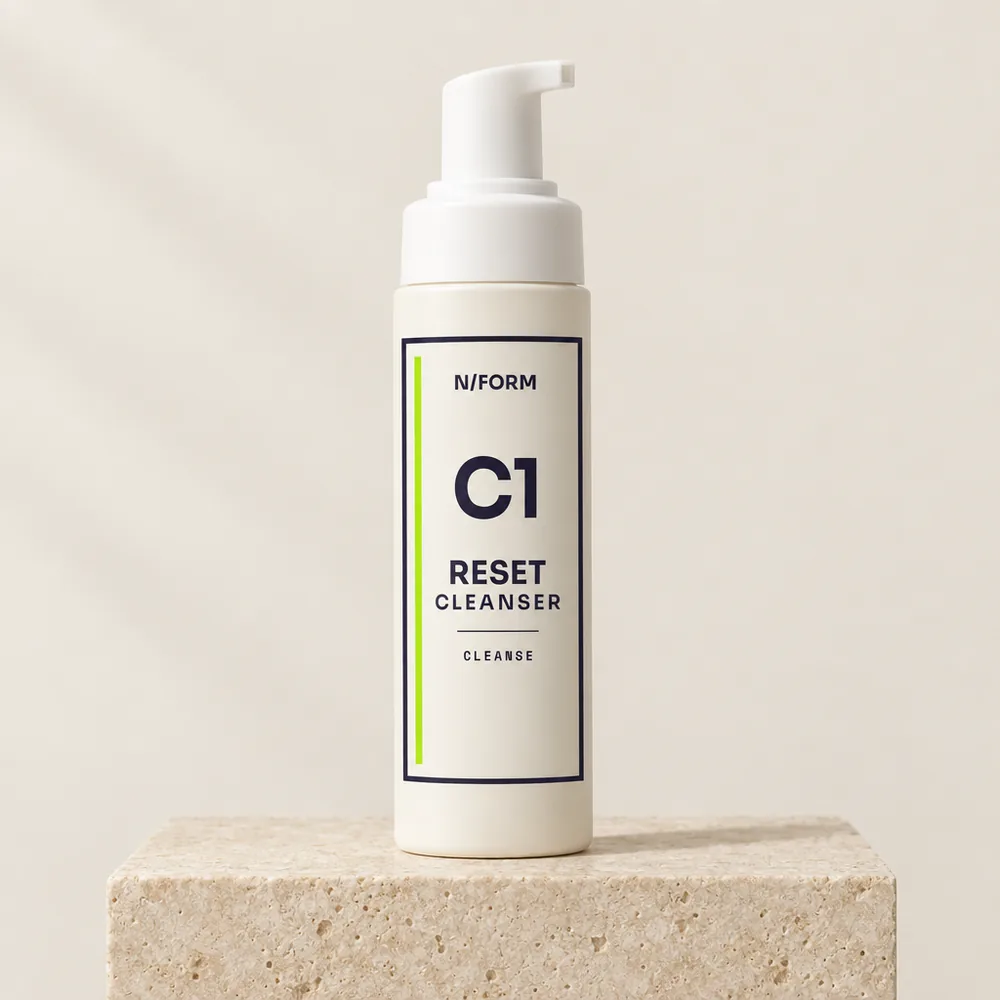
Reset Cleanser is built for this step: a sulfate-free foam on coconut- and sugar-derived surfactants (cocamidopropyl betaine and sucrose cocoate) with glycerin and rose flower water. It does contain fragrance, so if your skin reacts to parfum, use a fragrance-free cleansing emulsion in the evening and plain water in the morning instead. If your face pulls within a minute of rinsing, read why skin feels tight after washing before you buy anything else.
Step two: water into the outer layer while it is damp
Once the face is clean and still slightly damp, the dead cells are at their most receptive. This is the moment for a humectant, an ingredient that draws water into the outer layer and holds it there. The two with the best evidence are hyaluronic acid and glycerin.
Hyaluronic acid has a trial: 76 women applied 0.1% hyaluronic acid twice daily for 60 days, and the low molecular weight form raised skin hydration by up to 96% and reduced wrinkle depth by up to 40%5. Glycerin has a harder test: 24 people with atopic dermatitis used a 20% glycerol cream for four weeks, double-blind, and it improved stratum corneum hydration and restored barrier function against the same cream without glycerol6. The ingredient pages on hyaluronic acid and glycerin go through the mechanism and the rest of the evidence.
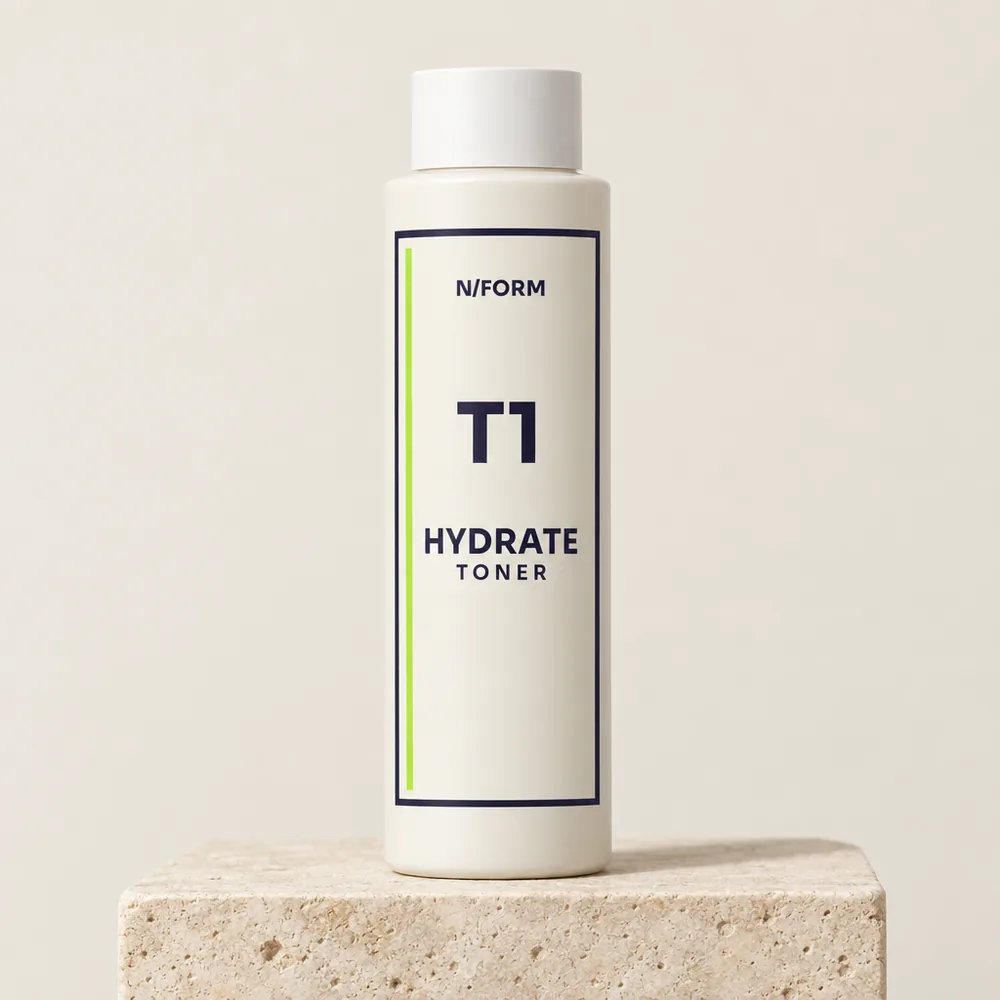
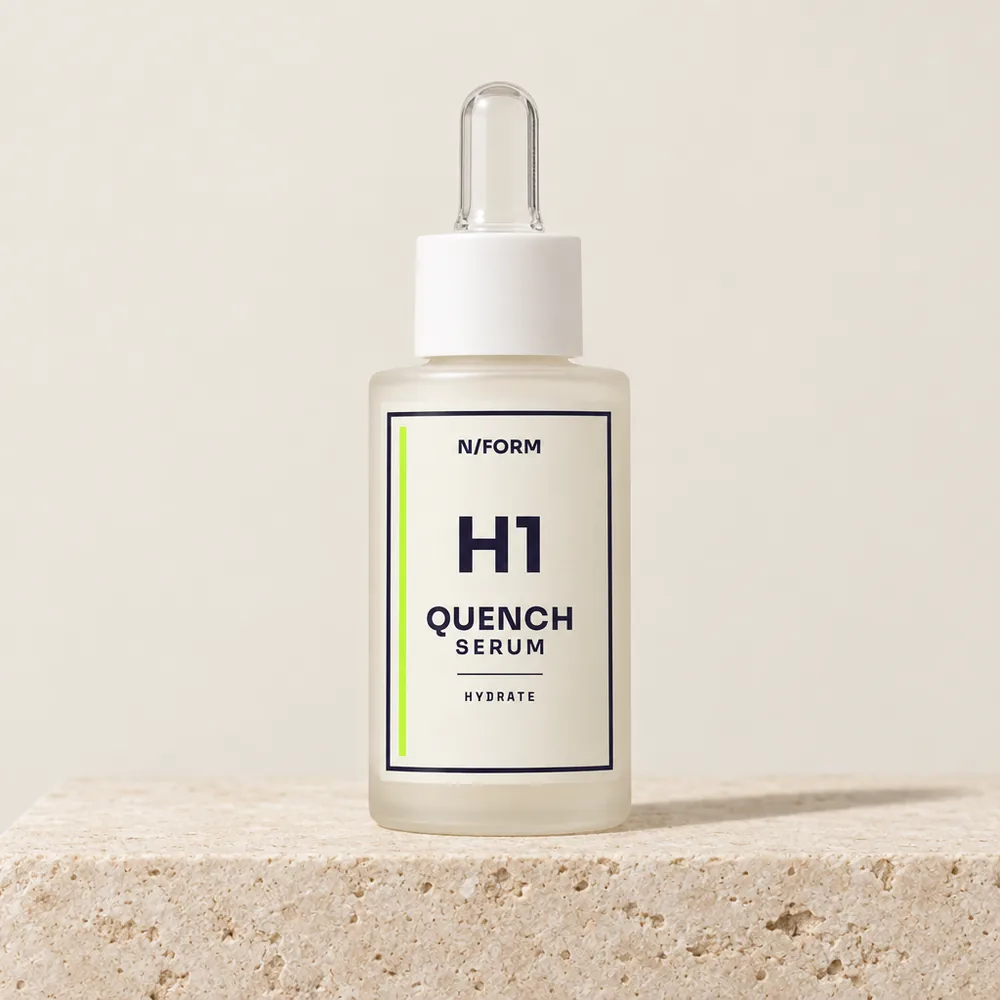
In the routine, this step is a hydrating toner, a humectant serum, or both. Hydrate Toner is twelve ingredients, fragrance-free, with hyaluronic acid, sodium PCA and rose flower water; it is a preparatory step after cleansing, not a moisturizer, and it does not replace one. Quench Serum carries hyaluronic acid at two molecular weights, hydrolyzed hyaluronic acid and sodium hyaluronate, with bisabolol and cloudberry; it contains fragrance and declares the allergens limonene, geraniol, coumarin and linalool, so skip it if you avoid those. How to use a hyaluronic acid serum covers the damp-skin detail and the reason step three has to follow within a minute.
Step three: a moisturizer that holds the water in
A moisturizer does three things, and the good ones do all three at once: occlusives slow water leaving, humectants draw water into the outer layer, and emollients fill the gaps between the lifted cells so the surface feels smooth7. Applied over a humectant on damp skin, it locks in what step two just put there. Applied to a dry face on its own, it seals a layer that is already short of water, which is why the cream-only routine feels good for an hour and tight again by the afternoon.
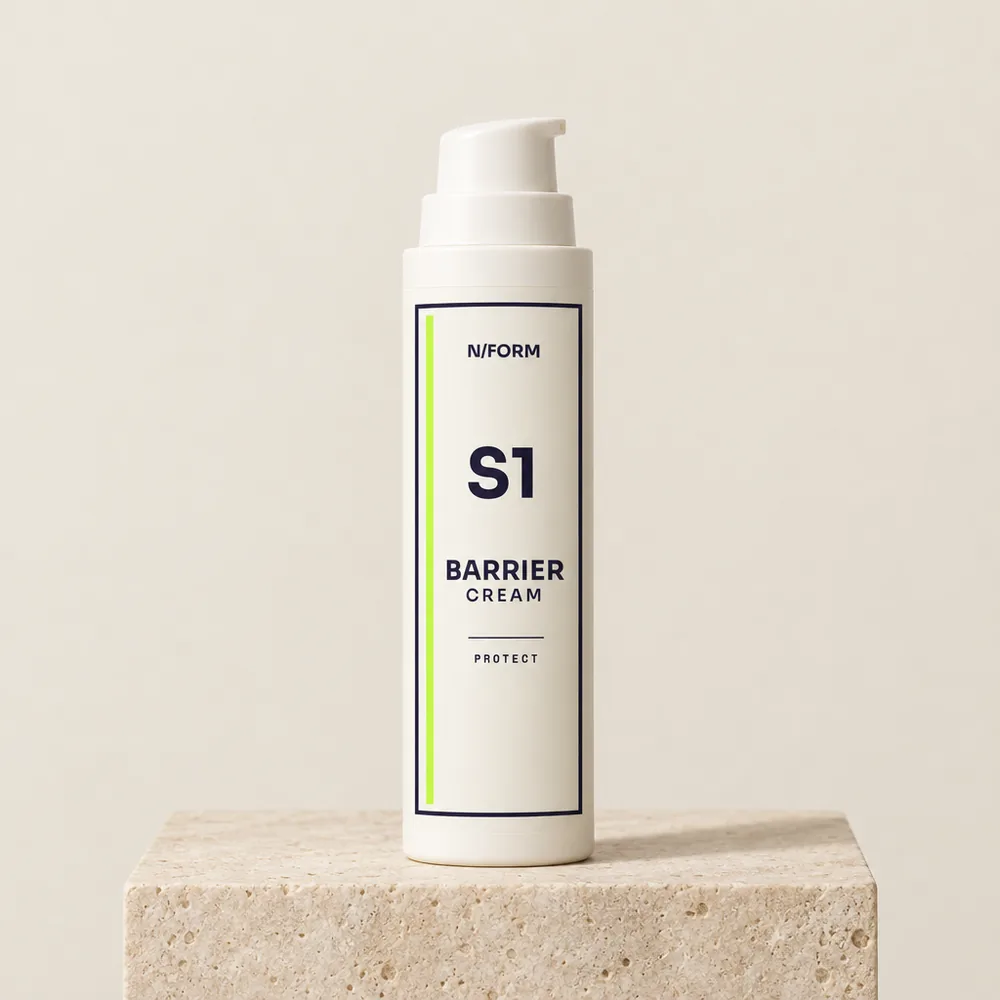
Barrier Cream is the moisturizer in this routine: aloe leaf juice, jojoba seed oil, sodium PCA and hyaluronic acid in a fragrance-free, COSMOS Organic base, made for sensitive and redness-prone skin. Jojoba supplies the lipid; aloe, sodium PCA and hyaluronic acid supply the humectants. If your skin has been stripped for months and stings at almost everything, the guide on how to fix a damaged skin barrier strips the routine back even further for a few weeks.
The morning and night skincare routine for dry skin, step by step
Morning:
- Rinse with lukewarm water, or use the cleanser if you wake up with product or sweat on your face. Pat dry, do not rub.
- Hydrate Toner on damp skin, pressed in with the hands rather than wiped on with cotton.
- Quench Serum, a few drops, on top of the toner while the face is still damp. Optional on days the skin feels comfortable.
- Barrier Cream within a minute of the serum.
- Your sunscreen.
Night:
- Reset Cleanser, thirty seconds, lukewarm water.
- Hydrate Toner on damp skin.
- Quench Serum.
- Barrier Cream. A slightly thicker layer at night is fine.
That is the whole routine. A simple skincare routine for dry skin is not a compromise; the AAD's own guidance is a gentle cleanser, moisturizer within minutes, and nothing alcohol-heavy or fragranced in between4.
The mistakes that keep dry skin stuck
Hot water. Heat loosens the lipid mortar, so more of it rinses away with every wash; the AAD puts warm-not-hot water at the top of its list4.
Washing twice with foam. Every wash costs the barrier some lipid3. If you have to cleanse in the morning, make it the mildest wash you own, or water.
Exfoliating the flakes. A flaking face looks like it needs scrubbing. It is a barrier that has lost its water and is shedding cells in clumps; a scrub or an acid takes more of a layer that is already short1. Rehydrate first; how often to exfoliate covers when to bring acid back.
Cream on a dry face. A moisturizer applied five minutes after washing seals a layer that has already lost its water. Humectant on damp skin, then cream, within a minute4.
Oil instead of water. Skin that is short of water and lipid needs both; a face oil supplies one. The review evidence points at humectants plus lipids, together, as what actually restores the outer layer1.
What to expect, week by week
Week one: the tightness after washing eases within days if the cleanser was the main cause. Comfort after the toner and cream still fades through the day.
Weeks two to three: the after-wash tightness is mostly gone. Flaking softens and the moisturizer stops disappearing by noon.
Weeks four to eight: this is where the change becomes structural rather than cosmetic. A skin cell takes roughly 40 to 56 days to travel from the base of the epidermis to being shed, so the cells arriving at the surface now were made under the new routine, with their natural moisturizing factors and lipids intact8. The American Academy of Dermatology advises using a product for 6 to 8 weeks before judging it and allowing up to three months for full results, and warns that changing products every week or two irritates skin9. Hold the routine steady through this window.
Beyond eight weeks: skin that is still tight, flaking or stinging on nothing but a mild cleanser, a humectant and a fragrance-free moisturizer has moved past routine advice. A dermatologist can rule out eczema and the other conditions that look like dry skin and do not respond to a moisturizer.
Questions people ask
What is the best skincare routine for dry skin morning and night?
Morning: a lukewarm water rinse or a mild cleanser, a hydrating toner on damp skin, a humectant serum if you need it, a moisturizer within a minute, then sunscreen. Night: a sulfate-free cleanser, the toner, the serum, the moisturizer. The order matters more than the number of products, because humectants need damp skin and a seal on top to work7.
Why does my dry skin feel tight even after moisturizer?
Because the moisturizer went on a layer that had already lost its water. An occlusive cream slows evaporation but does not rehydrate stiff, dry cells. Apply a humectant to damp skin first and the cream within a minute, and change the cleanser so that less water and lipid is lost in the first place3. Tightness that survives that change for three weeks is a barrier that needs longer, or skin that is short of oil as well as water.
Can I exfoliate dry, flaky skin?
Not until it stops flaking. The flakes are dead cells shedding in clumps because the outer layer has lost its water and its lipids are out of order; an acid or a scrub removes more of a layer that is already short1. Rehydrate for two to three weeks first, then a gentle acid a couple of evenings a week is reasonable.
Is a simple skincare routine for dry skin enough?
Yes. Cleanser, humectant, moisturizer, twice a day, is the routine the review literature and the AAD's guidance describe, and adding more steps does not add more water to the outer layer4. More products mostly add more chances of irritation.
How do I know if my skin is dehydrated rather than dry?
Dehydrated skin is short of water; dry skin is short of oil as well. Dehydrated skin can still be oily, feels tight after washing and shows fine lines that fill in when it is well hydrated. Dry skin is rough, flaky and matte all over and rarely shines. The routine above suits both; the difference is how rich the moisturizer needs to be, and the guide on dry versus dehydrated skin walks through the test.
Sources
Every study cited above, with what it found and where it can be read. A study of an ingredient is not a study of one of our formulas, and we say which kind each one is.
- 1
Rawlings and Harding, Dermatologic Therapy, 2004
Review
Review of stratum corneum moisturization: dry skin is a failure of the outer layer to hold water, driven by lost natural moisturizing factors and disordered lipids, and humectants plus lipids together restore it.
- 2
Proksch, Experimental Dermatology, 2008
Review
Review of the skin barrier: the stratum corneum’s corneocytes and lipid matrix limit water loss and keep irritants out, and barrier damage is measurable as raised transepidermal water loss.
- 3
Ananthapadmanabhan, Dermatologic Therapy, 2004
Review
Review of how surfactants damage the barrier: harsh cleansers strip lipids and bind to skin proteins, raising water loss and the tight, dry after-feel; milder surfactant systems clean with far less of both.
- 4
American Academy of Dermatology, dry skin tips
Guidance
AAD guidance for dry skin: short warm (not hot) washes, a gentle fragrance-free cleanser, moisturizer applied within minutes of washing to trap water, and avoiding alcohol-heavy and fragranced products.
- 5
Pavicic, Journal of Drugs in Dermatology, 2011
Clinical trial
76 women applied 0.1% hyaluronic acid twice daily for 60 days; low molecular weight hyaluronic acid reduced wrinkle depth by up to 40% and raised skin hydration by up to 96%.
- 6
Breternitz, Skin Pharmacology and Physiology, 2008
Clinical trial
24 people with atopic dermatitis, four weeks, double-blind: a 20% glycerol cream improved stratum corneum hydration and restored barrier function against the same cream without glycerol.
- 7
Draelos, Journal of Cosmetic Dermatology, 2018
Review
Review of how moisturizers work: occlusives slow water loss, humectants draw water into the outer layer, and emollients smooth the surface; the effective products combine them.
- 8
Iizuka, Journal of Dermatological Science, 1994
Review
A skin cell takes roughly 40 to 56 days to travel from the base of the epidermis to being shed, which is why a change in skin needs weeks, not days, to show.
- 9
American Academy of Dermatology
Guidance
The American Academy of Dermatology advises using a product for 6 to 8 weeks before judging it and allowing up to three months for full results; changing products every week or two irritates skin.
The formulas this guide points at
Not sure which of these is your skin?
Seven questions about what your skin does, not what you own, and you get the three formulas that treat it. Sixty days to find out, full refund, keep the bottles.
Read next
Dry and dehydrated skinGuide
Dehydrated Skin vs Dry Skin, and How to Tell Which You Have
Dry skin is short of oil. Dehydrated skin is short of water, and can be oily at the same time. The signs that separate them, a sink test, and what each needs.
7 min read · 6 sources
Dry and dehydrated skinGuide
Why Your Skin Feels Tight After Washing (and How to Make It Stop)
That pulled, squeaky feeling thirty seconds after you rinse is your cleanser taking more than dirt. What it took, why moisturizer only patches it, and the fix.
6 min read · 6 sources
Sensitive and reactive skinGuide
How to Fix a Damaged Skin Barrier (and How Long It Takes)
A damaged barrier stings, flakes and flushes at products it used to tolerate. What broke it, the three-step repair routine, what to stop, and how many weeks.
7 min read · 12 sources
Dry and dehydrated skinGuide
How to Use Hyaluronic Acid Serum So It Actually Hydrates
On damp skin, before moisturizer, sealed within a minute, morning and night. Why each of those matters, what molecular weight changes, and when it can backfire.
7 min read · 5 sources