Dry and dehydrated skinGuide
How to Use Hyaluronic Acid Serum So It Actually Hydrates
On damp skin, before moisturizer, sealed within a minute, morning and night. Why each of those matters, what molecular weight changes, and when it can backfire.
Published September 21, 2026 · 7 min read · 5 sources · By N/FORM
The short version
- Apply hyaluronic acid serum to damp skin, after cleansing and before moisturizer, and put the moisturizer on within a minute so the water it draws in has something to hold it.
- Hyaluronic acid is a humectant that binds many times its own weight in water, and it draws that water from whatever is nearest, which is why the skin should be damp and sealed rather than dry and bare.
- Twice a day is the schedule the trial used: 76 women applied 0.1% hyaluronic acid morning and evening for 60 days.
- Low molecular weight hyaluronic acid reaches deeper into the outer layer than the large form, which sits on the surface, and a serum with both covers both jobs.
- Hyaluronic acid pairs with retinol, acids and vitamin C without conflict, and it is the layer that makes those actives easier to tolerate.
The way to use hyaluronic acid serum is on damp skin, straight after cleansing or a hydrating toner, before your moisturizer, with the moisturizer applied within a minute. Two or three drops, pressed over the face, morning and night. That order is not a preference. Hyaluronic acid is a humectant, a molecule that pulls water toward itself, and it needs water nearby to pull and a layer on top to keep what it pulled. Put it on a dry face with nothing over it and it has neither, which is where the "hyaluronic acid dried out my skin" stories come from.
What hyaluronic acid does in the outer layer
Hyaluronic acid is a sugar molecule your skin already makes, mostly in the dermis, where it holds water in the tissue and keeps it plump. It binds many times its own weight in water, its content in skin falls with age, and its molecular size decides where it acts, with smaller fragments reaching deeper than large ones1. In a serum, it works as a humectant: it draws water into the outer layer of your skin (the stratum corneum) and holds it in the dead cells there, which is what makes a dehydrated face look smoother and feel less tight within minutes.
That is only half of what a moisturizer does. A moisturizer works through three kinds of ingredient: humectants draw water in, occlusives slow it leaving, and emollients smooth the surface, and the effective products combine them2. A hyaluronic acid serum supplies the first. The moisturizer that follows supplies the other two. Used together, in that order, they do the job; used apart, each does half.
Why damp skin matters
A humectant draws water from wherever water is. On a freshly cleansed, still-damp face, the nearest water is the film on the surface and in the wet outer cells, so the serum pulls that in and holds it. On a face that has been dry for ten minutes, there is no surface water to draw, so the serum sits on top waiting.
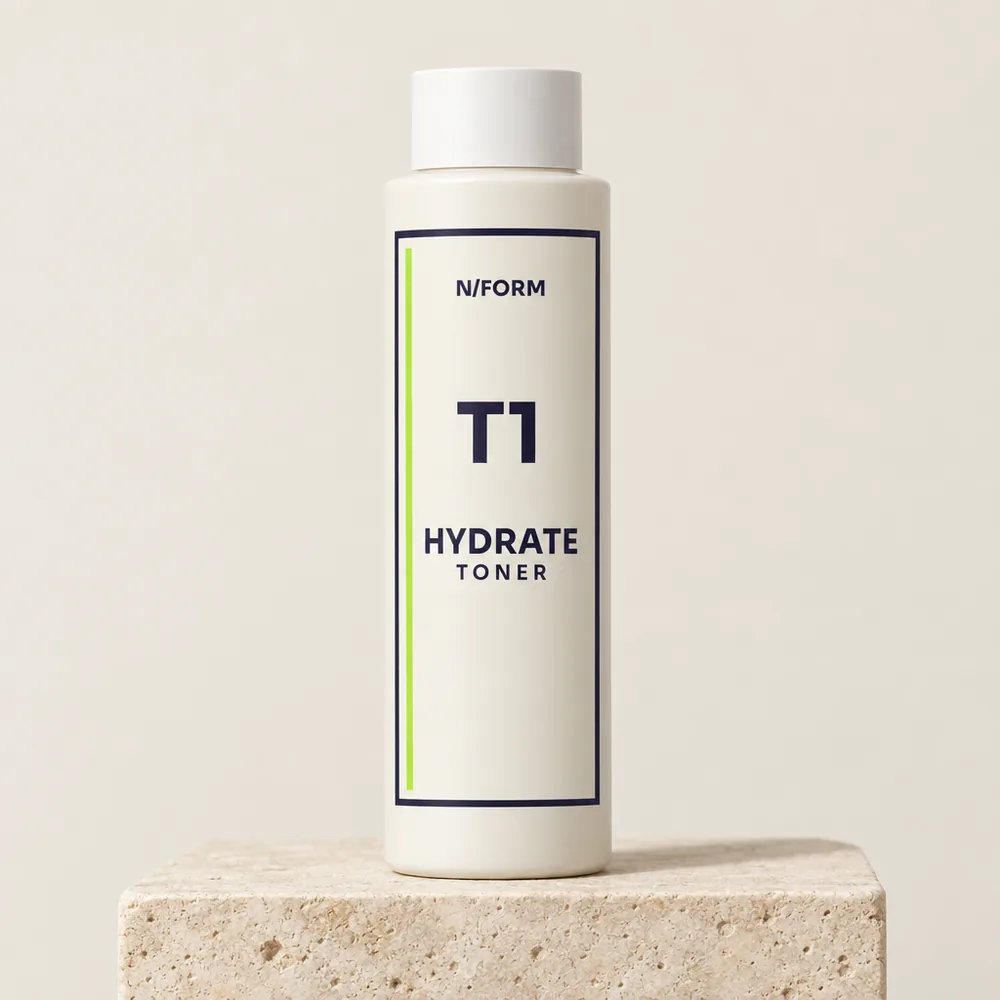
The practical version: cleanse, pat rather than rub, and apply the serum while the skin is still visibly damp. If you use a hydrating toner, apply it first and the serum on top of it while the toner is still wet; the toner is the water, the serum holds it. Hydrate Toner is built for exactly that step: twelve ingredients, fragrance-free, with hyaluronic acid, sodium PCA and rose flower water. It is a preparation for the serum and the moisturizer, not a substitute for either.
Hyaluronic acid before or after moisturizer
Before, always. The serum is thin and water-based and needs to touch the skin; the moisturizer is thicker and needs to go over the top of everything to seal it. Think of it as water, then the lid.
The lid matters more than most people expect. Water that a humectant has drawn into the outer layer is still free to evaporate, and the outer layer's own ability to hold it is what is already failing in dry and dehydrated skin: it has lost natural moisturizing factors and its lipids are disordered, and the review evidence is that humectants and lipids together, not either alone, restore it3. Apply the moisturizer within a minute of the serum, while the skin is still damp from it. The general rule for ordering everything else is in how to layer skincare.
Can hyaluronic acid dry out your skin?
It can feel that way, and the mechanism explains it. A humectant pulls water from the nearest source. When the skin is damp and sealed, the nearest source is the surface water and the serum holds it in the outer layer. When the skin is dry, the air is dry, and nothing goes on top, the serum still binds water; the only water nearby is what is in the skin, and whatever it binds at the surface is then free to evaporate into dry air. The net effect on a bare face in a heated room or a dry climate can be skin that feels tighter an hour later, not softer.
This is reasoning from how humectants work, not a trial result, and the fix follows from the same reasoning: damp skin, then the serum, then a moisturizer within a minute. Do that and the serum has water to hold and a seal that keeps it. It is also why the serum should never be the last step, and why on a very dry face a hyaluronic acid serum without a cream over it is worse than the cream alone.
What molecular weight changes
Hyaluronic acid comes in sizes, measured as molecular weight. The large form cannot get past the surface; it forms a film that holds water on top of the skin and gives the immediate smooth feel. Smaller fragments reach deeper into the outer layer, and molecular size is what decides where the ingredient acts1.
The trial that most product claims lean on tested this. 76 women applied 0.1% hyaluronic acid twice daily for 60 days, and the low molecular weight form reduced wrinkle depth by up to 40% and raised skin hydration by up to 96%4. Those figures belong to that ingredient at that strength and schedule; a serum on a shelf is not that trial. What the trial supports is choosing a serum that carries a low molecular weight form, not only the large one.
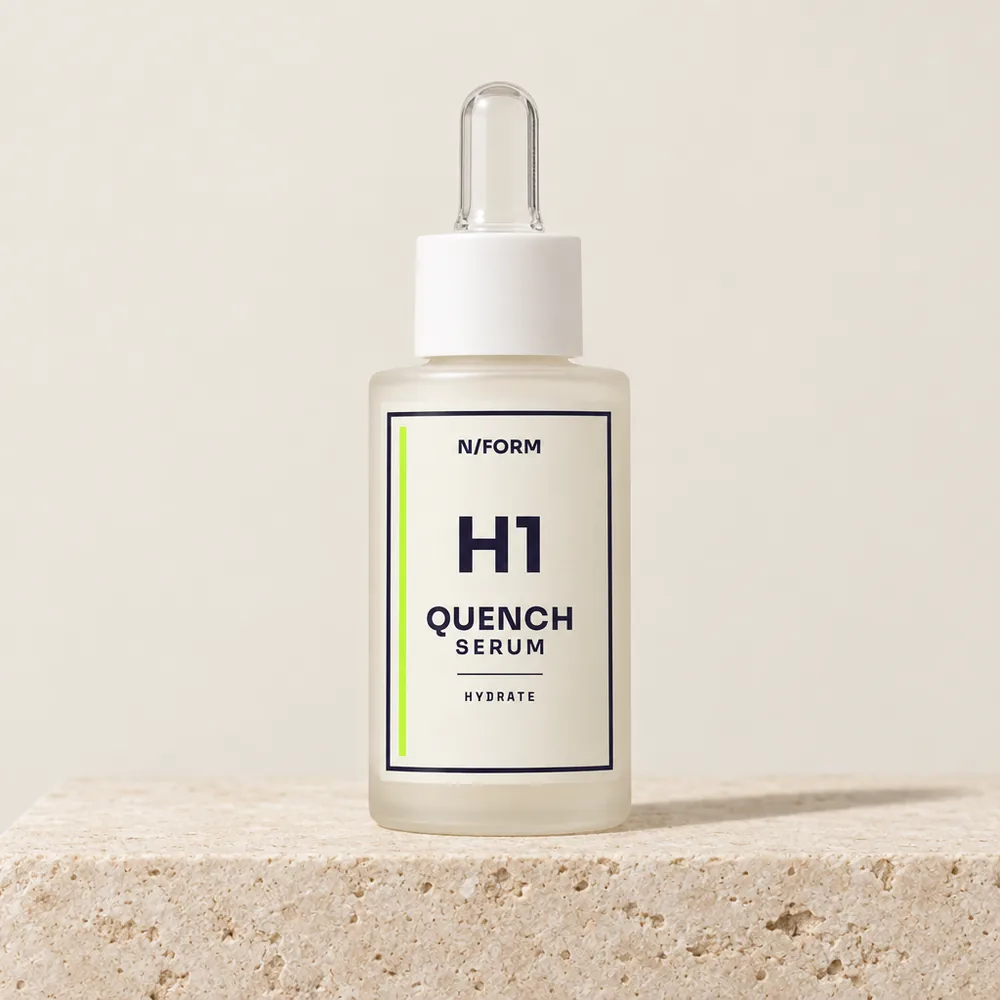
Quench Serum carries hyaluronic acid at two weights, hydrolyzed hyaluronic acid, the smaller form, and sodium hyaluronate, the salt of the larger form, with bisabolol and cloudberry fruit extract. It contains fragrance and declares the allergens limonene, geraniol, coumarin and linalool, so it is not the serum for skin that reacts to fragrance. The full mechanism and the rest of the evidence is on the hyaluronic acid page.
How often to use hyaluronic acid serum
Twice a day, morning and evening, is the schedule the trial used and the one that fits a normal routine4. There is no build-up period as there is with acids and retinoids; it is a humectant, not an exfoliant. Two to three drops covers a face. More than that pills under moisturizer without adding anything.
Skin that is dehydrated, meaning short of water but still producing oil, often needs the serum twice daily for the first few weeks and then only in the evening once the outer layer is holding water again. Dry skin, which is short of oil as well, tends to want it twice a day year-round, under a richer cream. Dry versus dehydrated skin explains the difference and how to tell.
Hyaluronic acid serum for dry skin
Dry skin is the case where the seal matters most. Its outer layer has fewer lipids of its own, so water drawn in by a humectant leaves faster than on normal skin. Apply the serum to damp skin and follow with a moisturizer that carries lipids, not a gel. On skin that is both dry and reactive, a fragrance-free hydrating toner followed by a fragrance-free lipid cream, without a fragranced serum in between, is the safer routine; the whole three-step version, with what to expect week by week, is in the routine for dry and dehydrated skin.
Questions people ask
Do you put hyaluronic acid on wet or dry skin?
Damp, not dripping and not dry. Pat the face after cleansing or toner and apply the serum while it still looks slightly wet. A humectant pulls water from whatever is nearest, so the damp surface is what it holds onto2.
Does hyaluronic acid go before or after moisturizer?
Before. The serum goes on damp skin and the moisturizer goes over it within a minute. The moisturizer's occlusives and emollients are what keep the water the serum drew in from evaporating2.
Can you use hyaluronic acid with retinol?
Yes, and it is a good pairing. Retinoids thicken the epidermis and raise collagen, and the price is dose-related irritation, peeling and redness that is most common in the first weeks5. A hyaluronic acid serum on damp skin before the retinoid, or a moisturizer with hyaluronic acid over it, keeps the outer layer hydrated through that period without interfering with the retinoid.
Does hyaluronic acid dry out skin?
It can feel drying when it is applied to dry skin in dry air with nothing on top, because a humectant draws water from the nearest source and, without a seal, that water then evaporates. This follows from how humectants work rather than from a trial. On damp skin with a moisturizer over it, the same serum raises the water content of the outer layer1.
How long does hyaluronic acid take to work?
The surface feels smoother within minutes, because the large molecular weight form holds water on top of the skin. The measured change in hydration and fine lines in the trial came after 60 days of twice-daily use, so give a serum two months before judging it4.
Sources
Every study cited above, with what it found and where it can be read. A study of an ingredient is not a study of one of our formulas, and we say which kind each one is.
- 1
Papakonstantinou, Dermato-Endocrinology, 2012
Review
Review: hyaluronic acid binds many times its weight in water, its skin content falls with age, and its molecular size decides where it acts, with smaller fragments reaching deeper than large ones.
- 2
Draelos, Journal of Cosmetic Dermatology, 2018
Review
Review of how moisturizers work: occlusives slow water loss, humectants draw water into the outer layer, and emollients smooth the surface; the effective products combine them.
- 3
Rawlings and Harding, Dermatologic Therapy, 2004
Review
Review of stratum corneum moisturization: dry skin is a failure of the outer layer to hold water, driven by lost natural moisturizing factors and disordered lipids, and humectants plus lipids together restore it.
- 4
Pavicic, Journal of Drugs in Dermatology, 2011
Clinical trial
76 women applied 0.1% hyaluronic acid twice daily for 60 days; low molecular weight hyaluronic acid reduced wrinkle depth by up to 40% and raised skin hydration by up to 96%.
- 5
Mukherjee, Clinical Interventions in Aging, 2006
Review
Review of retinoids for skin ageing: they thicken the epidermis, raise collagen and reduce fine wrinkles, and the price is irritation, peeling and redness that is dose-related and most common in the first weeks.
The formulas this guide points at
Not sure which of these is your skin?
Seven questions about what your skin does, not what you own, and you get the three formulas that treat it. Sixty days to find out, full refund, keep the bottles.
Read next
Dry and dehydrated skinRoutine guide
The Routine for Dry and Dehydrated Skin
Three steps, morning and night, for skin that feels tight, flakes or drinks up moisturizer by noon. What each step does to the outer layer and how long it takes
9 min read · 9 sources
Dry and dehydrated skinGuide
Dehydrated Skin vs Dry Skin, and How to Tell Which You Have
Dry skin is short of oil. Dehydrated skin is short of water, and can be oily at the same time. The signs that separate them, a sink test, and what each needs.
7 min read · 6 sources
Every skinGuide
How to Layer Skincare: The Order That Actually Matters
Thinnest to thickest, water before oil, actives on clean skin, moisturizer last and sunscreen over it by day. The order, the pairs to separate, and why.
7 min read · 7 sources