Dull and uneven skinIngredient
Vitamin C (Ascorbyl Glucoside) for Skin
Ascorbyl glucoside is vitamin C bonded to glucose so it stays stable and does not sting; skin converts it back. What it trades for that, and what trials found.
Published September 21, 2026 · 6 min read · 6 sources · By N/FORM
- In these formulas
- Brighten Serum, Eye Reset Patches
The short version
- Ascorbyl glucoside is vitamin C bonded to a glucose molecule. The bond keeps it stable in the bottle and the skin's own enzymes cut it to release vitamin C after absorption.
- Pure L-ascorbic acid only penetrates skin at a pH below 3.5 and saturates at 20%; the acidity that makes it work is what makes it sting, and it oxidizes and browns in the bottle.
- On human skin explants, 1.8% ascorbyl glucoside was converted back to vitamin C and protected against oxidative stress as well as 15% pure ascorbic acid. The trade is a slower conversion in skin for stability and comfort.
- In a 24-week double-blind half-face trial of 27 women with sun spots, the ascorbyl glucoside side lightened significantly at 12 and 24 weeks. Two authors work for the manufacturer.
Ascorbyl glucoside is vitamin C with a glucose molecule attached. The sugar bond does two things: it keeps the vitamin from oxidizing in the bottle, which is why a serum built on it stays clear instead of turning brown, and it removes the need for the very low pH that pure vitamin C depends on, which is why it does not sting. Once absorbed, the skin's own enzymes cut the bond and release vitamin C. What it does for skin, in one sentence, is act as an antioxidant and reduce melanin production, so that tone evens and marks fade over months.
What it does
Topical vitamin C is an antioxidant that supports collagen synthesis and reduces melanin formation; the pure form, L-ascorbic acid, is unstable and needs a low pH to work, which is why stabilized derivatives exist1. Those three jobs are why it appears in serums for dull, uneven skin: it protects during the day, and over the weeks it lowers the amount of new pigment being made.
The difficulty is the delivery. Pure L-ascorbic acid only penetrates skin at a pH below 3.5, and skin levels saturate at 20%; the acidity that makes it work is also what makes it sting2. Dissolved in water and exposed to air, it oxidizes: the serum yellows, then browns, and the browned form has lost what you bought it for. Ascorbyl glucoside is one of several answers to that problem. It is stable at a comfortable pH, it does not oxidize on the shelf, and the skin converts it to vitamin C after absorption rather than before.
What the trials found
The conversion is the question a derivative has to answer, and the lab evidence is that it does. On human skin explants, 1.8% ascorbyl glucoside was converted back to vitamin C by the skin and protected against oxidative stress as well as 15% pure ascorbic acid, while staying stable in storage3. That is lab skin, not a clinical trial: it shows the mechanism works in human tissue, not what a face looks like after three months.
The clinical trial is on pigment. In a double-blind half-face study, 27 women with sun spots applied ascorbyl glucoside to one side of the face and a placebo to the other for 24 weeks, and the ascorbyl glucoside side had lightened significantly at 12 and 24 weeks4. Two of the paper's authors work for the manufacturer, which the paper declares. And the spots were sun spots (solar lentigos), not the marks that breakouts leave; for those, the evidence is the mechanism plus this trial, not a trial of its own.
What the glucoside trades is speed. The skin has to do the conversion, and it does it gradually, so the vitamin C arrives more slowly than a pure ascorbic acid serum delivers it. In exchange the product does not sting, does not brown, and does not depend on a pH below 3.5 that few people tolerate every morning. The review of cosmeceutical ingredients is blunt that the evidence quality behind vitamin C and its relatives varies, and that concentration and formulation decide whether a given product does anything5. The evidence here is for the concentrations studied, not for every product that lists the ingredient.
How much, and in what
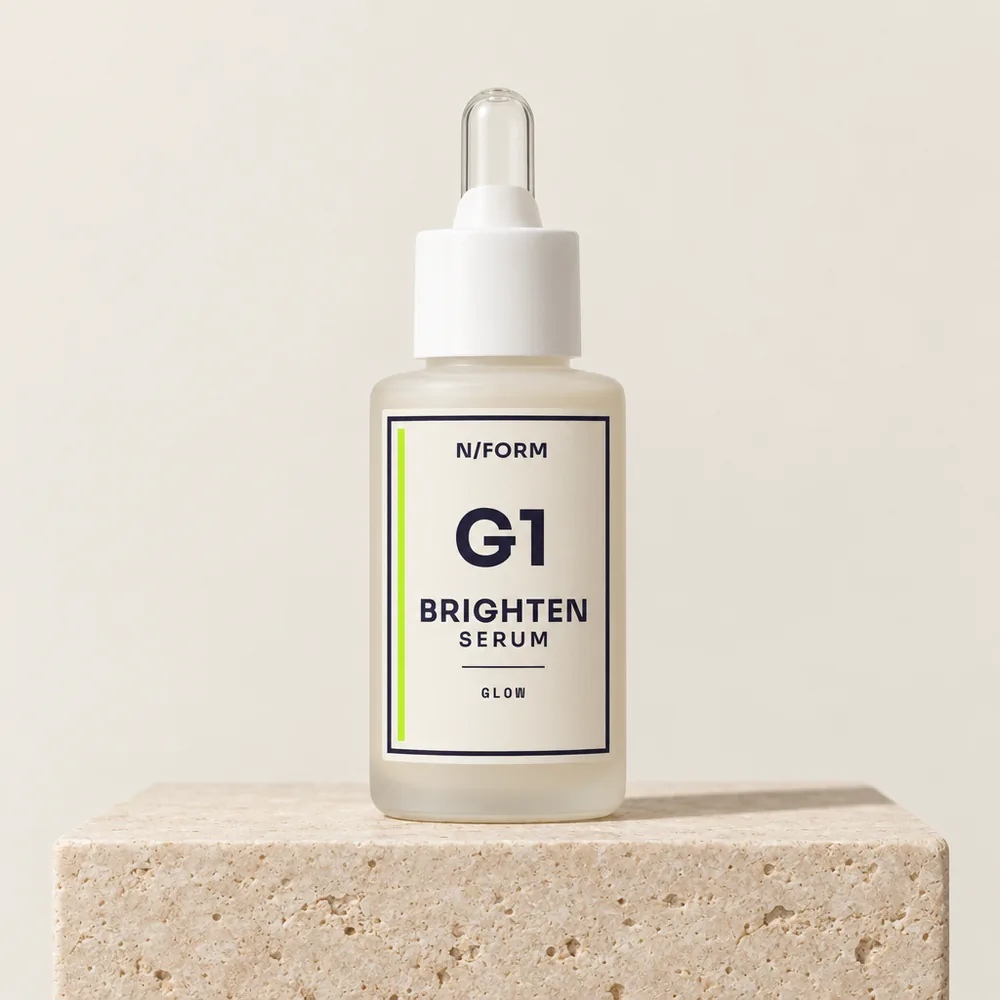
Brighten Serum carries 2% ascorbyl glucoside, alongside 1% ferulic acid and 1% sea-buckthorn oil, with hyaluronic acid. The 2% sits just above the 1.8% of the explant study3. Apply it in the morning to clean skin, let it sink in, then moisturizer and sunscreen; vitamin C is an antioxidant, not a sunscreen, and the sun spots it works on are made by the sun.
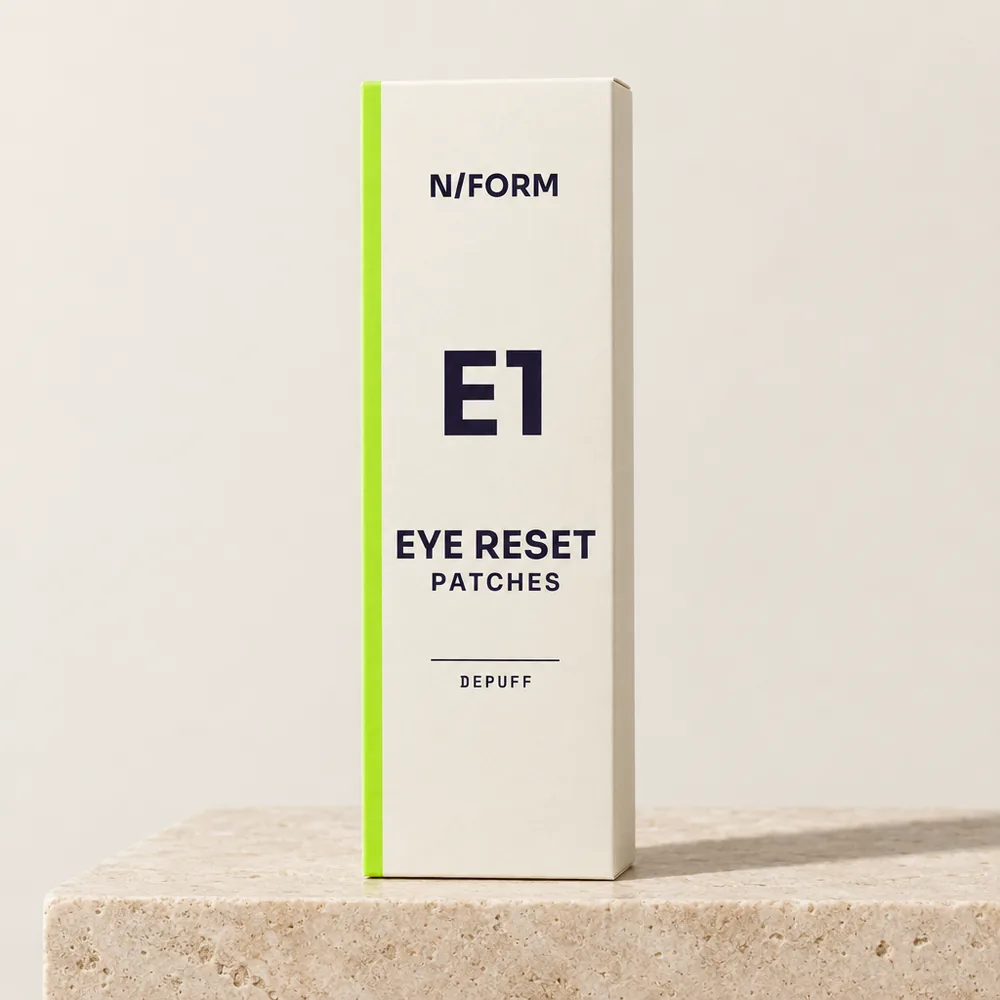
Eye Reset Patches list vitamin C among their actives, without a stated form or percentage, for a fifteen-minute application under the eyes. That is a different use and no trial in our bank covers it.
A 2% derivative is not the same as a 2% pure acid; the explant comparison, 1.8% glucoside against 15% ascorbic acid for oxidative protection, is the right frame for reading the number3.
Who it suits, and who should go carefully
Ascorbyl glucoside suits all skin types, including skin that has found pure vitamin C serums too stinging or has watched them turn brown. It is the vitamin C for uneven tone, post-breakout marks and the dull cast of years of sun. The guide on how to fade post-acne marks puts it in the sequence, after stopping the inflammation and daily sunscreen.
Go carefully with the formula rather than the ingredient. Brighten Serum contains fragrance and, in the US formula, the declared allergens limonene, citral, linalool and citronellol, and it contains sweet almond oil, so it is not nut-free. The ingredient itself has no sun-sensitivity warning; the sunscreen is for the pigment, not the product.
What it works with
Ferulic acid. The classic partner. In pig skin, adding 0.5% ferulic acid to a solution of L-ascorbic acid and vitamin E doubled its photoprotection, from 4-fold to about 8-fold, and stabilized both vitamins6. That study used pure ascorbic acid, not ascorbyl glucoside, and pig skin, not people, so it is the reason ferulic acid is in the formula rather than a result the formula has shown. The ferulic acid page goes through it.
Glycolic acid. In the same routine, at different times of day: vitamin C in the morning, glycolic acid on its two or three evenings. Because ascorbyl glucoside does not depend on a pH below 3.5, the old worry about acids switching vitamin C off does not apply to it in the same way; irritation is the reason to separate them. The guide on glycolic acid and vitamin C together has the detail.
Sunscreen. Every morning, over the serum. The pigment vitamin C reduces is pigment the sun makes.
Questions people ask
What is the difference between ascorbyl glucoside and ascorbic acid?
Ascorbic acid is pure vitamin C: fast, potent, and unstable. It only penetrates at a pH below 3.5, stings at that acidity, and oxidizes in the bottle2. Ascorbyl glucoside is vitamin C bonded to glucose: stable, comfortable, and converted to vitamin C by the skin after absorption, which on human skin explants protected against oxidative stress as well as 15% pure ascorbic acid3.
Does ascorbyl glucoside work for dark spots?
On sun spots, yes, in a 24-week double-blind half-face trial of 27 women, with significant lightening at 12 and 24 weeks4. Two authors work for the manufacturer. On the marks left by breakouts there is no trial of its own; the case rests on the mechanism, reduced melanin formation1, and the sun-spot result.
Why does my vitamin C serum turn brown?
Because it is built on pure L-ascorbic acid, which oxidizes in water and air; the brown is the oxidized form, which no longer does the job. Stabilized derivatives exist for exactly this reason1. An ascorbyl glucoside serum stays clear because the glucose bond protects the vitamin until the skin removes it.
Is 2% ascorbyl glucoside enough?
The explant study that showed conversion to vitamin C and protection equal to 15% ascorbic acid used 1.8%3, so 2% is in the range the lab evidence covers. Whether it is enough for your marks is a three-month question: the sun-spot trial recorded its first significant change at 12 weeks4.
Can I use ascorbyl glucoside with glycolic acid?
Yes. Morning for the vitamin C, two or three evenings a week for the acid. The pH concern belongs to pure ascorbic acid and its need for a pH below 3.52; the derivative does not share it. Separate them by time of day to keep irritation down, not because they cancel.
Sources
Every study cited above, with what it found and where it can be read. A study of an ingredient is not a study of one of our formulas, and we say which kind each one is.
- 1
Telang, Indian Dermatology Online Journal, 2013
Review
Review: topical vitamin C is an antioxidant that supports collagen synthesis and reduces melanin formation, and pure ascorbic acid is unstable and needs a low pH, which is why stabilized derivatives exist.
- 2
Pinnell, Dermatologic Surgery, 2001
Laboratory study
Pure L-ascorbic acid only penetrates skin at a pH below 3.5, and skin levels saturate at 20%; the acidity that makes it work is also what makes it sting.
- 3
Jacques, International Journal of Cosmetic Science, 2021
Laboratory study
On human skin explants, 1.8% ascorbyl glucoside was converted back to vitamin C by the skin and protected against oxidative stress as well as 15% pure ascorbic acid, while staying stable in storage. Lab skin, not a clinical trial.
- 4
Takada, International Journal of Molecular Sciences, 2024
Clinical trial
Double-blind half-face trial, 27 women with sun spots, 24 weeks: the ascorbyl glucoside side lightened significantly against the placebo side at 12 and 24 weeks. Two authors work for the manufacturer, which the paper declares.
- 5
Lin, Journal of Investigative Dermatology, 2005
Laboratory study
Adding 0.5% ferulic acid to a vitamin C and E solution doubled its photoprotection, from 4-fold to about 8-fold, and stabilized both vitamins. Pig skin, not people.
- 6
Levin and Momin, Journal of Clinical and Aesthetic Dermatology, 2010
Review
Review of the evidence behind common cosmeceutical ingredients (retinol, vitamin C, niacinamide, hydroxy acids, peptides): the evidence quality varies widely and concentration and formulation decide whether an ingredient does anything.
The formulas this guide points at
Not sure which of these is your skin?
Seven questions about what your skin does, not what you own, and you get the three formulas that treat it. Sixty days to find out, full refund, keep the bottles.
Read next
Dull and uneven skinGuide
Can You Use Glycolic Acid and Vitamin C Together?
Yes. Vitamin C in the morning, glycolic acid on its two or three evenings, and they never meet. Why the pH worry is mostly about pure ascorbic acid.
6 min read · 6 sources
Dull and uneven skinGuide
How to Fade Acne Marks (Dark Spots and Red Marks After Breakouts)
Marks are flat pigment or redness left after a breakout; scars are texture. Stop the inflammation, wear sunscreen, then vitamin C and glycolic acid.
7 min read · 7 sources
Dull and uneven skinIngredient
Ferulic Acid for Skin: What It Does Next to Vitamin C
A plant antioxidant that stabilizes vitamin C and, in pig skin, doubled a vitamin C and E solution's photoprotection. What that study did and did not test.
5 min read · 3 sources
Dull and uneven skinRoutine guide
The Routine for Dull, Uneven Skin
Dull skin is dead cells scattering light, too little water and patchy pigment. The routine that fixes all three, from cleanser to sunscreen.
9 min read · 9 sources