Lines and firmnessIngredient
Bidens Pilosa for Skin: The Plant Retinol Alternative, Explained
Bidens pilosa is a daisy-family herb whose extract acts on the same retinoid receptors as retinol. What the cell-culture study found, and what is not known.
Published September 21, 2026 · 6 min read · 5 sources · By N/FORM
- The evidence
- 1 clinical trial, 3 reviews, 1 laboratory study
- In these formulas
- Renewal Serum
The short version
- Bidens pilosa is a common herb in the daisy family (Asteraceae), and a standardized extract of it is sold as a plant alternative to retinol.
- In cultured human skin cells, a standardized Bidens pilosa extract raised collagen by 32.5% and elastin by 25.2%, acting through the same retinoid receptors retinol uses. That is cell culture, not a clinical trial.
- There is no human trial comparing Bidens pilosa with retinol in our source bank, so nobody can yet say it matches retinol on lines in people.
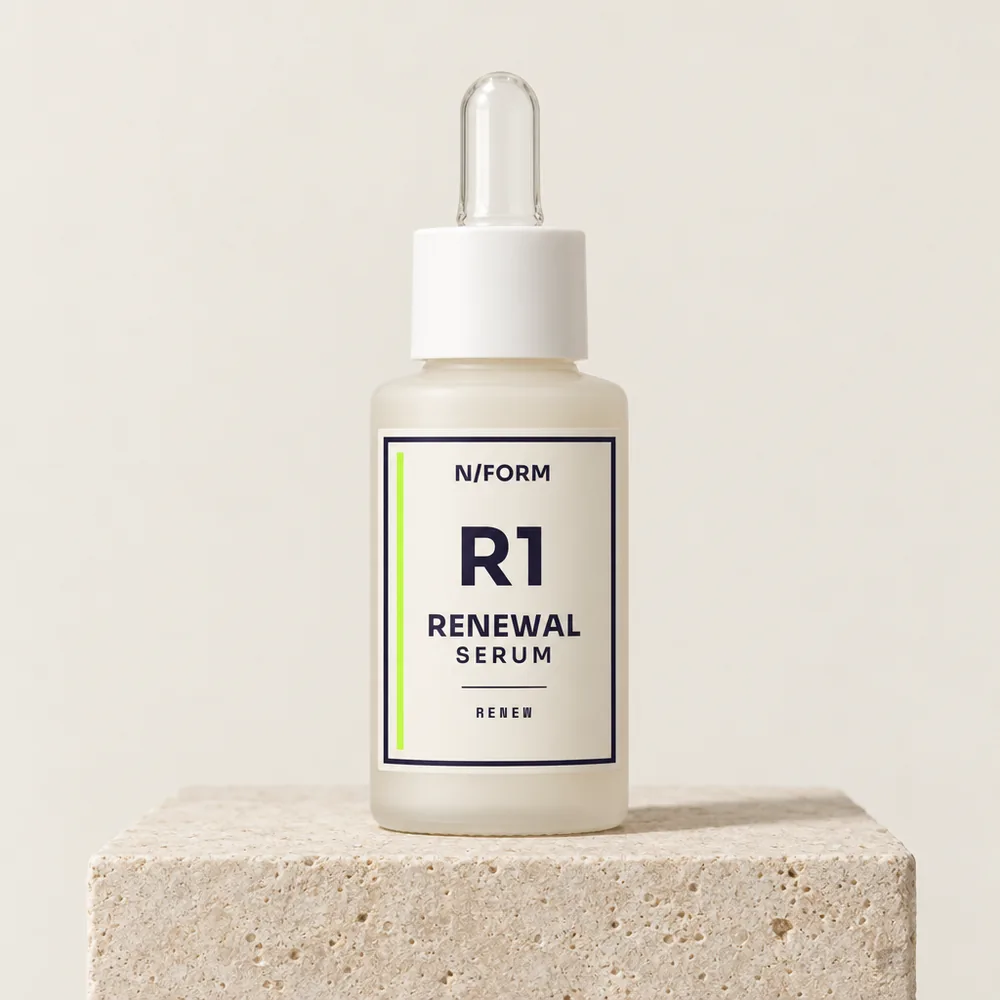
- Renewal Serum carries 2% Bidens pilosa extract, in a fragranced formula with rosehip oil, murumuru butter and hyaluronic acid, used in the evening with sunscreen by day.
Bidens pilosa is a common herb in the daisy family (Asteraceae), and the extract used in bidens pilosa skincare is a standardized preparation of the plant sold as a plant alternative to retinol. What it does for skin, on the evidence we hold, is this: in cultured human fibroblasts, the collagen-making cells of the dermis, a standardized Bidens pilosa extract raised collagen by 32.5% and elastin by 25.2%, acting through the same retinoid receptors that retinol uses1. That is one laboratory study, and this page says what it does and does not show.
What it does
Retinoids, the vitamin A family, work by binding to nuclear retinoid receptors inside skin cells, molecular switches that reset how fast cells turn over and how much collagen the dermis makes. Retinol has to be converted in the skin to retinoic acid before it can bind, which is why it is gentler and slower than the prescription forms2. The result, in a review of retinoids for skin aging, is a thicker epidermis, more collagen and fewer fine wrinkles; the price is irritation, peeling and redness that is dose-related and most common in the first weeks3.
Bidens pilosa extract is called a plant retinol because its mechanism runs through the same switches. In the cell-culture study, the extract's effect on collagen and elastin was traced to the retinoid receptors, the same route retinol takes1. That is what separates it from a humectant that plumps lines with water or an acid that smooths the surface: it is acting on what the cells make, not on how the surface looks for a day. The extract is not itself a retinoid, and its molecules are not vitamin A.
What the trials found
There is one study in our source bank, and it is not a trial. A standardized Bidens pilosa extract was applied to human fibroblasts in culture, and collagen production rose by 32.5% and elastin by 25.2%; the study showed the effect ran through retinoid receptors1. Cells in a dish, not faces over twelve weeks.
It tells you the mechanism is the right one and that the extract is active on the cells that matter for firmness. It does not tell you what happens on a face, at what concentration, over how long, or how the result compares with retinol. The one plant alternative that has been tested head-to-head against retinol in people is bakuchiol, not Bidens pilosa: in a randomized, double-blind trial of 44 people over 12 weeks, 0.5% bakuchiol matched 0.5% retinol on wrinkle area and pigmentation with less scaling and stinging4. No equivalent trial of Bidens pilosa exists in our bank, so we do not say it matches retinol.
A review of the evidence behind cosmeceutical ingredients makes the general point that applies here: evidence quality varies widely across the category, and concentration and formulation decide whether an ingredient does anything at all5. A cell-culture result is the start of a case, not the end of one. The full three-way comparison is in retinol alternatives: Bidens pilosa vs bakuchiol vs retinol.
How much, and in what
The cell-culture study used a standardized extract; it did not test a percentage on skin, so there is no studied strength to quote. Renewal Serum carries 2% Bidens pilosa extract, the one percentage the catalogue declares for it, in a formula with murumuru seed butter, rosehip fruit oil and hyaluronic acid. The butter and the oil give the serum its slip; the hyaluronic acid gives the water that softens dehydration lines while the extract works on the slower change underneath.
It is a serum for the evening, applied to clean skin under a moisturizer, with a sunscreen every morning. That schedule is practice, not a trial finding: it is how every renewal active is used, whatever it is, because sun is what causes the lines in the first place.
Who it suits, and who should go carefully
Renewal Serum is for fine lines, uneven texture and dark spots, on skin that has not tolerated retinol or would rather not find out. Retinol's irritation is dose-related and worst in the first weeks3; Bidens pilosa has no human irritation data in our bank, so the honest statement is that its evidence for gentleness is the absence of a retinoid molecule, not a measured result.
The formula contains fragrance and the declared allergens geraniol, citronellol, linalool and citral. Anyone who reacts to perfume, or who is building a fragrance-free routine, should not use it; the fragrance-free renewal serum in the range is the niacinamide one. It is COSMOS Natural certified.
Retinoids are avoided in pregnancy under standard guidance. That rule is about vitamin A, and Bidens pilosa is not vitamin A, but no source we hold has tested the extract in pregnancy, so we do not call it pregnancy safe. Anyone pregnant or breastfeeding should ask their doctor before using any active.
What it works with
Hyaluronic acid, in the same bottle and in a hydrating serum or toner underneath: the water shows fast while the extract works slowly, and the routine for fine lines and lost firmness is built around that pairing. A fragrance-free moisturizer over it, to hold the water in. Sunscreen in the morning, without exception.
The one thing to keep on a different evening is an exfoliating acid. Retinoid-pathway actives and acids each irritate on their own3, and while Bidens pilosa has no measured irritation of its own in our bank, there is no reason to find out on the same night as a 5% glycolic acid. Two or three acid evenings, the serum on the others.
Questions people ask
What is bidens pilosa skincare good for?
In cultured human skin cells, a standardized Bidens pilosa extract raised collagen by 32.5% and elastin by 25.2%, acting through the same retinoid receptors that retinol uses1. On a face, the expected result is the retinoid one, smoother texture and softer lines over months, but that has not yet been measured in a human trial in our source bank.
Is bidens pilosa as good as retinol?
Nobody has tested that in people. The mechanism is shared: both act through nuclear retinoid receptors2. But the only plant alternative with a head-to-head human trial against retinol is bakuchiol, which matched 0.5% retinol over 12 weeks in 44 people4. For Bidens pilosa the evidence is cell culture, and a result in a dish is a reason to expect an effect, not proof of one.
Is bidens pilosa safe?
The extract has no human safety or irritation data in our source bank, so the truthful answer is that its case for gentleness rests on not being a retinoid, whose irritation is dose-related and worst in the first weeks3, rather than on a trial. The formula that carries it contains fragrance and declared allergens, which is the more likely cause of a reaction for most people. Patch test behind the ear for a few days if your skin reacts easily, and stop if it stings or stays red.
How long does bidens pilosa take to work?
There is no trial that measured it. Retinoids in general are judged over months, and the plant alternative that was tested, bakuchiol, was measured at 12 weeks4. Plan on the same twelve weeks before judging lines. The guide on how long skincare takes to work has the reasons.
Can I use bidens pilosa with vitamin C?
Yes, at different ends of the day: vitamin C in the morning under sunscreen, the Bidens pilosa serum in the evening. Nothing in our source bank records a conflict between them. Keep exfoliating acids on separate evenings from the serum, since irritation from a retinoid-pathway active and an acid adds up3.
Sources
Every study cited above, with what it found and where it can be read. A study of an ingredient is not a study of one of our formulas, and we say which kind each one is.
- 1
Dieamant, Evidence-Based Complementary and Alternative Medicine, 2015
Laboratory study
A standardized Bidens pilosa extract raised collagen by 32.5% and elastin by 25.2% in human fibroblasts, acting through the same retinoid receptors retinol uses. Cell culture, not a clinical trial.
- 2
Zasada and Budzisz, Advances in Dermatology and Allergology, 2019
Review
Review: retinoids act through nuclear retinoid receptors to normalize cell turnover and collagen production; retinol must be converted in the skin to retinoic acid, which is why it is gentler and slower than prescription forms.
- 3
Mukherjee, Clinical Interventions in Aging, 2006
Review
Review of retinoids for skin ageing: they thicken the epidermis, raise collagen and reduce fine wrinkles, and the price is irritation, peeling and redness that is dose-related and most common in the first weeks.
- 4
Dhaliwal, British Journal of Dermatology, 2019
Clinical trial
Randomized double-blind trial, 44 people, 12 weeks: 0.5% bakuchiol twice daily matched 0.5% retinol once daily on wrinkle area and pigmentation, and the retinol group reported more scaling and stinging.
- 5
Levin and Momin, Journal of Clinical and Aesthetic Dermatology, 2010
Review
Review of the evidence behind common cosmeceutical ingredients (retinol, vitamin C, niacinamide, hydroxy acids, peptides): the evidence quality varies widely and concentration and formulation decide whether an ingredient does anything.
The formula this guide points at
Not sure which of these is your skin?
Seven questions about what your skin does, not what you own, and you get the three formulas that treat it. Sixty days to find out, full refund, keep the bottles.
Read next
Lines and firmnessGuide
Retinol Alternatives: Bidens Pilosa vs Bakuchiol vs Retinol
How two plant alternatives compare with retinol on evidence, irritation and sun. Bakuchiol has a human trial against retinol; Bidens pilosa has cell culture.
7 min read · 5 sources
Lines and firmnessRoutine guide
The Routine for Fine Lines and Lost Firmness
The anti aging routine that works in your 30s and 40s is short: daily sunscreen, a retinoid-pathway active at night, water for the outer layer, and months.
9 min read · 11 sources
Every skinGuide
How Long Does It Take for Skincare to Work?
Hydration shows in days, texture and tone in 8 to 12 weeks, pigment in 12 to 24, lines in 12 or more. Why the skin cycle sets that clock and when to give up.
7 min read · 10 sources